










In the modern era, the average citizen operates under the comfortable assumption that the mechanisms of daily life—the flow of electricity, the arrival of imported goods, and the stability of the currency—are permanent fixtures of the human experience. However, an increasing number of systemic risk analysts and civilizational scholars are sounding a clarion call: our globalized infrastructure is not a permanent achievement, but a fragile, hyper-specialized construct that is currently on the brink of a profound, cascading failure.
The Anatomy of Fragility: Why Our System Is at Risk
The core of the issue lies in the transition from local resilience to global efficiency. Over the past century, the world has optimized every supply chain for cost-effectiveness, stripping away the redundancies that once protected societies from local shocks.
The Chokepoint Vulnerability
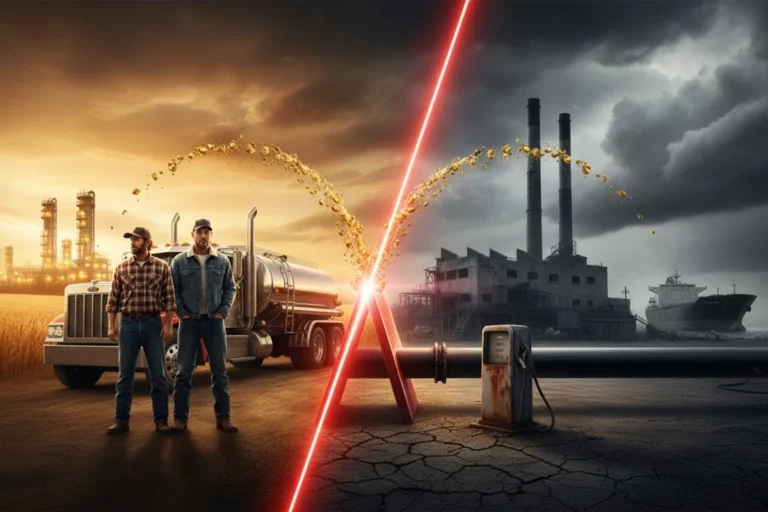
The global economy functions like a complex circuit board. The Strait of Hormuz—a narrow, strategic maritime passage—serves as one of the most critical conduits for the world’s energy supply. A systemic risk analysis indicates that the interruption of this single corridor would not merely cause a localized energy spike; it would trigger a general crisis of civilization. When energy inputs are severed, the disruption propagates outward, impacting shipping, manufacturing, and food production. We are not merely talking about a return to the technological levels of the 19th century; we are talking about a total failure of the infrastructure that supports 8 billion people.
The Illusion of Wealth
William Ophuls, in his seminal work Immoderate Greatness, argues that we are currently living under a "money illusion." This phenomenon disconnects our artificial, debt-based economy from the finite ecological reality of our planet. As the gap between monetary valuation and physical resources widens, the system becomes increasingly unstable. The collapse of this illusion is inevitable, as our way of life is entirely dependent on the uninterrupted flow of oil, gas, and global logistics. When these flows cease, the abstraction of "wealth" will evaporate, leaving behind the stark reality of resource scarcity.
A Chronology of Decline: From Efficiency to Collapse
The transition from a functioning society to a state of collapse does not happen overnight, but rather through a series of predictable, accelerating stages.
- The Era of Optimization (1990–2020): Globalization reaches its peak. Supply chains are stretched thin, and "Just-in-Time" delivery becomes the industry standard. Redundancies are systematically eliminated to maximize shareholder value.
- The Period of Strained Inputs (2020–2025): The onset of geopolitical tensions and energy volatility begins to stress the system. Governments respond with deficit spending and fiat currency expansion, creating the "money illusion" that obscures the underlying structural decay.
- The Trigger Event: A major disruption at a primary chokepoint (such as the Persian Gulf) forces a sudden halt in the global distribution of critical energy and chemical precursors.
- The Cascading Failure: The loss of the Haber-Bosch process—which converts atmospheric nitrogen into fertilizer—leads to a rapid decline in agricultural yields. As food supplies dwindle, the social contract begins to disintegrate.
- The Socio-Economic Unraveling: Urban centers experience supply chain shocks, leading to panic, food riots, and the eventual breakdown of law and order.
Supporting Data: The Science of Systemic Risk
The fragility of our civilization is not merely a theoretical concern; it is backed by the physics of energy and the economics of complexity.
The Haber-Bosch Dependency
Perhaps the most alarming statistic in modern survival analysis is our reliance on the Haber-Bosch process. This chemical reaction is responsible for producing the nitrogen fertilizer that sustains the diets of approximately 50% of the global population. Because this process is energy-intensive—requiring massive amounts of natural gas—any breakdown in the energy sector will result in an immediate and catastrophic fertilizer shortage. Within a single growing season, the global food supply would be halved, leading to widespread famine and secondary social collapse.
The Elimination of Redundancy
David Holmgren, author of Future Scenarios, highlights that a robust system requires "energy descent" strategies and fallback mechanisms. In contrast, our current global system has zero tolerance for error. By prioritizing efficiency over resilience, we have built a system that cannot survive a sustained disruption. As the MuseLetter 309 posits, while a "good civilizational death" might be a slow, manageable transition, the speed of our current decline suggests a violent shift rather than a graceful exit.
Official Responses and Institutional Blind Spots
Despite the mounting evidence of systemic vulnerability, institutional response has been largely characterized by inertia. Governments and central banks continue to rely on traditional fiscal and monetary levers that are increasingly ineffective against structural, physical failures.
Current official policy focuses on maintaining the status quo, often through increased intervention in markets or the promotion of long-term technological transitions (like green energy) that are themselves reliant on the very supply chains now at risk. There is little in the way of state-level contingency planning for a world without functioning infrastructure. This silence from the establishment leaves individuals with no choice but to pursue personal and community-level preparation.
The Implications: A Shift Toward Survivalism
The implications of this trajectory are severe. As the global order weakens, the burden of survival will shift from the state to the individual.
The Looming Urban Crisis
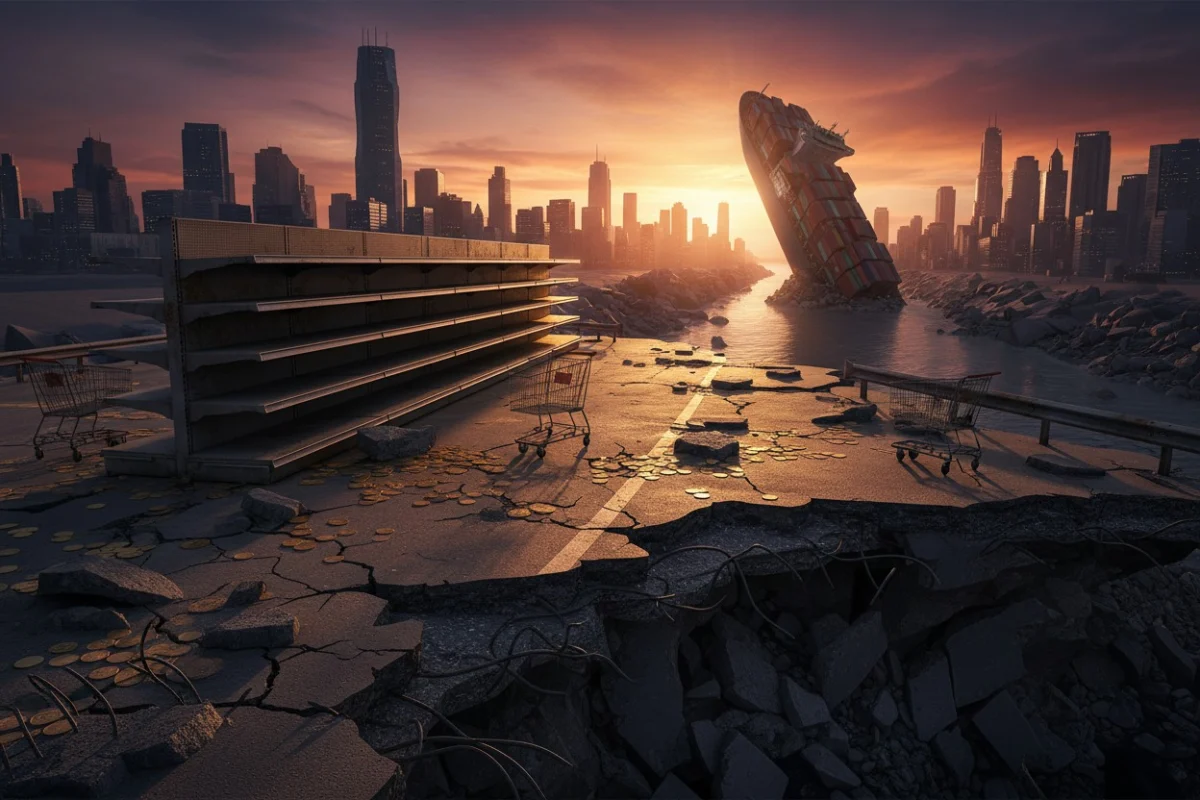
Expert analysts like Matt Bracken have pointed to a recurring historical pattern: the first signs of civilizational stress appear as the wholesale looting of retail infrastructure in major urban centers. As the supply chain breaks, the "last mile" of food distribution—the grocery store—becomes the site of conflict. For those living in dense urban environments, the window of time to secure resources before the onset of social unrest is narrowing.
The Return of Hard Assets
As the trust in fiat currency wanes, the historical utility of physical precious metals—gold and silver—becomes critical. Unlike digital currency or paper money, which depend on the integrity of a central bank, gold and silver possess intrinsic value that cannot be counterfeited or erased by a server failure. They represent the only viable medium of trade for a society forced to operate outside of a collapsed financial grid.
The Necessity of Skill Acquisition
The most significant vulnerability of modern man is the loss of "maker" skills. As we move further into an automated, service-based economy, the ability to maintain basic infrastructure—such as water pumps, solar arrays, or mechanical tools—has atrophied. The path forward for the prepared individual involves:
- Decentralized Energy: Moving toward personal solar-powered battery systems to ensure energy independence.
- Food Security: Developing small-scale, localized agricultural production to mitigate the risks of fertilizer and supply chain collapse.
- Secure Communications: Utilizing encrypted and non-grid-dependent communication methods to organize and stay informed as the surveillance state loses its grip on the infrastructure.
Conclusion: The Mandate for Action
We are currently living in a unique window of history—a time when the lights are still on, the shelves are still stocked, and the currency still holds nominal value. The transition into a post-infrastructure world is not a matter of "if," but "when."
The logic of systemic collapse dictates that once the tipping point is reached, it is too late to begin the process of preparation. To survive the coming shift, one must abandon the comfortable delusions of the present and begin building a foundation of self-reliance. Whether through the acquisition of essential trades, the stockpiling of storable food, or the diversification of wealth into physical assets, the mandate is clear: those who wait for the official systems to fail will find themselves at the mercy of the chaos. The time to act is now, while the resources to build a future are still within reach.