










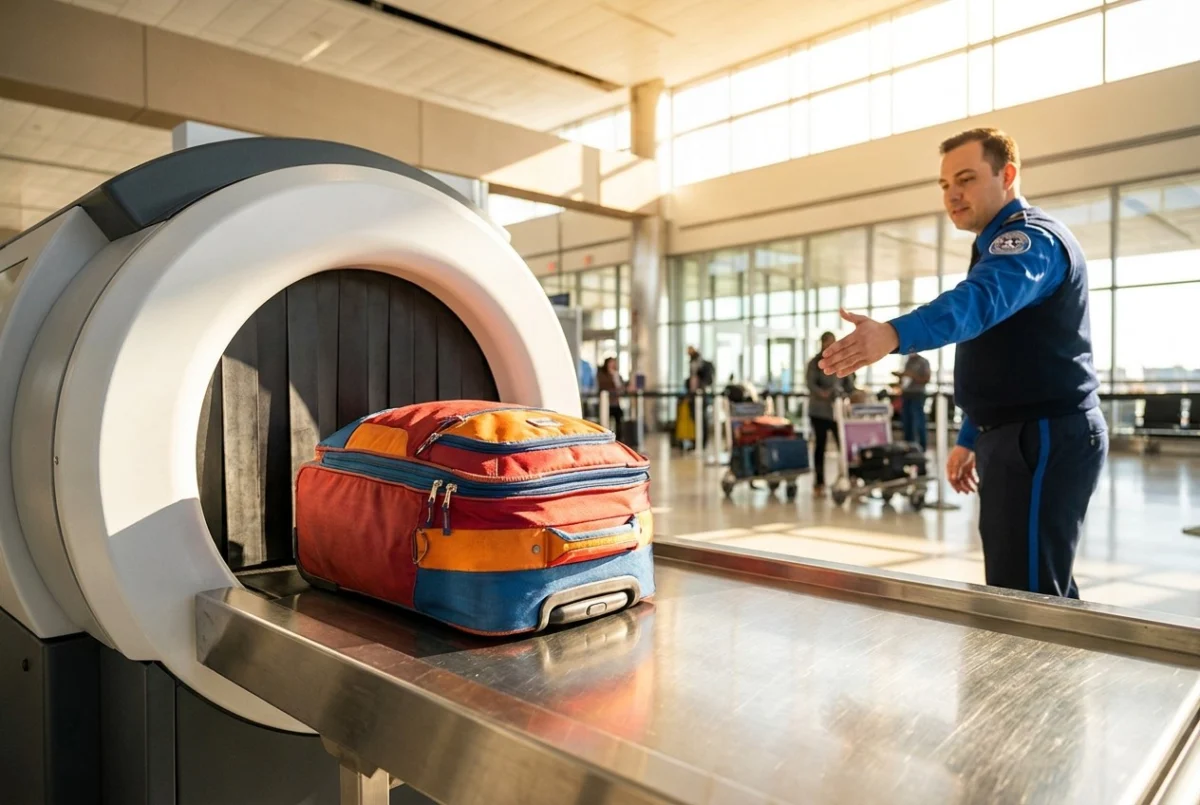
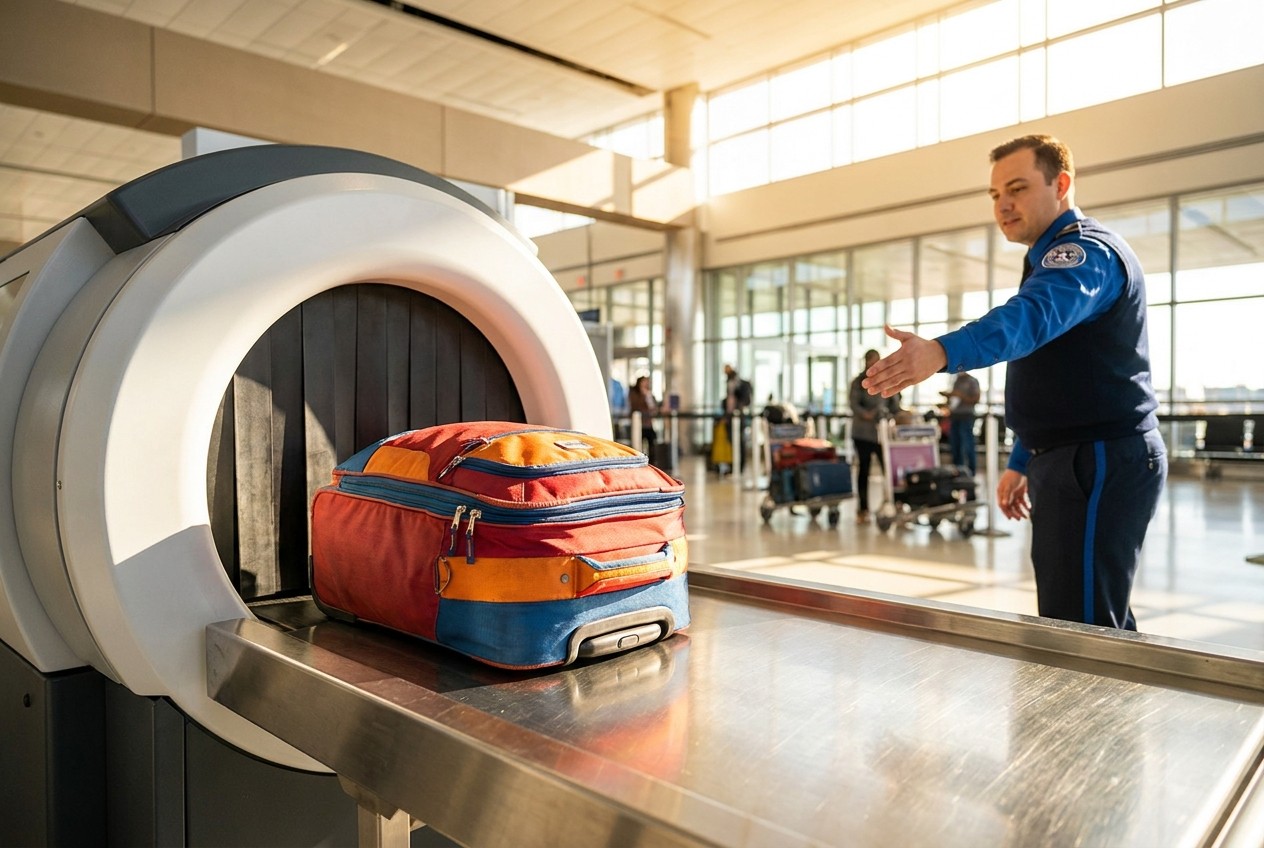
As the Transportation Security Administration (TSA) continues its nationwide push to modernize airport checkpoint technology, a significant transition is underway that promises heightened security but poses new logistical hurdles for millions of passengers. The agency is currently replacing traditional X-ray machines with advanced Computed Tomography (CT) scanners. While these machines represent a major leap in threat detection, their physical design—specifically, a more restrictive tunnel aperture—is forcing a reckoning regarding carry-on luggage dimensions.
The rollout comes at a time when the agency is under intense public and political scrutiny, navigating everything from budgetary stalemates in Congress to high-profile complaints regarding the invasiveness of screening protocols.
The Technological Shift: Why the Change?
The transition to CT scanning technology is being framed by the TSA as a necessary evolution in aviation security. Unlike traditional 2D X-ray systems, which produce a flat image requiring officers to mentally reconstruct the contents of a bag, CT scanners generate high-resolution 3D images.
These images allow security personnel to rotate and examine the contents of a bag from multiple angles on a monitor. The primary operational benefit, according to the TSA, is the reduction of manual bag checks. If an officer can clearly identify an object within a bag through digital manipulation, there is no need to pull the bag aside for a physical inspection. Furthermore, the advanced imaging is sophisticated enough to detect explosives and other prohibited items with higher precision, potentially allowing passengers to keep laptops and liquids inside their carry-ons rather than removing them for separate screening.
However, the hardware required for this level of imagery is bulkier and more rigid than its predecessors. TSA spokesperson Velez explained to FOX 13 that the smaller opening of the new scanners is a non-negotiable trade-off for the advanced technology housed within. "This design is necessary to accommodate the advanced imaging technology and ensure optimal performance," Velez stated.
The "Carry-On" Conundrum: Size Matters
The most immediate impact of the new scanners is the potential for "oversized" carry-ons to be rejected at the checkpoint. Most commercial airlines maintain standard carry-on dimensions, typically capping bags at 22 inches by 14 inches by 9 inches. Historically, these limits were enforced loosely; if a bag was slightly overstuffed or had bulky wheels, it might still squeeze through a traditional, wider X-ray scanner.
With the new CT units, that flexibility is evaporating. Bags that exceed these standard dimensions—or even those that are packed to the point of being rigid and misshapen—may find themselves unable to fit through the scanner’s aperture.
The agency’s guidance is firm: if a bag does not fit, it cannot be screened via the CT machine. This places the burden of compliance directly on the traveler. Passengers whose luggage exceeds these limits may be forced to leave the checkpoint and check their bags with their respective airlines, a process that is not only time-consuming but can lead to missed flights. The TSA has advised travelers to consult their airline’s specific carry-on policies well before arriving at the airport to ensure their luggage conforms to the new technical constraints.
A Timeline of Transformation and Turmoil
The deployment of these scanners is part of a multi-year, multi-billion-dollar effort to modernize security infrastructure. However, the timeline of this rollout has been shadowed by a series of broader institutional crises.
The Legislative Impasse
The modernization effort has proceeded despite severe political friction in Washington. In March 2026, reports indicated that Senate Democrats blocked Republican-led efforts to fund the Department of Homeland Security (DHS). This resulted in a partial government shutdown that stretched into its fourth week, causing significant operational strain. During this period, airports across the country reported "out-of-control" wait lines, a consequence of the agency struggling to manage increased passenger volumes with constrained resources.
The "PreCheck" Controversy
Simultaneously, the agency’s premium screening program, TSA PreCheck, has come under fire. A report from the Ron Paul Institute in December 2025 characterized the program as an "extortion racket-style scheme." The report argued that the agency effectively creates an environment of "harassment" for standard travelers, then charges those same individuals for the privilege of bypassing the most aggressive screening measures. The introduction of new administrative hurdles, including the "Confirm.ID" tax and updated verification requirements, has further fueled public sentiment that the agency is becoming increasingly bureaucratic and costly.
High-Profile Friction
Public frustration reached a boiling point in December 2025 following an incident involving Evita Duffy-Alfonso, the daughter of Transportation Secretary Sean Duffy. Duffy-Alfonso, who was pregnant at the time, publicly recounted a 15-minute wait for a manual pat-down after refusing the radiation exposure associated with standard body scanners. The incident drew significant media attention, with Duffy-Alfonso calling for the abolition of the TSA. This sentiment reflects a growing segment of the traveling public that feels the balance between safety and personal liberty has tipped too far toward the latter.
Operational Implications: What Travelers Should Expect
For the average traveler, the new scanners represent a "double-edged sword." On one hand, the promise of faster lines—driven by the fact that electronics and liquids may no longer need to be removed from bags—could significantly streamline the checkpoint experience once the transition is complete and passengers are familiar with the new protocols.
On the other hand, the current "transitional period" is creating confusion. Because the TSA has not released a master schedule of which airports have received the new technology, travelers are effectively playing a game of chance. One airport may still use legacy machines, while the next may have a fully upgraded lane.
Tips for a Smooth Screening Experience:
- Adhere to the 22x14x9 Rule: If your bag is even slightly over these dimensions, assume it will not fit. Use a measuring tape before you leave home.
- Pack Flexibly: Even if your bag is within the size limits, overstuffing it can make it rigid and difficult to fit through the aperture.
- Ask for Assistance Early: If you are unsure about your luggage, approach a TSA officer before you reach the conveyor belt. They are trained to assist with oversized or special items and can offer guidance before a delay occurs.
- Monitor Airline Updates: Airline policies regarding carry-ons can change. Always check your specific carrier’s app for the most current baggage dimensions.
Looking Ahead: Security vs. Efficiency
The TSA’s push for CT scanners is ultimately a pursuit of higher security standards in an era of evolving threats. By leveraging 3D imaging, the agency aims to eliminate the "human error" factor that can occur when an officer is tasked with staring at hundreds of 2D images per hour.
However, the agency must contend with the reality that security does not exist in a vacuum. The efficiency of an airport is measured by the speed at which passengers can safely reach their gates. If the new technology leads to a high volume of rejected bags, longer queues for manual checks, and increased passenger frustration, the perceived benefits of the technology may be eclipsed by the logistical reality on the ground.
The agency remains committed to the rollout, maintaining that the long-term benefits to safety justify the short-term adjustments. "TSA officers are available to assist travelers with larger items or special needs to help ensure a smooth screening process," spokesperson Velez emphasized.
As the deployment continues, the agency faces the dual challenge of successfully integrating this sophisticated technology while simultaneously addressing a public that is increasingly wary of the TSA’s growing footprint and its impact on the freedom of movement. Whether this shift results in a more secure and efficient travel environment, or simply more bottlenecks at the security checkpoint, remains the central question for the future of domestic aviation. For now, the best defense for the traveler remains preparation: measuring bags, staying informed on current policies, and maintaining a high level of patience in an ever-tightening security landscape.