








In a landmark move that signals the next frontier of medical technology, GE HealthCare has announced a strategic collaboration with the renowned Mass General Brigham healthcare system. The partnership aims to fundamentally transform radiation oncology by integrating generative artificial intelligence (AI) into clinical workflows. By synthesizing fragmented, patient-specific data, the initiative seeks to bridge the gap between complex diagnostic information and actionable treatment planning, potentially setting a new gold standard for personalized cancer care.
Main Facts: Addressing the Fragmentation of Care
Radiation therapy is notoriously complex. It is a multi-disciplinary effort that requires the seamless coordination of oncologists, physicists, dosimetrists, and radiation therapists. Historically, this journey has been hindered by "data silos"—the tendency for vital information to remain trapped in disparate software systems that fail to communicate with one another.
GE HealthCare’s latest initiative is designed to dismantle these silos. The company has developed a software platform that unifies disparate workflows, acting as a "digital backbone" for the radiation oncology department. By bringing together structured healthcare data—such as clinical notes, diagnostic imaging, and complex radiation treatment plans—the system creates a single source of truth for the care team.
The core innovation lies in the integration of generative AI. Unlike traditional diagnostic AI, which might focus on identifying a tumor in an image, this generative application is designed to act as an intelligent assistant. It allows clinicians to query the entirety of a patient’s medical history in natural language, enabling the software to "read" and synthesize vast amounts of unstructured data to surface the most relevant clinical insights instantly.
Chronology of Development: From Efficiency to Innovation
The trajectory of this project reflects the evolving priorities of modern medtech.
- The Pre-AI Phase: Recognizing the administrative burden inherent in cancer treatment, GE HealthCare first focused on workflow optimization. Working closely with Massachusetts General Hospital (a member of the Mass General Brigham system), the team identified critical bottlenecks in the time between a patient’s initial intake and the commencement of radiation therapy.
- The Efficiency Breakthrough: Through the implementation of the initial software platform, Mass General Hospital achieved a remarkable reduction in administrative latency. The time required to move from patient intake to the first day of treatment plummeted from 30 days to a mere eight days. This success provided the operational proof-of-concept necessary to move toward more advanced technological integrations.
- The AI Integration Phase: Having successfully streamlined the workflow, the partnership transitioned into its current phase: the exploration of generative AI. By leveraging the data repository already established, the team is currently testing how Large Language Models (LLMs) can be applied to clinical oncology datasets to assist in decision-making and patient personalization.
Supporting Data: The Impact of Streamlined Workflows
The quantitative improvements achieved by Mass General Hospital serve as a compelling case study for the value of interoperability. In the realm of oncology, "time-to-treatment" is more than just an efficiency metric; it is a clinical outcome. Delays in starting radiation can lead to tumor progression and increased patient anxiety.
By cutting the intake-to-treatment duration by over 70%, the project demonstrates that the primary obstacle to high-quality care is often not the lack of medical knowledge, but the inability to access and synthesize the right information at the right time. The integration of generative AI is intended to build upon this foundation. If clinicians can reduce their administrative search time—finding a specific clinical note or a previous imaging report—by even a few minutes per patient, the cumulative effect across a busy hospital department is a massive increase in capacity and a significant reduction in clinician burnout.
Official Responses: Aligning Technology with Clinical Needs
The leadership at GE HealthCare emphasizes that this project is not merely about automation, but about empowering the clinician.
Sam Kandala, general manager for therapy guidance at GE HealthCare, articulated the vision for the partnership in a recent statement: "We are exploring how AI could help clinicians not only work more efficiently but also make better use of the information available to them as they personalize treatment for each patient."
For GE HealthCare, the goal is to shift the clinician’s role from "data harvester" to "data interpreter." In the current environment, doctors often spend more time navigating software interfaces than interacting with the data itself. By surfacing relevant, synthesized information, the generative AI acts as a filter, highlighting the specific variables—such as genetic markers, historical side-effect profiles, or anatomical variations—that should inform a personalized radiation dose.
Mass General Brigham’s involvement also underscores the industry trend of academic medical centers acting as "innovation laboratories." By embedding technology developers directly into clinical environments, the healthcare system ensures that the tools being built are not just theoretically sound, but clinically relevant and practically deployable.
Implications: The Regulatory and Ethical Landscape
The promise of generative AI in healthcare is balanced by significant regulatory scrutiny. Because generative AI models can occasionally produce "hallucinations" or biased outputs, the integration of these tools into high-stakes environments like radiation oncology requires a cautious approach.

The Regulatory Hurdle
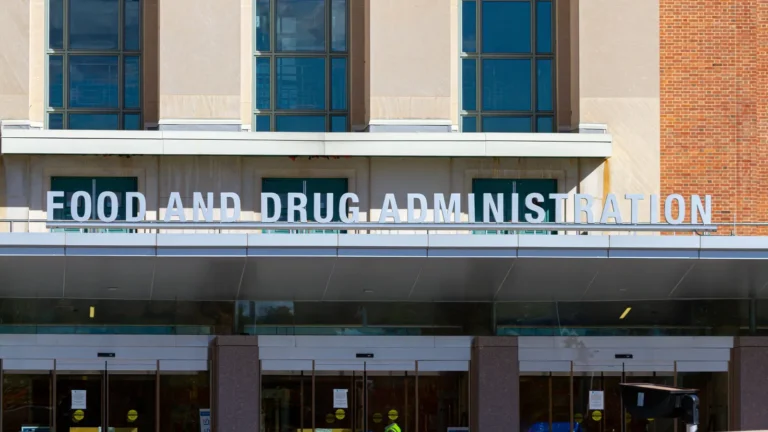
The U.S. Food and Drug Administration (FDA) has taken a proactive stance on this issue. Recognizing that generative AI presents "unique risks" compared to traditional software, the agency recently opened a call for public feedback on how to best regulate these adaptive technologies. The challenge for the FDA is to foster innovation without compromising patient safety. Regulators are particularly concerned with how models are trained, how they are validated, and how they handle the "black box" nature of AI decision-making.
The Future of Clinical Practice
The implications of the GE-Mass General Brigham project extend far beyond radiation oncology. If this model proves successful, it could serve as a blueprint for other medical specialties. The ability to ingest unstructured clinical notes and align them with structured diagnostic data is a universal challenge across cardiology, neurology, and surgery.
Furthermore, this project highlights the "human-in-the-loop" requirement for the next decade of medicine. The AI does not replace the oncologist; it provides the oncologist with a synthesized "briefing" of the patient’s status. This change in the clinical workflow suggests that the medical education of the future will need to include data literacy and AI-interaction skills alongside traditional anatomy and pharmacology.
Addressing Data Privacy and Security
As the partnership moves forward, the focus will inevitably turn to the security of the data being fed into the AI models. Given the sensitivity of cancer treatment records, the collaboration must adhere to the highest standards of HIPAA compliance and cybersecurity. The use of cloud-based AI tools requires robust encryption and a clear understanding of data sovereignty—ensuring that the insights gained by the AI do not compromise the privacy of the individuals they are intended to help.
Conclusion: A New Era of "Intelligent" Healthcare
The collaboration between GE HealthCare and Mass General Brigham is a testament to the potential of generative AI to solve systemic problems in healthcare. By moving from the conceptual to the practical, the partners have demonstrated that the greatest benefit of AI lies in its ability to organize the "chaos" of modern clinical information.
As the industry watches to see how this project evolves, the lessons learned—both in terms of clinical workflow efficiency and regulatory compliance—will be invaluable. We are entering an era where the speed of medical innovation is no longer limited by the technology itself, but by our ability to integrate it responsibly into the patient’s journey. If the success of the initial workflow project is any indicator, the future of radiation oncology will be defined by systems that are not just faster, but fundamentally more intelligent, ensuring that every patient receives care that is as precise as the data allows.