









Published October 26, 2026
In the modern yoga studio, we often fall into the trap of viewing postures as static, frozen monuments. We treat them as destinations—goals to be reached and held—rather than fluid expressions of human potential. This perspective, perhaps inadvertently encouraged by the very term "posture," ignores the organic reality of the body in motion. To deepen our understanding of our practice, we must look back at the wisdom of the past, specifically the foundational teachings of the 1990s that challenged us to view asanas as "streams" of movement.
This exploration of Utthita Hasta Padangusthasana (Extended Hand-to-Big-Toe Pose) draws from the Yoga Journal archives of March-April 1996, offering a timeless framework for practitioners to move with intention, precision, and grace.
The Philosophy of "Acture"
To accurately evoke the vitality of a movement, movement pioneer Moshe Feldenkrais famously coined the term "acture." Unlike a static posture, an acture possesses four essential qualities: an absence of effort, regardless of the energy expenditure; a total absence of resistance, or acting "against ourselves"; the inherent presence of reversibility, meaning the movement can be paused or reversed at any moment without a change in attitude; and, crucially, the ease of the breath.
By applying the concept of the "acture" to our standing sequences, we transform our practice from a mechanical drill into a conscious, living dialogue with gravity.
Chronology: The Journey of the Asana
All standing postures, including Utthita Hasta Padangusthasana, follow a specific, rhythmic cycle that begins and ends in Tadasana (Mountain Pose).
1. The Point of Origin (Tadasana)
Tadasana is the jumping-off point and the ultimate terminus of all standing work. It is a condition of equilibrium where the skull, rib cage, and pelvis are aligned along the central line of gravity. Establishing this foundation is not merely about standing still; it is about establishing a state of poised awareness that persists even as we move into more complex shapes.
2. The Middle Phase: The Transition
Most practitioners fixate on the "peak" of the pose—the moment the leg is fully extended. However, the true value of the asana lies in the transition. Success in this phase depends on our willingness to remain alert, receptive, and enthusiastic during the passage, rather than rushing toward the destination. If we lose our breath or our focus during the transition, the "acture" is lost.
3. The Return
After exploring the intensity of the extended position, we recoil back to our home base. This return is not a collapse, but a controlled, conscious movement that re-establishes the fundamental awareness we cultivated in the beginning.
Supporting Data: The Mechanics of Standing
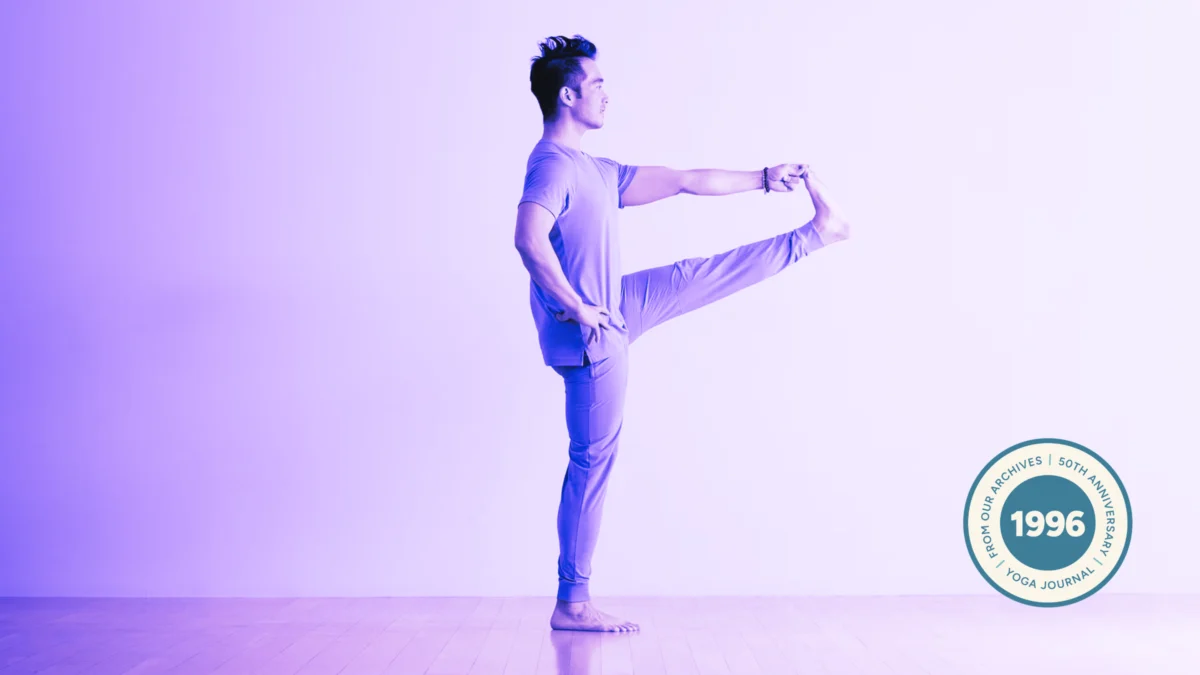
Utthita Hasta Padangusthasana—the "elevated hand-and-big-toe posture"—is a rigorous test of strength and balance. It asks the practitioner to stand on one leg while holding the other, parallel to the floor, creating a demanding chain of stability.
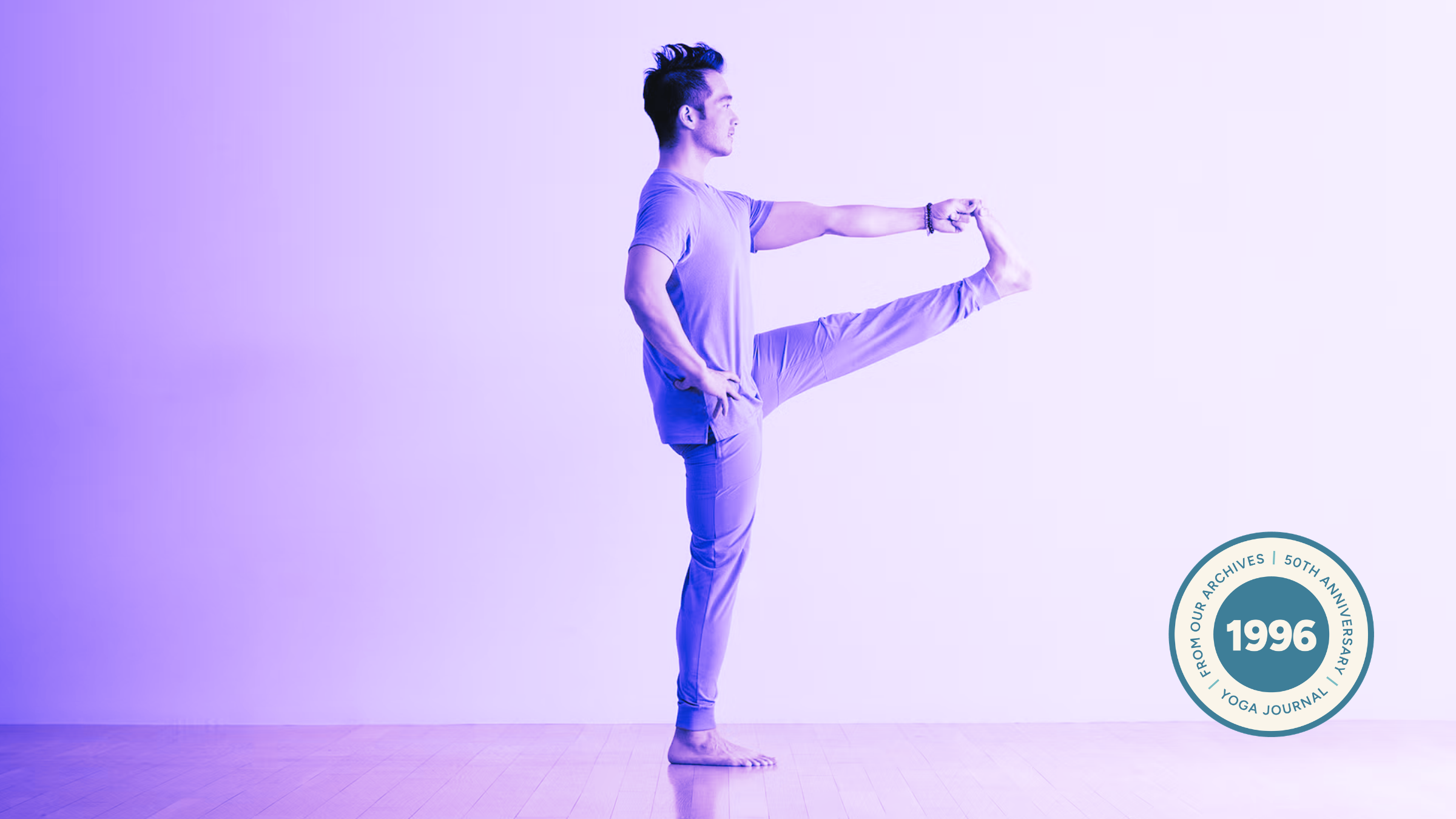
The Foundation: The Foot and Ankle
Before engaging the core or the hamstrings, we must address the foot. The sole acts as a shock absorber, connecting us to the earth through three distinct points: the base of the big toe, the base of the little toe, and the center of the heel.
- The Vault: These three points form a vault. To prevent pronation (the "flat foot" collapse), one must visualize the heel as a wheel spinning counterclockwise (for the right foot) or clockwise (for the left).
- The Ankle: Often mistaken for the "knobs" on the side of the leg (the tibia and fibula), the true ankle is the talus, the bone that transmits weight to the foot. A misaligned ankle destabilizes the entire kinetic chain. By visualizing a "string and pulley" system—connecting the big toe to the inner malleolus and up to the tibia—we can stabilize the ankle and strengthen the entire leg.
Preliminary Exercises: Training the Ground
To master the balance required for Utthita Hasta Padangusthasana, practitioners should engage in specific preliminary conditioning. Using a sandbag or firm support to lift the balls of the feet while keeping the heels on the floor helps the practitioner learn to "stand their ground."
By swaying over the feet and sensing the six points of contact (three on each foot), we wake up the skin of the soles. As B.K.S. Iyengar once noted, the seed of self-awareness starts from the skin on the soles of the feet. Integrating these exercises—which trace back to movement experts like Mabel Todd and Barbara Clark—is essential for building the confidence required to lift one leg while remaining centered.
Implications for Practice
The pursuit of Utthita Hasta Padangusthasana carries significant implications for long-term health and functional mobility.
Physical Benefits
- Musculoskeletal Strengthening: The pose builds significant strength in the legs, ankles, feet, and the lower back.
- Flexibility: It provides a deep, targeted stretch for the hamstrings, calves, and Achilles tendons.
- Proprioception: By demanding a single-leg stance, it drastically improves balance and body awareness.
Addressing Common Errors
Many practitioners struggle with "cross-eyed" knees—where the kneecap rolls inward. To correct this, align the center of the kneecap with the center of the ankle and engage the quadriceps to lift the patella toward the hip joint.
Furthermore, the "fear of falling" often leads to clutching the floor with the toes. To avoid this, keep the toes soft and spread. If the pelvis tilts or the standing leg bends, it is an indication that the hamstrings require further preparation. In such cases, using a chair to support the raised leg is not a sign of "failure," but a sophisticated tool for refining the alignment of the pelvis and spine.
Expert Guidance: Step-by-Step Execution
When preparing for the full expression of the pose, follow this hierarchy of progression:
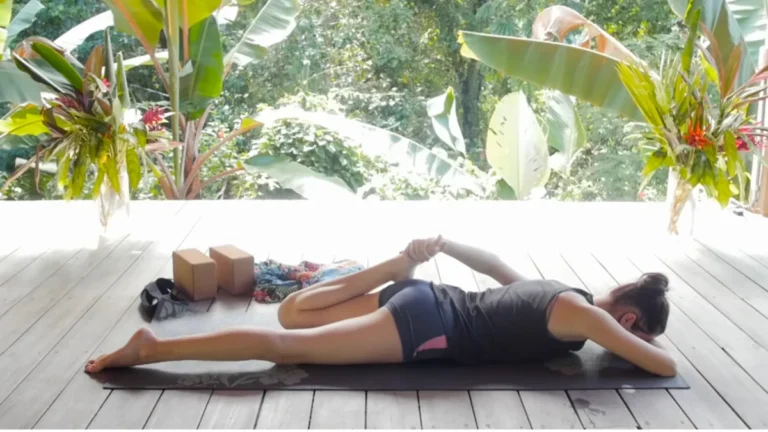
- Supta Padangusthasana (Reclining): Rehearse the movement on your back. Use a strap to find the length of the leg without the burden of gravity.
- Supported Vertical Practice: Use a chair to support the lifted leg. Focus on keeping the pelvis neutral. If the right hip hikes, soften the outer left hip and firm the inner left thigh.
- Wall-Supported Practice: Lean against a wall to gain confidence, using a strap to catch the foot. This allows the practitioner to find the vertical alignment of the spine before venturing into the open space of the room.
- The Full Asana: Only when the internal sense of ease and "acture" is present should the practitioner attempt the full version without support.
Final Reflection
Physical performance is merely the outer shell of the practice. The true measure of Utthita Hasta Padangusthasana is the quality of awareness brought to the movement. As we navigate the complexities of the pose, we must remain committed to the inner sense of effortlessness, self-acceptance, and composure. Whether we are using a strap or performing the full, unsupported expression, the goal remains the same: to stand with clarity, from the inception of the movement through its final, graceful return to the stillness of Tadasana.
By treating our yoga as a continuous stream of movement rather than a collection of rigid shapes, we honor the intelligence of the body and invite a deeper, more sustainable vitality into our daily lives.