







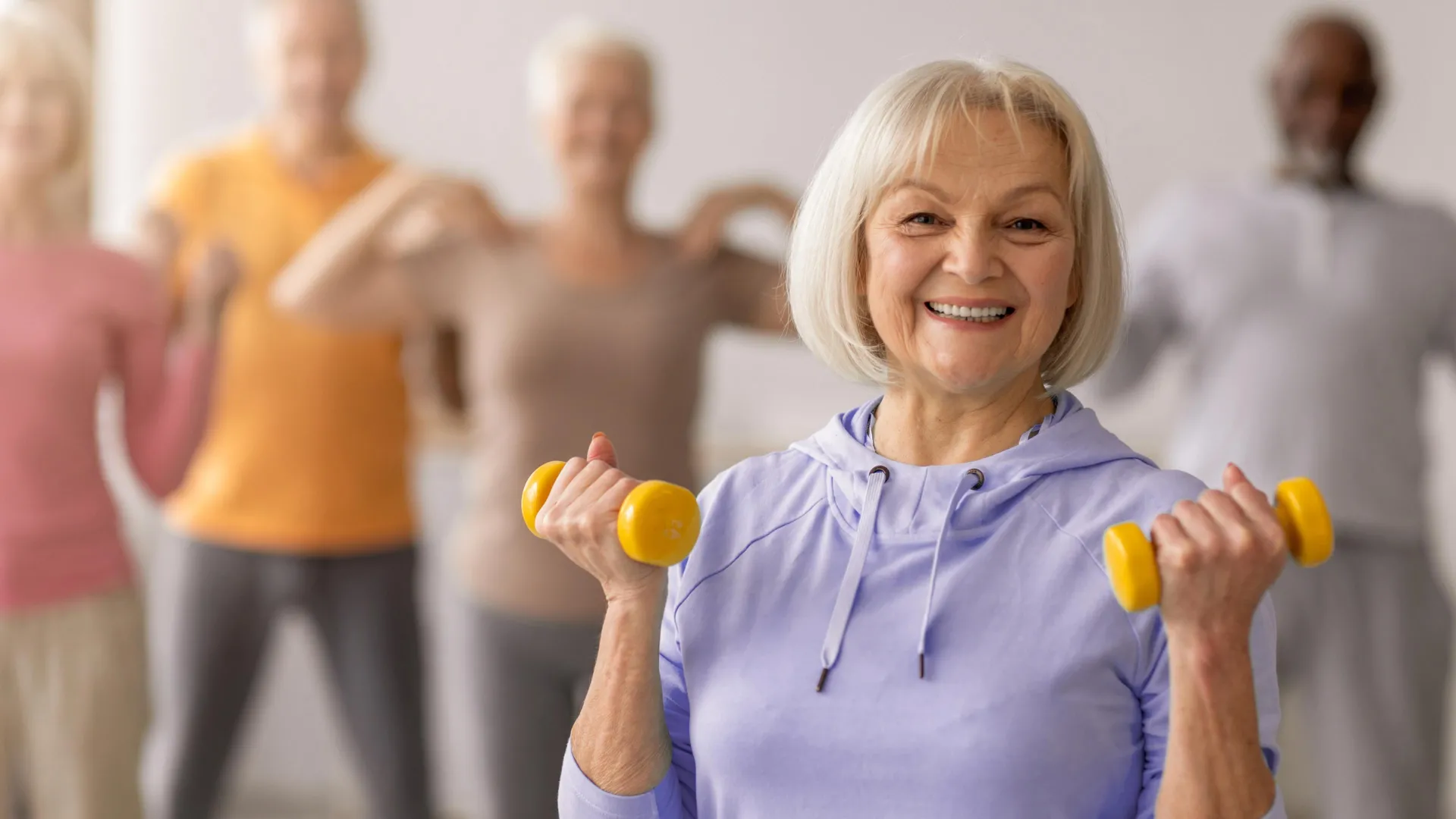
For many, the word "exercise" conjures images of grueling hour-long gym sessions, heavy weights, and exhausting cardio. For the millions of adults aged 65 and older, this traditional view of fitness serves as a significant barrier. However, groundbreaking research from the Penn State College of Medicine is shattering the myth that meaningful physical improvement requires a massive time commitment. A new study reveals that a daily, four-minute strength training routine can lead to significant improvements in balance, mobility, and overall physical independence.
Main Facts: The Power of the Four-Minute Routine
The study, published in the journal PLOS One, investigated the efficacy of the "Functional Activity Strength Training" (FAST-2) program. Researchers recruited 97 participants, with an average age of 74, to determine if an ultra-short, daily resistance training regimen could yield measurable health outcomes.
The core of the FAST-2 program is remarkable for its brevity: four simple, functional movements performed for 30 seconds each, separated by 30-second rest intervals. The entire session lasts exactly four minutes. The exercises—specifically designed to mimic the movements required for daily living—include:
- Squats (or chair stands): Essential for rising from furniture.
- Push-ups: Targeted at upper-body strength for pushing and reaching.
- Step-ups: Designed to improve stability and climbing ability.
- Resistance band exercises: Focused on building functional muscle mass.
The results were striking. After just 12 weeks of consistent, four-minute daily sessions, participants showed measurable improvements in their ability to rise from a chair and maintain balance—two of the most critical indicators of long-term health and fall risk.
Chronology: From Concept to Clinical Proof
The development of the FAST-2 program did not occur in a vacuum; it was the culmination of years of inquiry into why older adults struggle to maintain consistent exercise habits.
The Preliminary Phase (FAST-1):
The research team first conducted a smaller pilot study known as FAST-1. In this initial phase, 24 older adults performed just 30 seconds of push-ups and squats daily. After six months, the participants displayed notable improvements in their squatting mechanics. This proved that even the most minimal dose of exercise could trigger a physiological response.
The Design Phase:
Following the success of FAST-1, the Penn State team sought to standardize a more comprehensive routine. They recognized that the complexity of modern exercise prescriptions—how many sets, how many reps, how much rest—often leads to "exercise paralysis," where individuals, overwhelmed by the logistics, choose not to start at all.
The Trial Phase (FAST-2):
In the primary study, 97 participants were divided into an intervention group and a control group. Before the intervention, the average participant reported only 18 minutes of physical activity per week, falling drastically short of the 150-minute recommendation by public health organizations. Participants were provided with simple, inexpensive tools: elastic resistance bands and a height-adjustable stepper. They were taught how to perform exercises at their own level, with modifications like wall push-ups for beginners, ensuring that the barrier to entry remained low while allowing for "progressive overload"—the gradual increase in difficulty as strength improves.
Supporting Data: Why Small Gains Matter
The data gathered over the 12-week period serves as a powerful testament to the body’s adaptability. While the improvements in strength and balance were statistically significant, their real-world value is even greater.
According to the Centers for Disease Control and Prevention (CDC), falls are a leading cause of accidental death and injury among those 65 and older. The metrics used in the study—such as the speed of rising from a chair and the ability to balance on one leg—are not just academic data points; they are clinical predictors of future health.
When an individual loses the ability to rise from a chair without assistance, their world shrinks. They become more reliant on caregivers, their social life diminishes, and their risk of injury skyrockets. By improving these functional metrics, the researchers argue they are doing more than just increasing muscle mass; they are effectively extending the "healthspan" of the participants.
Furthermore, the consistency rate of the participants was a highlight of the study. Participants completed their daily four-minute routine on 81% of the days throughout the study. This high adherence rate suggests that the brevity of the program is its "secret sauce." When an exercise routine fits easily into a morning routine—or even a commercial break—it ceases to be a chore and becomes a sustainable lifestyle habit.
Official Responses and Expert Perspective
Dr. Christopher Sciamanna, professor of medicine and public health at Penn State College of Medicine and lead author of the study, believes these findings are a wake-up call for the medical community and the public alike.
"The human body is designed to improve very quickly," says Dr. Sciamanna. "Just a few repetitions of an exercise performed regularly can lead to huge improvements. Exercise is about forward-thinking—think about what you want to be able to do and train for it."
Dr. Smita Dandekar, co-author and associate professor of pediatrics at Penn State, highlights the psychological hurdles of exercise. "Exercise is actually really complicated because you have to decide how many repetitions, how far, how many sets, how much rest, and how many times per week," she explains. "It’s hard work, so there’s huge problems with people wanting to do exercise. If we can make it short, we’re part way there."
The researchers emphasize that "exercise" should not be viewed as an intimidating project, but as a series of movements that support the activities one values in daily life. Whether it is gardening, playing with grandchildren, or simply navigating a flight of stairs, the four-minute routine is a bridge to maintaining those abilities.
Implications: A New Framework for Longevity
The implications of the FAST-2 study are vast. In a healthcare environment where chronic disease and age-related decline place an immense burden on both individuals and systems, low-cost, low-time interventions are the "holy grail" of preventive medicine.
1. Reducing the Burden on Care Facilities
By focusing on strength and balance, the program targets the two primary reasons for admission to long-term care facilities: loss of mobility and fall-related injuries. If a four-minute daily habit can delay or prevent the need for assisted living, the economic and personal quality-of-life benefits are immeasurable.
2. Democratizing Fitness
Conventional exercise often requires expensive gym memberships, specialized equipment, or private trainers. The FAST-2 model uses simple resistance bands and household items, making it accessible to those living in rural areas, those on fixed incomes, and those with limited access to fitness facilities.
3. Shifting the Narrative
Perhaps the most significant implication is the shift in the narrative around aging. For decades, the message has been that "more is better." This study suggests that "consistent is better." By lowering the threshold for what constitutes a "successful" workout, the researchers have created a blueprint for an aging population that feels empowered rather than intimidated by the prospect of physical activity.
4. A Philosophy of Freedom
Dr. Sciamanna’s closing sentiment strikes at the core of the study’s intent: "Exercise is the key to freedom. Freedom is the ability to be able to do what you want to do. I approach exercise by thinking of what I want to be able to do in 20 years, and then I train to do that."
This research confirms that the path to longevity does not necessarily require a marathoner’s discipline. It requires only four minutes of purposeful movement, a pair of resistance bands, and the foresight to invest in one’s future self. As the global population continues to age, these findings offer a pragmatic, scalable, and deeply empowering solution for preserving the most precious commodity of all: independence.
Research Contributors:
The study involved an extensive multi-disciplinary team, including Smita Dandekar (Penn State Health Children’s Hospital), Jordan Kurth, Liza S. Rovniak, Noel Ballentine, Natalia Pierwola-Gawin, Yimeng Shang, and Shouhao Zhou (Penn State College of Medicine). Additional contributors included Jonathan G. Stine (Penn State Health Milton S. Hershey Medical Center), Matthew Silvis, Matthew A. Ladwig (Purdue University Northwest), David E. Conroy (University of Michigan), Kathryn H. Schmitz (University of Pittsburgh), and Margaret Danilovich (Northwestern University).