









Published November 20, 2026
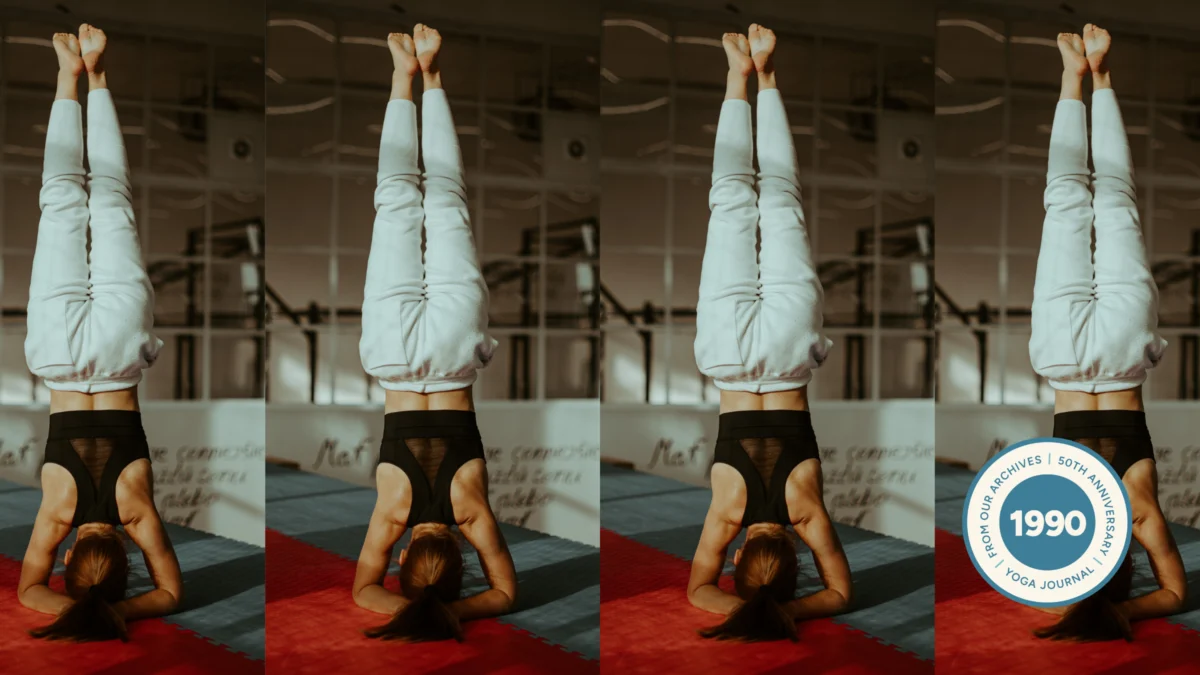
In Yoga Journal’s Archives series, we revisit seminal texts that have shaped the landscape of modern practice. This exploration of Sirsasana (Headstand), originally published in the July-August 1990 issue, remains a cornerstone for understanding the physiological and philosophical depth of inversions.
The Paradox of the Inverted Pose
In the first of his foundational sutras on asana, the sage Patanjali defines the essence of practice: “Sthira sukham asanam,” or “Posture is steady and comfortable.” Yet, for any practitioner who has attempted the gravity-defying challenge of Sirsasana (Headstand), these words often feel like a cruel irony. The shaking limbs, the rush of blood to the temples, and the intense mental focus required to remain upright rarely align with the layperson’s concept of "comfort."
However, the disconnect lies not in the teaching, but in the translation of our physical reality. If "steady and comfortable" were merely a state of physical relaxation, the couch potato would be the ultimate yogi. Patanjali’s instruction demands something far more profound: a nervous system tuned to balance, and a posture that facilitates, rather than restricts, the flow of energy.
The Etymology of Stability: Understanding Sthira
The Sanskrit term sthira is derived from the root tha, meaning "to stand." It is the etymological ancestor of the English words "stay," "stable," and "steady." In the context of the Yoga Sutras (I-13), Patanjali links sthira to abhyasa—the practice of stabilizing the "mindfield."
Pandit Usharbhud Arya, in his influential commentaries, notes that meditation is the process of bringing the mind to a state of stillness, free from the turbulent oscillations of rajas (activity) and tamas (inertia). For the hatha yoga practitioner, the challenge is binary: How do we use the physical architecture of the body to stabilize the mind, and how can a steady mind, in turn, refine the physical posture?
Physiological Mechanics: The Six Diaphragms
To unlock the true potential of Headstand, we must move beyond simple muscle strength and look toward the body’s internal "pumping stations." The body’s respiratory and circulatory rhythms are dictated by the expansion and contraction of its three primary cavities: the pelvic-abdominal, the thoracic, and the cranial.
In a state of "steady and comfortable" practice, the body functions as a harmonious whole. Tension, however, acts as a barrier, disrupting the flow of breath and blood. This tension is often stored in what yoga scholars refer to as the "Six Diaphragms"—functional relay stations that oversee the movement of fluids and energy:
- The Brain (Skull) Diaphragm
- The Throat
- The Heart
- The Respiratory Diaphragm
- The Navel
- The Pelvic Floor
While these are not all muscular diaphragms in the anatomical sense, they function as rhythmic pumps. When the pelvic floor is open and the respiratory diaphragm is free, the skull feels spacious. When they are constricted—often due to fear of falling or misaligned shoulders—the brain diaphragm enters a state of "pressurization," leading to the congestion and discomfort common in novice practitioners.
Chronology of Practice: From Foundation to Equilibrium
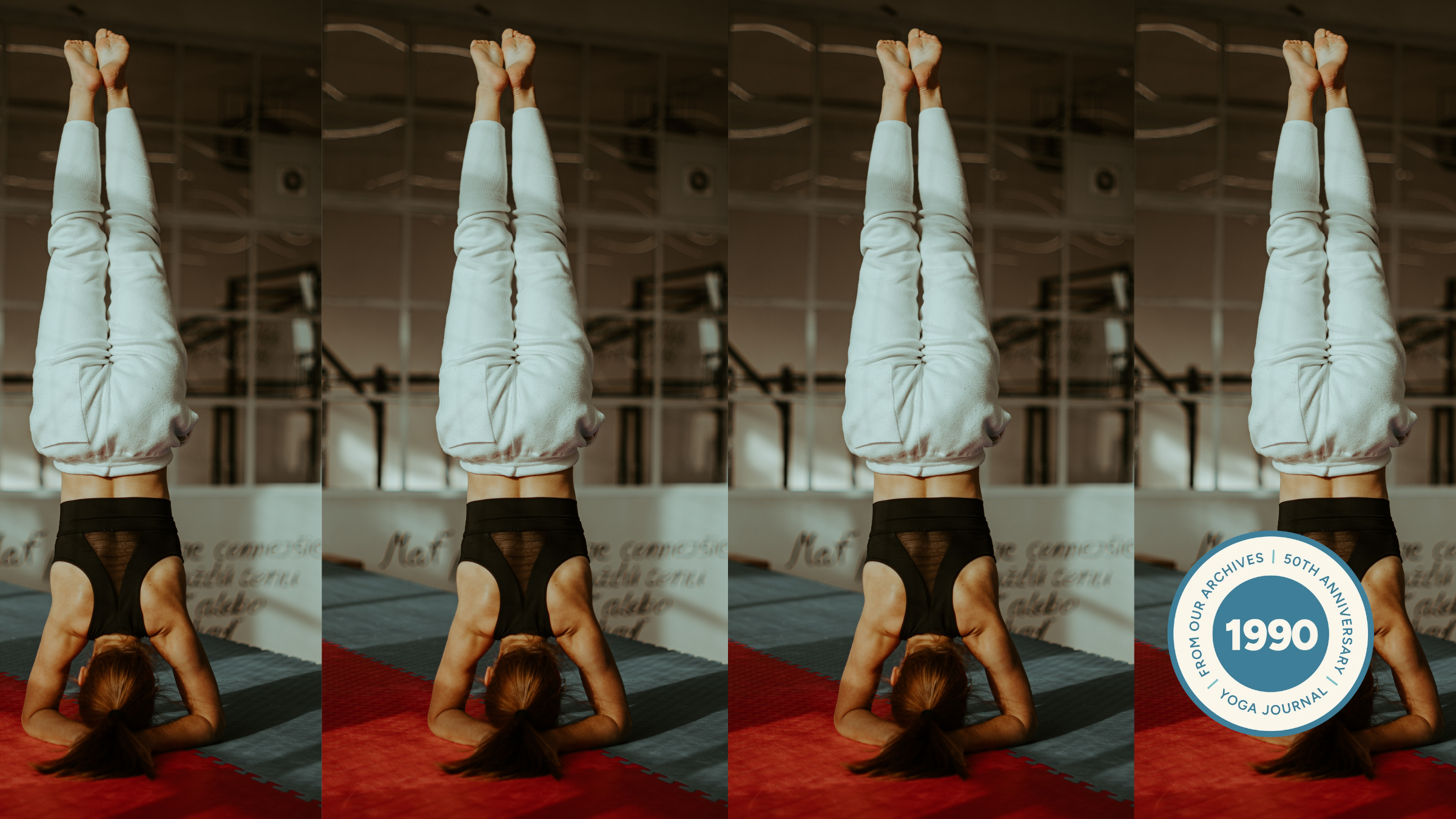
The path to a mature Headstand is not a leap, but a deliberate construction of skeletal alignment.
- Phase 1: The Preparatory Foundation. Before attempting to invert, one must master Adho Mukha Svanasana (Downward-Facing Dog) and various standing poses. These build the requisite intelligence in the shoulders, arms, and legs.
- Phase 2: The Structural Setup. Proper foundation requires the forearms to be exactly shoulder-width apart, with fingers interlocked. The wrists must remain perpendicular to the floor, preventing the "collapse" that leads to neck injury.
- Phase 3: The Lifting Action. The common "inverted banana" posture—where the lumbar collapses and the legs fall behind the midline—is a symptom of poor engagement. The shoulders must actively lift away from the ears, and the inner groins must extend to stabilize the pelvis.
- Phase 4: Integration. In the final stage, the bones align with gravity. With the pelvic floor and brain diaphragms functioning in opposition—the "inhale" of the torso matched by the "exhale" of the cranium—the pose becomes truly sthira and sukham.
Supporting Data: The Impact of Pressure
When we force a body into an inverted position without proper muscular support, we increase internal pressure. The brain is uniquely sensitive to this. One can simulate the negative effects of poor posture by closing the mouth and nostrils while attempting to exhale. This immediate spike in cranial pressure mimics the congestion felt by students who collapse into their shoulders during Headstand.
Research into these patterns highlights that when the groin is restricted, the pelvic floor cannot "breathe." This stagnation prevents the diaphragm from moving effectively, forcing the skull to compensate. Conversely, when the groins are open and the legs are vibrant, the pelvic diaphragm supports the torso, alleviating the pressure on the neck and brain.
Official Guidance and Safety Protocols
The practice of Sirsasana should never be a test of endurance at the expense of safety.
- Beginner Warning: If eyes become bloodshot, or if extreme pressure is felt in the ears, the pose is being executed with harmful misalignment. Immediate release is required.
- The Role of Mentorship: The 1990 guidance from instructors like Ramanand Patel emphasizes that the "lifting action" is significantly more important than the ability to balance. Beginners should utilize corner walls to prevent tilting and to focus on the extension of the spine.
- Skeletal Alignment: Figure 4 (in original archives) illustrates the ideal vertical alignment of the arches, knees, hips, and shoulders. When these are stacked, the bones support the body weight, and muscular effort is reduced to a minimum.
Implications: Yoga as a Catalyst for Global Awakening
As we move through the final years of the 20th century, the pursuit of sthira and sukham takes on a broader significance. Yoga is not merely a method of physical fitness; it is a laboratory for consciousness.
The state of samadhi—the ultimate goal of yoga—is said to begin where steadiness and comfort meet. By refining our ability to find stillness within the most challenging postures, we cultivate a template for how to live in the world. As we look toward the future, the integration of wisdom, compassion, and ecological stewardship becomes an extension of our internal practice.
If we can stabilize our own internal "diaphragms," we contribute to a more harmonious external environment. The mastery of the Headstand is, therefore, a microcosmic act of planetary alignment. When the practitioner finds that perfect balance between gravity and grace, they do not just stand on their head; they stand as a witness to the interconnectedness of all life.
Key Takeaways for the Practitioner
- Foundation First: Never rush the journey to the center of the room. Stability in the forearms and shoulders is non-negotiable.
- The Breath is the Barometer: If the breath is strained, the pose is compromised. Use the respiratory cycle to gauge the "quality" of your inversion.
- Leg Intelligence: The legs are not just dead weight; they are the anchors. Extend through the bones while keeping the muscles vibrant.
- The Goal is Stillness: Move beyond the physical mechanics to find the "pacific, smooth stream" of the mind.
This article serves as a reminder that the depth of one’s practice is measured not by the complexity of the pose, but by the clarity of the mind held within it.