






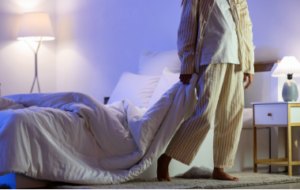



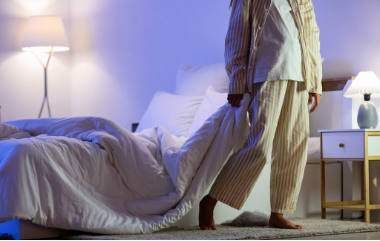
While the majority of the population enjoys a period of restorative, stationary slumber, a significant subset of individuals experiences the night as a landscape of motion, action, and, frequently, physical peril. For those living with parasomnias—a category of sleep disorders characterized by abnormal behaviors during sleep—the boundary between the dream world and reality often dissolves. These disorders, which involve actions performed without conscious awareness, can turn the sanctuary of the bedroom into a site of falls, fractures, and accidental self-harm.
As medical understanding of these conditions evolves, the focus has shifted from mere observation to active risk mitigation. From sleepwalking to the violent physical manifestations of REM sleep behavior disorder, these nocturnal phenomena pose genuine safety concerns that demand professional medical attention and home environmental modifications.
Main Facts: The Nature of Parasomnias
Parasomnias are defined as undesirable physical events or experiences that occur during entry into sleep, within sleep, or during arousal from sleep. Because these events occur while the individual is not fully conscious, they fall outside the realm of voluntary control. The two most clinically significant conditions linked to high injury risk are sleepwalking (somnambulism) and REM sleep behavior disorder (RBD).
Sleepwalking: Navigating While Asleep
Sleepwalking typically occurs during deep, non-REM sleep. An affected individual may rise from bed, walk through the home, and engage in complex tasks such as dressing, eating, or even leaving the house. Because the sleepwalker is not fully alert, their spatial awareness is severely compromised. They may collide with furniture, lose their balance on staircases, or attempt to exit through windows or exterior doors, often with catastrophic results.
REM Sleep Behavior Disorder: The Body Without a Filter
Under normal physiological conditions, the body enters a state of "atonia" during Rapid Eye Movement (REM) sleep, effectively paralyzing the voluntary muscles to prevent the physical acting out of dreams. In individuals with RBD, this mechanism fails. Consequently, the brain’s motor commands are executed by the body, leading to vivid, often violent dream-enactment. Unlike sleepwalking, where the individual is essentially "on autopilot," RBD patients are often reacting to intense, often threatening, dream content.
Chronology of Recognition and Clinical Evolution
The medical history of parasomnias has transitioned from folklore and anecdotal reports to a rigorous scientific field of study.
- 19th and Early 20th Centuries: Historically, sleepwalking was often treated as a psychological curiosity or a symptom of hysteria. Documentation was largely confined to asylum records and psychiatric case studies.
- 1960s–1980s: The development of polysomnography (overnight sleep studies) allowed researchers to correlate brain wave activity with physical movement. This era established that sleepwalking was a disorder of arousal rather than a dream-related phenomenon.
- 1986: A landmark paper by researchers at the University of Minnesota formally identified and characterized REM sleep behavior disorder, differentiating it from other nocturnal movements like nightmares or night terrors.
- Present Day: Modern sleep medicine now integrates high-definition video monitoring with neuro-imaging, allowing specialists to differentiate between parasomnias and nocturnal seizures, which can mimic sleep-related movements.
Supporting Data: The Statistics of Nighttime Trauma
The risks associated with parasomnias are not merely theoretical; they are backed by clinical data that underscore the necessity for intervention.
In a seminal study involving 100 patients referred to a specialized sleep disorders center due to recurrent nighttime injuries, the clinical picture was sobering. The vast majority of these patients were diagnosed with either parasomnias or RBD. The injuries reported were not limited to minor scrapes; they included:
- Fractures and dislocations: Often resulting from falls down stairs or impacts with hard surfaces.
- Lacerations: Sustained from collisions with glass, furniture, or kitchen implements.
- Head trauma: Concussions and blunt force injuries.
Perhaps most concerning is the impact on bed partners. A study published in the journal Brain revealed that 64% of bed partners of patients with RBD had been injured during the patient’s episodes. These injuries included punches, kicks, and even attempted strangulation. The prevalence of these injuries is often underestimated, as many patients only seek medical intervention after a severe, life-altering event occurs.
Sleep-Related Eating Disorder: A Hidden Hazard
Beyond the standard definitions of parasomnias, researchers are increasingly focused on Sleep-Related Eating Disorder (SRED). In this condition, individuals prepare and consume food while in a state of partial arousal. The risks here are twofold:
- Direct Injury: The use of knives, kitchen appliances, or the handling of boiling water while not fully awake creates a high risk for lacerations and severe burns.
- Toxic Consumption: Reports indicate that individuals with SRED have consumed inedible, spoiled, or toxic substances, leading to poisoning or internal gastrointestinal damage.
Because the kitchen is often far from the bedroom, the risk of injury extends to the entire home. Families are advised to treat the home as a holistic safety environment rather than focusing exclusively on the bedroom.
Official Responses and Medical Recommendations
The consensus among sleep specialists is that while a "safe room" is an essential temporary measure, it is not a substitute for comprehensive medical treatment.
The Stance on Restraints
Medical professionals strongly advise against the use of physical restraints, such as tying or strapping a patient to the bed. The reasoning is rooted in safety: if a patient experiences a parasomnia episode, their movements can be erratic and powerful. If they are restrained, these involuntary, thrashing movements can lead to soft tissue injuries, joint dislocations, or panic responses that exacerbate the physical trauma.
The Role of Diagnostics
When a patient presents with recurrent injury, the gold standard of care is an overnight sleep study. During this evaluation, specialists use:
- Polysomnography: To track brain waves, heart rate, and oxygen levels.
- Video Monitoring: To record the physical manifestation of the behavior. This is crucial for distinguishing between RBD, sleepwalking, and nocturnal epilepsy, as each requires vastly different pharmacological or behavioral treatments.
Implications: Building a Safer Nighttime Environment
For families and individuals managing these disorders, immediate environmental modifications can serve as a vital bridge to recovery. Experts suggest a "layered" approach to safety:
- Clear the Floor: Remove loose rugs, electrical cords, and clutter from the bedroom and hallways to minimize the risk of tripping.
- Padding and Protection: For those with frequent, forceful movements, consider placing mattresses on the floor or using foam padding on sharp furniture corners.
- Security Measures: Install alarms on bedroom doors or windows that signal when they have been opened. For those who leave the home, motion-activated sensors in the hallway can alert family members to the activity.
- Kitchen Safety: For those with sleep-related eating disorders, disabling the stove or locking away sharp utensils and toxic substances is a critical, life-saving necessity.
The Path Forward
The prognosis for most patients with parasomnias is positive, provided the condition is diagnosed accurately. Many patients see a significant reduction in symptoms through a combination of medication, sleep hygiene adjustments, and the management of underlying triggers such as stress, sleep deprivation, or alcohol consumption.
However, the medical community emphasizes that the primary implication of these findings is a shift in mindset: nighttime behaviors should never be dismissed as "just sleepwalking." When these actions pose a threat to the individual or their loved ones, they must be treated with the same urgency as any other medical emergency.
By integrating modern clinical diagnostics with practical, home-based safety protocols, patients can reclaim their sleep, ensuring that the night remains a time of rest rather than a time of danger. If you or a family member is exhibiting frequent or forceful nighttime behaviors, the first step is a consultation with a board-certified sleep specialist. Your safety, and the safety of those around you, depends on taking that first step toward diagnosis and care.
Medical review by Margaret Hovda, MD.
This article was created using editorial tools, including AI, as part of the process. Human editors reviewed this content before publication.