








Reviewed by Brian St. Pierre, MS, RD
When GLP-1 receptor agonists—the class of medications including semaglutide (Ozempic) and tirzepatide—first emerged on the mass market, the fitness industry faced an existential tremor. Many health and fitness coaches, whose livelihoods depend on guiding clients toward body composition changes, asked a singular, panicked question: "Is this drug going to steal my job?"
In 2017, when semaglutide first gained attention, the threat felt theoretical. Prescription rates were nominal, and the medication was an abstract concept for most. Fast forward to 2026, and the landscape has transformed: over 1 in 10 US adults are currently utilizing GLP-1 therapy. For the modern coach, these medications are no longer a distant shadow; they are a constant, defining feature of the client-coach relationship.
The Evolution of the Coaching Mindset
The initial fear that GLP-1s would render human coaching obsolete has largely evaporated, replaced by a more nuanced, collaborative reality. Coaches have largely moved away from viewing these drugs as a "band-aid" or an "easy way out." Instead, the industry is pivoting toward an additive model: medication as a biological lever, and coaching as the essential scaffolding required for long-term sustainability.
However, the transition hasn’t been seamless. Coaches remain deeply concerned about the long-term physiological impact on clients, specifically regarding the preservation of lean muscle mass, the potential for nutrient deficiencies due to suppressed appetite, and the danger of bypassing the foundational habit-building that prevents weight regain.
The most critical shift in this field is the refinement of the target market. As Kate Solovieva, Director of Community at Precision Nutrition, astutely observes: "As a coach, you’re not in the GLP-1 world; you’re in the GLP-1 support world."
Identifying the Seven Archetypes of GLP-1 Clients
Coaching readiness is not a fixed state; it is fluid. A client who feels empowered today may feel overwhelmed tomorrow. To navigate this, practitioners must categorize clients based on their current stage in the medication journey.
1. The Honeymooner (Low Readiness)
These clients are early in their journey and experiencing rapid results with minimal side effects. They are "flying high" and often see no reason to invest in coaching.
- Strategy: Avoid the "righting reflex"—the urge to correct their course. Instead, validate their success and plant a seed for future support, positioning yourself as a resource for when they eventually hit a plateau or face new challenges.
2. The Ambivalent Candidate (Low-to-Moderate Readiness)
These individuals are often paralyzed by the decision to start medication. They struggle with the stigma of "taking the easy way out."
- Strategy: Recognize that this is a medical decision, not a coaching one. Help the client articulate their hesitation using tools like the "4 Crazy Questions" to explore the pros and cons of both starting and staying the course.
3. The Ready-to-Quitter (Moderate Readiness)
These clients are seeing weight loss but are suffering from severe nausea, exhaustion, or digestive distress. They are on the verge of abandoning the medication entirely.
- Strategy: Normalize their experience. Offer educational support on diet adjustments—such as smaller, more frequent meals—and encourage them to collaborate with their doctor regarding dosage adjustments.
4. The Muscle-Loss Risk (Moderate Readiness)
These individuals are losing weight, but without sufficient protein or resistance training, a significant portion of that loss is lean muscle tissue.
- Strategy: Focus on objective data. Encourage a DEXA scan to show the client what is happening beneath the skin. Prioritize protein intake (25–40g per meal) and scalable strength training to preserve metabolic health.
5. The Under-Fueler (Moderate-to-High Readiness)
For these clients, the medication has suppressed appetite so effectively that they have stopped eating entirely.

- Strategy: Screen for disordered eating. If the client is clear of active pathology, implement an "eating schedule" to ensure they receive adequate nutrients, even in the absence of hunger cues.
6. The Graduate (High Readiness)
These clients are ready to wean off the medication. They are often vulnerable to the "yo-yo" effect of weight regain.
- Strategy: Focus on the transition. The goal is to ensure the habits built while on the medication—protein intake, lifting, sleep—are so ingrained that they continue even after the chemical support is removed.
7. The Priced-Out (High Readiness)
These individuals are forced off the medication due to insurance changes or cost. They often feel a sense of personal failure.
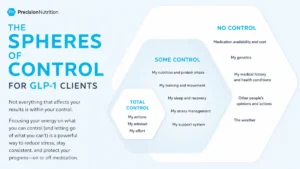
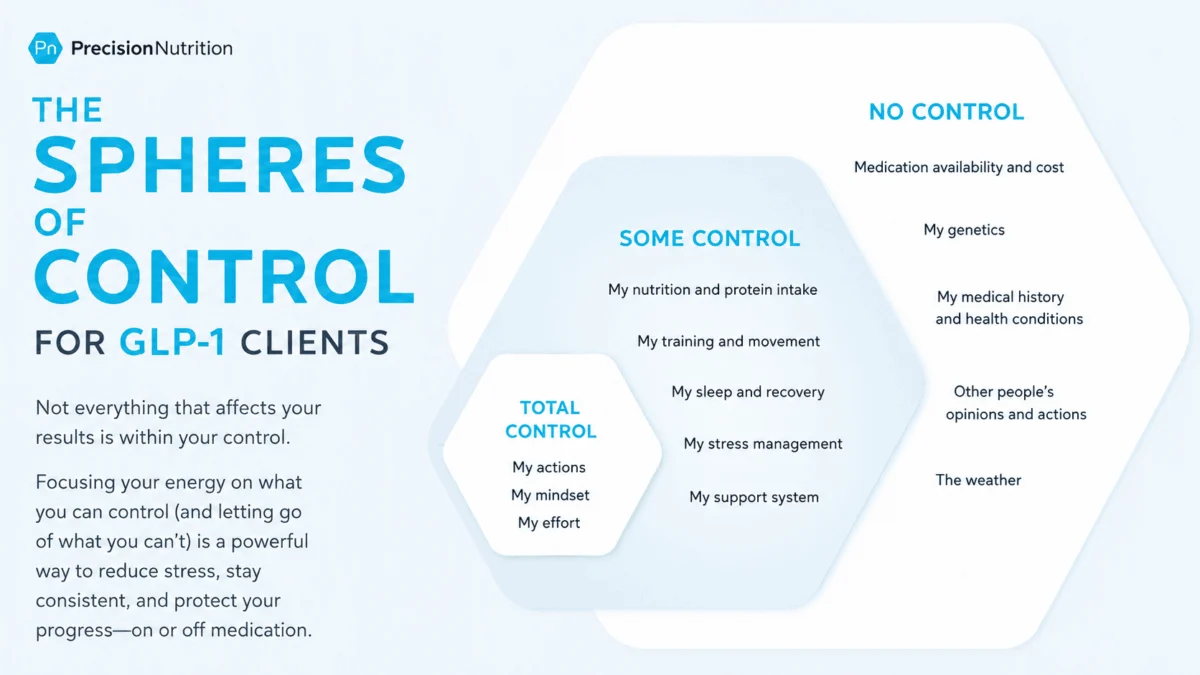
- Strategy: Reframe the situation. Emphasize that this is a systemic failure, not a personal one. Use the "Spheres of Control" exercise to refocus their energy on the behaviors they can still influence.
The Science of Sustainability
The data on GLP-1s is clear: without behavioral intervention, the majority of weight lost is regained within 18 months of cessation. However, the outcomes shift dramatically when those months on medication are used to build "neural ruts"—the lasting pathways of habit.
According to data cited by experts, clients who integrate and sustain healthy nutrition and exercise behaviors while on medication are four times more likely to maintain a 10 percent or higher weight loss after stopping the drug.
The Implications for Professional Practice
The role of the coach in 2026 has become increasingly complex. It is no longer enough to provide a workout plan; a coach must now act as a navigator through medical, emotional, and systemic challenges.
This requires a departure from "one-size-fits-all" coaching. Practitioners must now master:
- Medical Literacy: Understanding when a side effect is common and when it is a "red flag" requiring a physician’s intervention.
- Motivational Interviewing: Helping clients resolve their own ambivalence rather than dictating solutions.
- Nutritional Strategy: Managing extreme appetite suppression through tactical food intake rather than caloric restriction.
Official Stance and Future Outlook
Professional organizations are increasingly recognizing that obesity is a chronic, physiological condition. Consequently, the medical community is moving toward long-term therapy models. For the coach, this means that the "finish line" of a 12-week program is no longer relevant. Success is now measured in the durability of a client’s identity.
As Coach Toni Bauer notes, "Ideally, your client will have embraced the identity of a ‘new person.’ I am the person who eats protein at every meal. I am the person who does resistance training because it builds the tissue I need to age well."
The industry is currently formalizing this support through specialized education. Certifications such as the GLP Coaching Institute are emerging to standardize the intersection of pharmacological support and behavioral science, ensuring that as more of the population utilizes these medications, they are accompanied by professionals equipped to foster long-term health rather than temporary, medication-dependent results.
Conclusion: The New Promise
The modern coach cannot promise that a client will never regain weight, nor can they guarantee a specific number on the scale. But they can promise something more valuable: a roadmap.
By helping clients use the time afforded by medication to build foundational habits, coaches are effectively "setting the ruts" in the trail. When the medication is no longer there, those ruts remain, providing a path forward that the client can walk on their own. In this new era, the coach’s value has not been stolen; it has been elevated. We are no longer just trainers of movement; we are architects of the habits that sustain a human life.