








For decades, a diagnosis of metastatic pancreatic cancer has been synonymous with a grim prognosis. Often described as a "silent killer," the disease frequently evades detection until it has already metastasized, leaving patients with limited, often ineffective options. For those diagnosed between 2015 and 2021, the statistics were haunting: approximately 97% of patients did not survive beyond five years.
However, a monumental shift in oncology is underway. A new targeted therapy, daraxonrasib, has emerged as a potential game-changer, successfully dismantling the "undruggable" nature of the disease’s primary genetic driver. By effectively silencing the protein responsible for tumor growth, this drug is nearly doubling survival rates and offering a glimmer of hope where, until now, there was almost none.
The Anatomy of a Medical Milestone: Main Facts
Pancreatic cancer is notoriously resilient, largely because it lacks clear, early-warning symptoms. By the time patients present with jaundice or abdominal pain, the cancer has typically breached the confines of the pancreas and infiltrated distant organs.
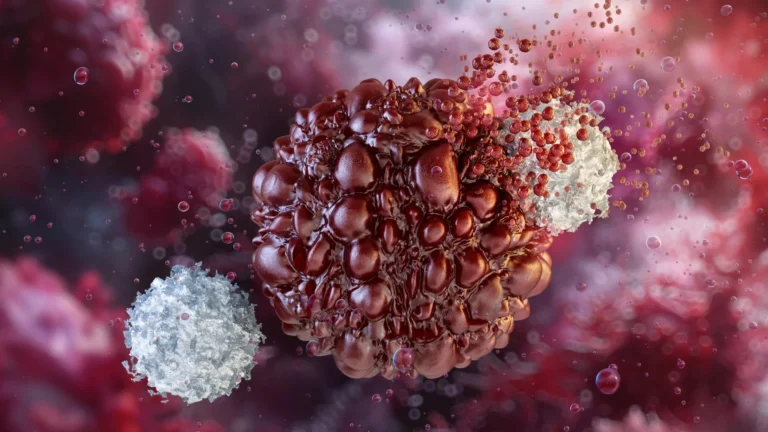
The breakthrough lies in a novel mechanism of action. Unlike traditional chemotherapy, which acts as a "blunt instrument" by attacking all rapidly dividing cells—thereby causing significant collateral damage to healthy tissue—daraxonrasib is a precision-engineered molecule. It targets the KRAS gene mutation, which is present in over 90% of all pancreatic tumors. This gene acts as a faulty cellular switch, locked in the "on" position, forcing cells to multiply uncontrollably. While scientists long believed the surface of the KRAS protein was too smooth to be targeted, daraxonrasib bypasses this by binding to cyclophilin A, a helper protein that facilitates the final 3D structure of the KRAS protein. Once attached, it renders the cancer’s "growth switch" inert.
A Chronology of Discovery: From "Undruggable" to Clinical Reality
The journey to this discovery has been one of the most arduous in modern medicine.
- The Decades of Stagnation: For years, the KRAS mutation was labeled "undruggable" by the global scientific community. The protein lacked the molecular pockets necessary for drug binding, leaving researchers dependent on chemotherapy as the only standard of care.
- The Development Phase: Revolution Medicines spent years investigating the interaction between protein folding and tumor signaling. By identifying the cyclophilin A pathway, they moved from theoretical modeling to laboratory testing.
- The Phase 3 Trial (2025–2026): A rigorous Phase 3 clinical trial involving 500 participants with metastatic pancreatic cancer who had previously undergone other treatments was launched to test the efficacy of daily oral administration of daraxonrasib.
- The Data Reveal (May 31, 2026): The trial results were unveiled, showing a massive increase in patient survival and a significant reduction in mortality risk, marking a turning point in gastrointestinal oncology.
Supporting Data: The Quantitative Impact
The evidence provided by the Phase 3 clinical trial is statistically striking. In the study, patients receiving daraxonrasib saw their overall survival period increase from 6.7 months (the standard achieved with existing chemotherapy) to 13.2 months—a near-doubling of life expectancy for patients with advanced disease.
Beyond survival statistics, the data highlights a 60% reduction in the risk of death for patients on the regimen. Furthermore, while the drug is not without side effects—notably a common skin rash affecting 86% of patients, as well as stomatitis and gastrointestinal distress—the clinical data indicates that patients were significantly more likely to remain on the treatment compared to those on chemotherapy. This indicates that the drug’s benefit-to-toxicity ratio is superior to current standards, leading to improved quality of life and reduced pain for many.
Official Perspectives: The Clinical Reality
As a gastrointestinal oncologist specializing in early-phase clinical trials, the arrival of this data represents the realization of a long-held professional aspiration. For years, the medical community watched as patients succumbed to the lack of viable molecular targets.
"We were fighting a battle with our hands tied behind our backs," says one lead researcher. "To finally have a tool that speaks the language of the tumor—that interferes with its specific, mutated signaling pathway—is the dawn of a new era. We are no longer just poisoning the patient to kill the cancer; we are now effectively switching off the engine of the tumor itself."

The industry reaction has been one of cautious optimism. While the regulatory process with the FDA is still pending, the sheer magnitude of the survival data suggests that the drug will likely be fast-tracked. Because of the dire nature of metastatic pancreatic cancer, regulatory bodies often grant priority review to therapies that demonstrate such significant clinical benefits.
Implications for the Future of Oncology
The success of daraxonrasib extends far beyond its application to pancreatic cancer; it fundamentally changes the pharmaceutical landscape regarding "undruggable" targets.
1. The Era of Precision Oncology
This drug proves that "undruggable" is a temporary label, not an absolute truth. It encourages pharmaceutical investment into other notoriously difficult targets in the cancer genome, suggesting that if we can identify the helper proteins—like cyclophilin A—we can create "molecular keys" to shut down previously inaccessible pathways.
2. A Shift in Treatment Strategy
The oncology community expects a wave of new clinical trials focused on combination therapies. By pairing KRAS inhibitors like daraxonrasib with other targeted therapies, researchers hope to stay one step ahead of the tumor’s natural tendency to develop drug resistance. If the cancer learns to bypass one pathway, the combination approach aims to block the alternative routes, keeping the disease in check for even longer.
3. Regulatory and Clinical Speed
If formal FDA approval follows the current publication of data, clinics could see the drug within months. This rapid transition from clinical trial data to patient bedside is vital for a disease where time is the most expensive currency.
4. Patient-Centric Outcomes
Perhaps most importantly, the conversation around pancreatic cancer is shifting from "end-of-life management" to "chronic disease management." While daraxonrasib is not yet being marketed as a "cure," the ability to extend life by several months with a better quality of life—allowing patients to live at home rather than in hospital wards—is a profound victory.
Conclusion: A New Horizon
The narrative of pancreatic cancer is rapidly evolving. For the first time, we have a pharmacological intervention that directly addresses the genetic root of the disease. While the path to widespread accessibility involves further regulatory hurdles and the ongoing monitoring of long-term side effects, the existence of daraxonrasib serves as a beacon of progress.
As we look toward the future, the goal is clear: to continue refining these personalized, targeted treatments until pancreatic cancer is no longer a death sentence, but a manageable condition. The "undruggable" has finally been drugged, and in that victory, thousands of families may find the one thing they have lacked for decades: time.