







Published: July 5, 2026
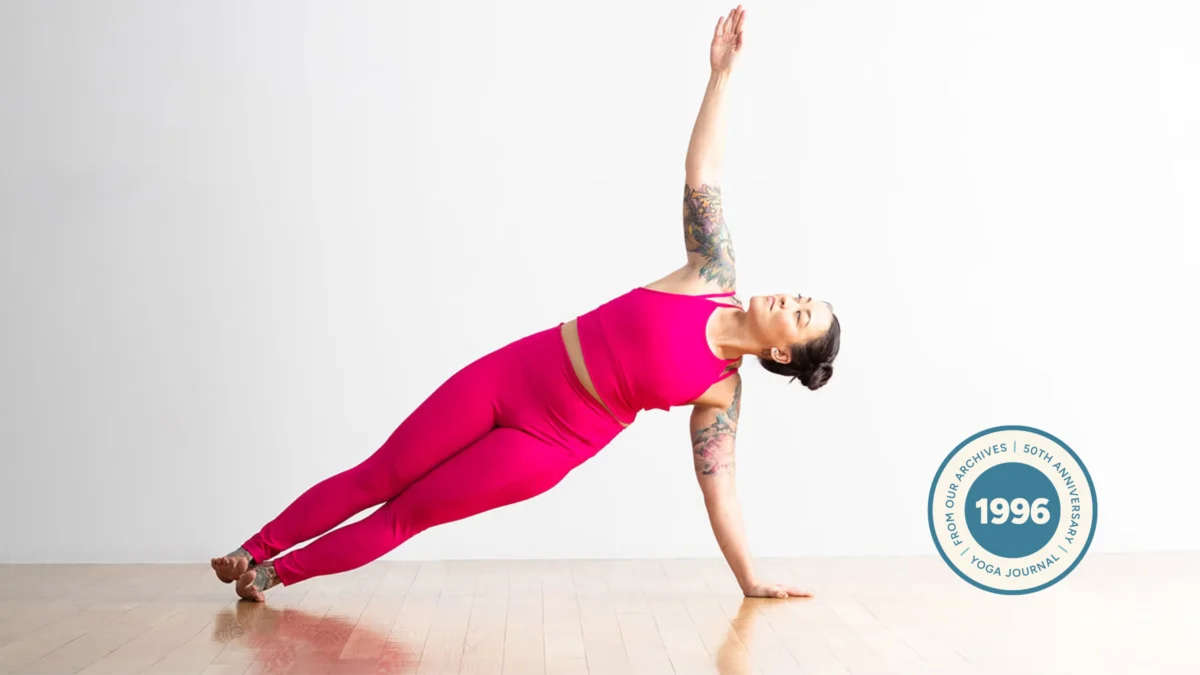
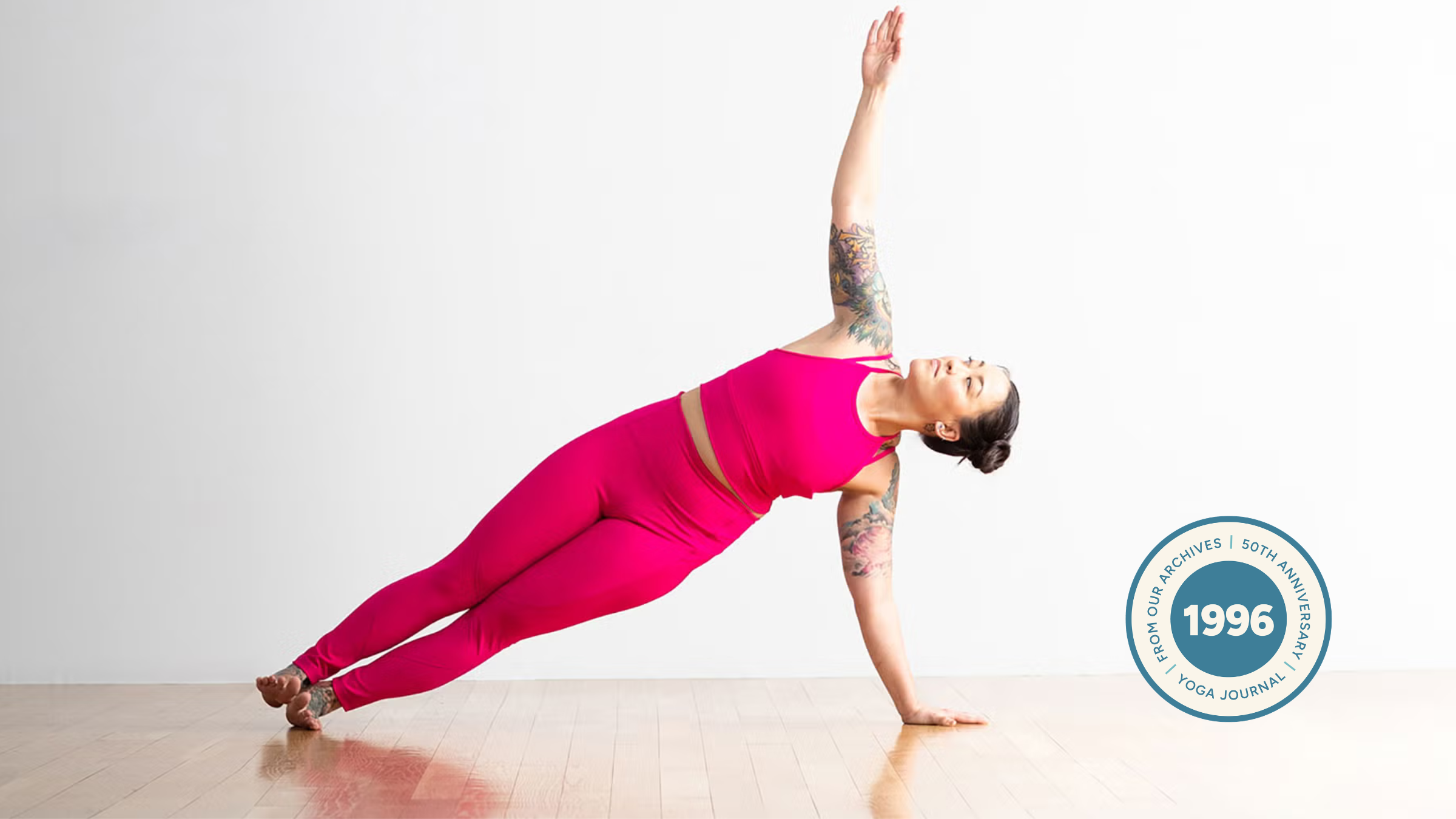
In the vast lexicon of yoga asanas, few postures demand as much structural integrity and subtle internal focus as Vasisthasana, or Side Plank Pose. Often reduced to a mere test of arm strength, this foundational pose—which first appeared in the May-June 1996 archives of Yoga Journal—is fundamentally an exercise in energetic alignment. By shifting our perspective from the periphery of the muscles to the center of the "yoga heart," practitioners can transform a trembling, difficult pose into an expression of grace and profound stability.
The Subtle Anatomy: Redefining the "Yoga Heart"
To understand the mechanics of Vasisthasana, one must first redefine the location of the heart. While the physical organ resides slightly to the left of the sternum, the yogic tradition invites us to envision a "yoga heart" located deep within the center of the chest, toward the back ribs. This is the residence of the Anahata chakra, or the "wheel of the unstruck sound."
The concept of Anahata is paradoxical; it is a sound produced without physical impact—akin to the Zen koan of "one hand clapping." In the context of Vasisthasana, this energy center acts as the command hub for the entire body. When we practice, we are not merely holding a shape with our limbs; we are pulsing energy from this central, sacred point. This internal paradigm shift is essential, as it moves the practitioner away from the "downhearted" belief that the posture is an insurmountable test of brute muscular force.
The Sage and the Wealth of Stability
Vasisthasana is dedicated to the sage Vasistha, whose name translates to "owner of wealth." The mythology surrounding Vasistha centers on Nandini, a celestial cow capable of granting any desire. When Vasistha requested sustenance, shelter, or prosperity, the cow provided it instantly.
In the yoga practice, we are both the sage and the recipient. When we enter the Side Plank, we are requesting strength and balance. If we approach the pose with the right alignment—the "wealth" of conscious engagement—the pose yields to us. Our goal is to transform the body into a capital ‘T’ tipped on its side, with the torso as the trunk and the extended arms as the horizontal crossbar.
Chronology of Practice: From Preparation to Mastery
The journey into a full Vasisthasana is not a leap but a progressive sequence of awareness. Through the methods developed by body-mind centering pioneer Bonnie Bainbridge Cohen, we learn that structural success depends on "organ consciousness"—the ability to involve the heart in the work of the arms.
Phase 1: Mapping the Connection
Begin by lying on your back, knees bent. By placing fingertips on the sternum and imagining the bones fanning out toward the shoulders, you create a spatial map of the chest. The experiment of "string-pulling"—where an imaginary force pulls the arm outward—contrasts sharply with "heart-pushing," where energy radiates from the center. Practitioners will find that moving from the heart provides a buoyancy that muscular contraction alone cannot achieve.
Phase 2: Wall-Assisted Engagement
To build the foundation, stand with your back to a wall. This provides immediate sensory feedback. By pressing the palms and burrowing the scapulas into the back ribs, you learn to maintain shoulder stability. Transitioning to a side-facing orientation against the wall allows you to practice the "push" without the full gravity of a floor-based pose. Focusing on the inner hand—the base of the thumb and index finger—is the primary key to preventing the "collapse" often experienced by beginners.
Phase 3: The Chair-Supported Transition
Using a chair as a prop allows for a more accessible entry into the full pose. By starting in a modified Downward-Facing Dog and rotating onto one side, the practitioner can isolate the pelvic alignment. If the pelvis sags, the integrity of the line from the nose to the heels is lost. By engaging the inner thighs and drawing the pubic bone toward the navel, the practitioner maintains a vertical, flat-plane alignment.
Supporting Data: The Mechanics of the Pose
Success in Vasisthasana relies on a sophisticated interplay of biomechanics:
- The Scapular Anchor: The shoulder blades must not be "scrunched" toward the spine. Instead, they must remain integrated against the back ribs to support the weight of the torso.
- Pelvic Neutrality: A common error is the "flat V" shape, where the pelvis tilts backward. Correcting this requires pressing the sacrum forward and lengthening the tailbone toward the heels.
- The Radiant Arm: The top arm should not be angled backward. It must reach straight out of the shoulder joint, creating a continuous line of energy that "hoists" the body away from the floor.
Implications for Daily Practice
The implications of mastering Vasisthasana extend far beyond the yoga mat. When students find the "song in their heart" during the most challenging physical moments of the pose, they are training the nervous system to remain calm under stress.
Expert instructors note that the trembling often felt in the arms is not necessarily a sign of weakness, but a sign of disconnection. Once the practitioner learns to "breathe into the heart" and radiate that energy through the limbs, the trembling ceases. This is the "wealth" of Vasisthasana: the realization that the body is not just a collection of levers and pulleys, but a conduit for a more subtle, centered intelligence.
Official Guidance for Progression
For those seeking to refine their Vasisthasana, the following diagnostic steps are recommended:
- Visual Verification: Utilize a full-length mirror to check the alignment of the diagonal line from the forehead to the heels. If the line is broken, return to the wall-assisted version.
- The 30-Second Rule: Do not attempt to hold the full pose until you can sustain 30 seconds of stable, rhythmic breathing in the chair-supported version.
- The Exit Strategy: Never collapse out of the pose. Exhale, smoothly return the hand to the chair or floor, and transition back into Downward-Facing Dog to reset the nervous system.
By treating the posture as a dialogue between the heart and the limbs, Vasisthasana becomes more than a test of strength—it becomes a meditation on the nature of support. Whether you are a newcomer or a seasoned practitioner, the goal remains the same: to find that elusive "unstruck sound" within the pulse of your own life, and to carry that stability into the world beyond the mat.
For further exploration of how our consciousness intersects with the physical practice of yoga, continue your study with our series on the "Moving Spirit of Yoga."