









In an era defined by sedentary habits and constant screen interaction, physical posture has become a modern health crisis. Whether you are a student, a remote professional, or someone simply looking to age with vitality, the way you carry yourself is far more than a matter of aesthetics. It is a fundamental pillar of respiratory health, spinal integrity, and digestive function.
"Good posture is one of the first things people notice, but its importance goes well beyond a first impression," explains Jacob Siwicki, founder of Siwicki Fitness, an NCSF and AFAA-certified expert and former elite group fitness instructor. "When you stand tall, you aren’t just projecting confidence; you are creating the physical space your organs need to function optimally."
As we navigate the demands of modern life, the prevalence of "tech neck"—a condition characterized by a forward-projecting head, rounded shoulders, and a hunched thoracic spine—has reached epidemic levels. However, experts suggest that this is not a permanent state. By integrating targeted, standing exercises into your daily routine, it is entirely possible to restore your natural alignment and reclaim your posture.
The Science of the Slump: Why Modern Life Compromises Alignment
To understand how to fix posture, one must first understand how it deteriorates. The human body is a masterpiece of kinetic chains; when one link is compromised, the entire structure suffers.
"The postural changes I see most frequently are the ‘tech neck’ look, where the head drifts inches in front of the body, coupled with rounded upper backs and forward-rolled shoulders," says Siwicki. According to his analysis, the primary culprits are twofold: environmental and biological. Years of sustained sitting, combined with the constant downward gaze required by smartphones and laptops, create a "closed-loop" posture.
The Biological "Weak Links"
The breakdown typically follows a predictable pattern:
- The Tight Chest: Constant slouching shortens the pectoralis muscles, physically pulling the shoulders forward and inward.
- The Weak Upper Back: The muscles responsible for pulling the shoulder blades together (the rhomboids and middle trapezius) become stretched and dormant.
- The Gluteal Amnesia: When we sit for extended periods, the glutes—the body’s largest stabilizers—become inactive. Without a strong posterior chain, the core struggles to maintain an upright position, leading to a compensatory pelvic tilt.
"The good news is that most of this is highly trainable," Siwicki notes. "By focusing on strengthening the posterior chain and opening the anterior musculature, most people can see a noticeable shift in their standing posture within just a few weeks."
The Four-Pillar Routine for Postural Restoration
To reverse years of neglect, Siwicki recommends a four-exercise protocol that requires nothing more than a resistance band and a bit of floor space. These movements are designed to be performed standing, which engages the stabilizer muscles of the lower body simultaneously.
1. Standing Band Pull-Aparts
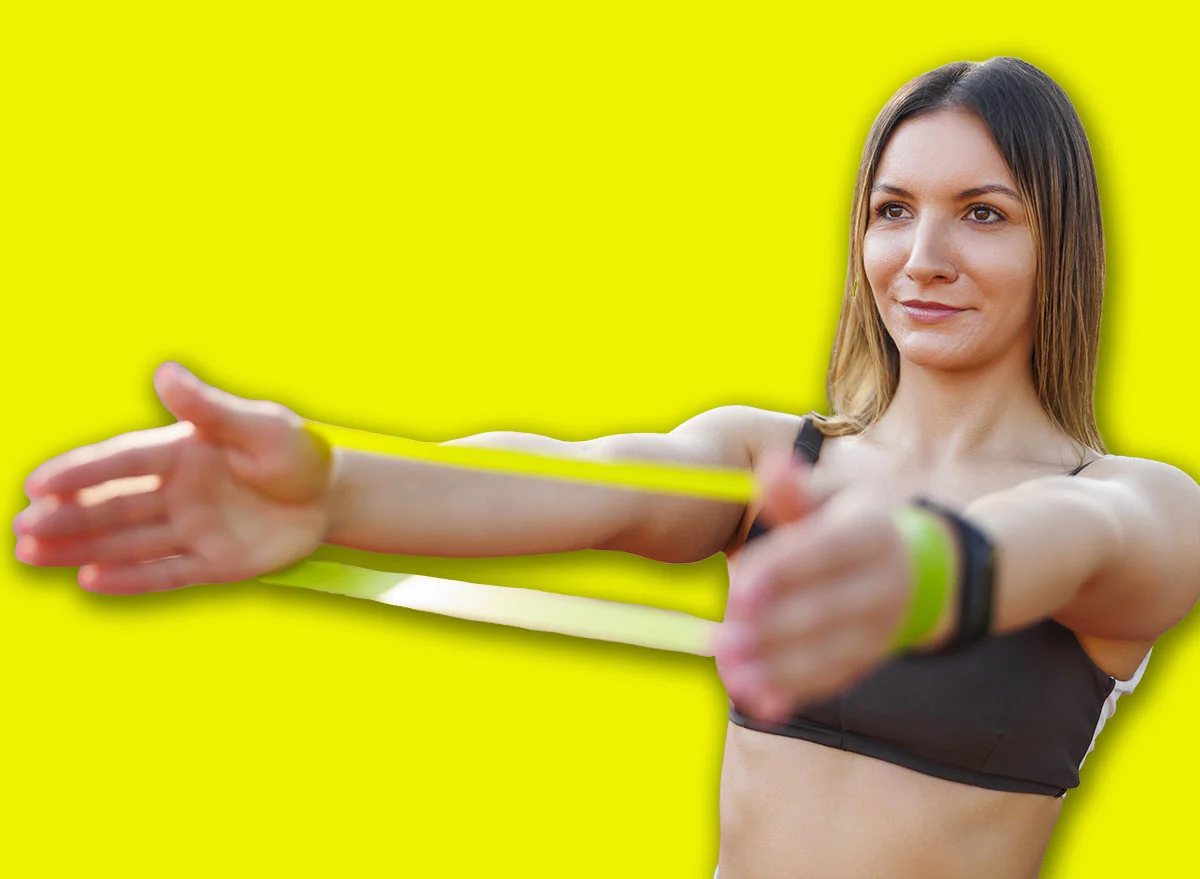
The Band Pull-Apart is the gold standard for correcting rounded shoulders. It targets the posterior deltoids and the upper back muscles that have become weak due to excessive keyboard and smartphone use.
- The Mechanism: By holding a resistance band with straight arms in front of your chest and pulling it apart until it touches your sternum, you force the scapulae to retract.
- The Benefit: This exercise actively combats the "rounded" aesthetic by training the brain to hold the shoulders in a neutral, retracted position.
2. Y-T-W Raises
Often used in physical therapy clinics, the Y-T-W series is a sophisticated way to target the muscles of the upper back from multiple angles.
- The Mechanism: Standing with a slight hinge at the hips, you raise your arms to form the shape of a ‘Y,’ then a ‘T,’ then a ‘W.’
- The Benefit: This sequence ensures that the entire trapezius muscle group is firing. It builds the endurance necessary to keep your head and shoulders aligned during long workdays.
3. Standing Good Mornings
While often considered a glute-building exercise, the Standing Good Morning is a masterclass in spinal awareness and hinge mechanics.
- The Mechanism: With hands placed behind the head, hinge at the hips while keeping a flat back and a soft bend in the knees. Return to a standing position by driving through the heels.
- The Benefit: This move bridges the gap between the upper body and the lower body. It reinforces the importance of a neutral spine and wakes up the hamstrings and glutes, which act as the "anchor" for your upright posture.
4. Standing Chin Tucks
Perhaps the most effective tool against "tech neck," the chin tuck is a subtle but powerful movement.
- The Mechanism: While standing against a wall (for feedback), pull your chin straight back as if you are making a double chin, without looking up or down.
- The Benefit: This targets the deep cervical flexors, the small muscles in the neck that hold the head in place over the shoulders. It acts as a corrective "reset" for the neck’s position.
Chronology of Improvement: What to Expect
Consistency is the primary variable in the equation of postural health. If you integrate these movements into your morning routine, the progression typically follows a distinct timeline:
- Week 1-2 (Neural Awareness): During the first fortnight, the goal is not structural change but neural recruitment. You will begin to notice when you are slouching, a phenomenon known as "postural mindfulness."
- Week 3-6 (Structural Adaptation): As you continue to perform the Y-T-W raises and band pull-aparts, the muscles of the upper back begin to gain tonicity. You will likely find that standing tall feels less "forced" and more natural.
- Week 8 and Beyond (Permanent Integration): At the two-month mark, the cumulative effect of a stronger posterior chain and a more flexible chest will become your new baseline. Friends and colleagues may comment that you "look taller" or "more confident."
Supporting Data: The Cost of Ignoring Alignment
The implications of chronic poor posture extend beyond the physical. Research in the field of orthopedics consistently links "tech neck" to increased rates of tension headaches, nerve impingement, and chronic lower back pain.
Furthermore, a 2018 study published in the Journal of Physical Therapy Science demonstrated that participants who underwent a 12-week corrective exercise program targeting the thoracic spine experienced not only improved alignment but also increased vital capacity—the total amount of air that can be exhaled after a maximum inhalation. This suggests that opening the chest through exercise literally allows for deeper, more efficient breathing.
Expert Implications: A Holistic Approach
Siwicki emphasizes that while these four exercises are highly effective, they are most powerful when combined with a lifestyle shift. "You cannot undo 40 hours of sitting with 10 minutes of exercise if you continue to sit in a way that compresses your spine for the rest of the day," he warns.
He suggests a "macro-posture" approach:
- Workstation Ergonomics: Ensure your monitor is at eye level. If you are looking down, your neck will follow.
- Movement Snacking: Every 30 minutes, stand up and perform three to five chin tucks.
- Active Breathing: Practice diaphragmatic breathing, which naturally encourages the ribs to expand and the shoulders to drop away from the ears.
Conclusion: Investing in Your Future Self
The journey to better posture is a marathon, not a sprint. By prioritizing these movements, you are making an investment in your longevity. As Siwicki notes, the human body is designed to be upright and mobile, not compressed and sedentary.
Whether you are 20 or 70, the principles of physics remain the same: gravity is always pulling us down. It is our daily habit of strengthening the back side and opening the front that allows us to stand tall against that pull. By adopting this routine, you aren’t just fixing a "slouch"—you are building the physical foundation required to enjoy an active, healthy, and confident life.
As the summer draws to a close and we move into the latter half of the year, there is no better time to reset your physical habits. Start today, remain consistent, and allow your body the opportunity to realign itself. Your back, your breathing, and your future self will thank you.