










By Sree Roy
The modern medical landscape faces a frustrating paradox: despite an unprecedented explosion in personal health monitoring, the vast majority of obstructive sleep apnea (OSA) cases remain undiagnosed and untreated. Millions of people go to bed every night wearing sophisticated sensors that track their physiology, yet this data remains locked in proprietary "silos." For clinicians, this information is often functionally invisible, leading to a massive gap between the availability of data and the ability to provide life-saving care.
A groundbreaking study presented at SLEEP 2026 suggests that the solution may not lie in better hardware, but in better translation. A research team has developed a "cross-device harmonization framework"—a universal language for sleep data that could finally pave the way for device-agnostic screening for obstructive sleep apnea.
The Babel of Sleep Technology
The primary barrier to integrating consumer sleep technology into clinical workflows is profound heterogeneity. Every manufacturer—from tech giants like Apple and Garmin to specialized sleep-tech firms—utilizes different hardware. Some devices rely on wrist-based accelerometers and photoplethysmography (PPG), while others use bedside radio-frequency, sonar, or sound analysis to track sleep stages.
Even more problematic is the lack of standardized terminology. "A doctor looking at wearable sleep data has no reliable way of knowing how much to trust it," says Elie Gottlieb, PhD, head of applied sleep science at Sleep.ai and co-investigator of the study. "They also don’t know how to compare it to another patient on a different device."
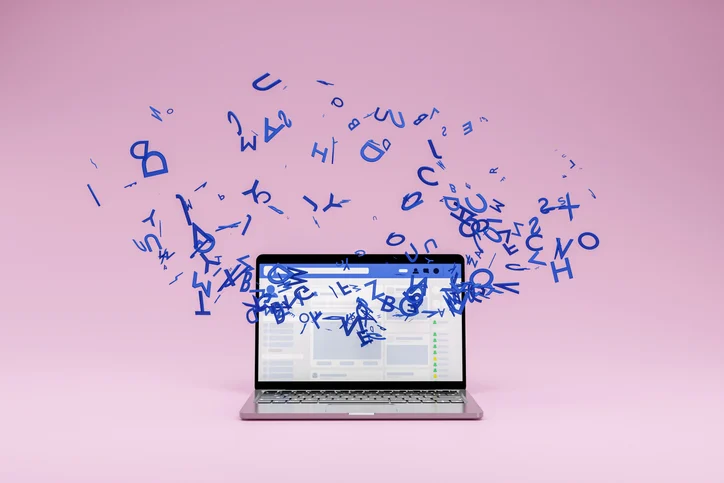
When one device labels a sleep phase as "core sleep" and another identifies it as "light sleep," while clinical polysomnography (PSG) uses the gold-standard N1 and N2 staging, the confusion is compounded. Without a common lexicon, these devices function as isolated islands, useless to a physician who needs to compare longitudinal data across a patient’s health history.
Chronology of a Data Revolution
The path to this harmonization began with an ambitious data aggregation project. The team behind the Sleep.ai study recognized that previous validation studies were too limited, often focusing on a single device in a highly controlled, artificial environment.
To create a truly robust model, the researchers scaled their logic across 138 different devices and applications. The dataset was massive, comprising 19,431 users and approximately 4.3 million nights of sleep data, contributed through Apple HealthKit. By analyzing such a vast, real-world dataset, the researchers moved beyond the "lab-only" approach, capturing the messy, high-variability reality of how people actually sleep.
The process involved mapping each device’s specific "dialect" of sleep onto a common, validated scale. Using Sleep.ai’s proprietary non-contact measurement technology—which has been validated against clinical PSG in over 14 peer-reviewed publications—the researchers created an "anchor." When data from a third-party device enters the system, the machine learning model calculates how that specific hardware systematically differs from the anchor, effectively "normalizing" the input to a standard baseline.
Supporting Data: The Power of Machine Learning
The model’s performance metrics are highly encouraging. The best-performing model achieved an Area Under the Curve (AUC) of 0.77. In diagnostic screening, an AUC of 0.77 indicates that roughly three out of four times, the model correctly distinguishes between a patient with OSA and one without.
However, Dr. Gottlieb suggests that 0.77 is a conservative estimate. The challenge in training the model lies in the "labeling" process. In a large-scale population study, researchers often rely on self-reported clinical diagnoses. If a user has undiagnosed OSA, they are labeled as "non-apnea," which the model then treats as a false positive when it correctly identifies the OSA "signature." As the team moves into prospective validation, they expect the accuracy of the model to rise as the data labeling becomes more precise.
The study identified "sleep instability" as a critical, non-demographic predictor of OSA. While age and gender are strong baseline indicators, the machine learning algorithm prioritized markers of irregularity. Because OSA is fundamentally a disorder of repeated, fragmented breathing, it leaves a distinct physiological footprint that manifests as inconsistent sleep patterns.
The "Fingerprint" of Apnea
For sleep physicians, the study’s most significant finding is the move away from simple nightly averages. "A person with sleep apnea doesn’t just have worse sleep on average," Gottlieb explains. "They tend to have more inconsistent sleep. Some nights are bad, some are less bad, and that instability is itself a fingerprint."
This discovery leverages the unique advantage of consumer wearables: the ability to provide months or years of longitudinal data. A lab-based polysomnography study is a one-night snapshot, which may or may not capture a representative night of sleep. In contrast, the new harmonization framework can distill months of data into a risk profile, allowing for a much clearer view of the patient’s health.
Official Responses and Clinical Implications
The implications for the medical community are transformative. The goal of this framework is not to replace the sleep specialist or the diagnostic gold standard, but to refine the "funnel" of patients entering the clinic.
"I’d put one clear boundary around all of this," says Dr. Gottlieb. "None of it replaces the clinician or the diagnostic study. What a common framework does is turn a chaotic pile of incompatible consumer data into a consistent, longitudinal input that a physician can actually fold into their clinical judgment."
Currently, many specialists are hesitant to accept wearable data because it lacks transparency and validation. By using a "gap-filling" model—where the algorithm estimates missing metrics based on millions of nights of parallel recordings—the team ensures that the data remains useful. Critically, the system is designed for transparency; all inferred values are flagged as "estimated," ensuring that doctors know exactly what they are looking at when they review a report.
Future Horizons
The study represents a meaningful step toward a more integrated healthcare system, but the researchers are quick to emphasize that it is not the finish line. The next phase of the research will involve rigorous prospective validation against gold-standard PSG in a sleep lab.
Logistically, testing 138 devices simultaneously is impossible, so the team will focus on a subset of the most common wearables. They are also moving toward more sophisticated labeling, such as utilizing the NoSAS (Neck, Obesity, Snoring, Age, Sex) screening tool to improve the accuracy of their training data.
The project, led by a data science team including Luke Gahan, Alice Lynch, and Eduardo Parkinson de Castro, in collaboration with Dr. Nathaniel Watson of the University of Washington, sets the stage for a new era of sleep medicine. As these harmonization capabilities are integrated into business-to-business platforms, the technology could eventually be embedded into standard Electronic Health Record (EHR) systems.
"The tools to start closing the screening and subsequent diagnostic gap for sleep apnea may already be sitting on people’s wrists, fingers, and bedside tables," Dr. Gottlieb concludes. By translating the disparate languages of our consumer technology into a single, cohesive medical narrative, the path to diagnosing the millions of hidden sleep apnea cases may finally be opening.
This research underscores that while our gadgets have become smarter, the real breakthrough occurs when we find a way to make them speak to one another, turning millions of isolated data points into a powerful tool for global health.