
For many adults entering their sixties, the physiological landscape begins to shift. Metabolism naturally slows, muscle mass begins a gradual decline—a process known as sarcopenia—and the midsection often becomes a focal point for stubborn adipose tissue, frequently referred to as an "apron belly." While the allure of "spot reduction" exercises is strong, the reality of biology is more nuanced. Transforming body composition after 60 requires a strategic, holistic approach that prioritizes functional strength, metabolic demand, and consistent, high-intent movement.
A standing workout, when executed with precision, can shift the trajectory of your health almost immediately. By integrating external loads, maintaining tight rest intervals, and selecting movements that demand total-body engagement, you can transform a brief daily routine into a powerful engine for longevity. This article explores a specialized four-move standing circuit designed to build strength, elevate heart rate, and foster a body that remains capable and resilient well into your later years.
The Philosophy of Training Over 60: Moving Beyond the Floor
When coaching adults over the age of 60, the objective is never to induce exhaustion for its own sake. Instead, the goal is to create a "training effect"—a physiological stimulus significant enough to trigger adaptation. This involves using exercises that recruit multiple muscle groups simultaneously, adding intensity where appropriate, and prioritizing the maintenance of lean muscle tissue.
Many traditional gym routines rely heavily on floor-based movements or complex machine circuits. However, for the aging athlete, standing exercises offer a distinct advantage: they reinforce functional balance, core stability, and proprioception. An apron belly is not merely a vanity concern; it is often a marker of metabolic health. Addressing it requires a broader strategy: consistent strength work, nutritional habits that support hormonal health, and movement patterns that keep the body in a state of active adaptation.
By staying on your feet, you engage your core—the body’s central stabilizer—in every repetition. This approach allows for a "hidden" workout where your midsection is forced to work against gravity and resistance throughout the entire session.
Chronology of a High-Efficiency Circuit
To maximize results, the following four movements should be performed as a circuit. This format minimizes downtime, keeping the heart rate elevated while allowing specific muscle groups to recover as you move to the next exercise.
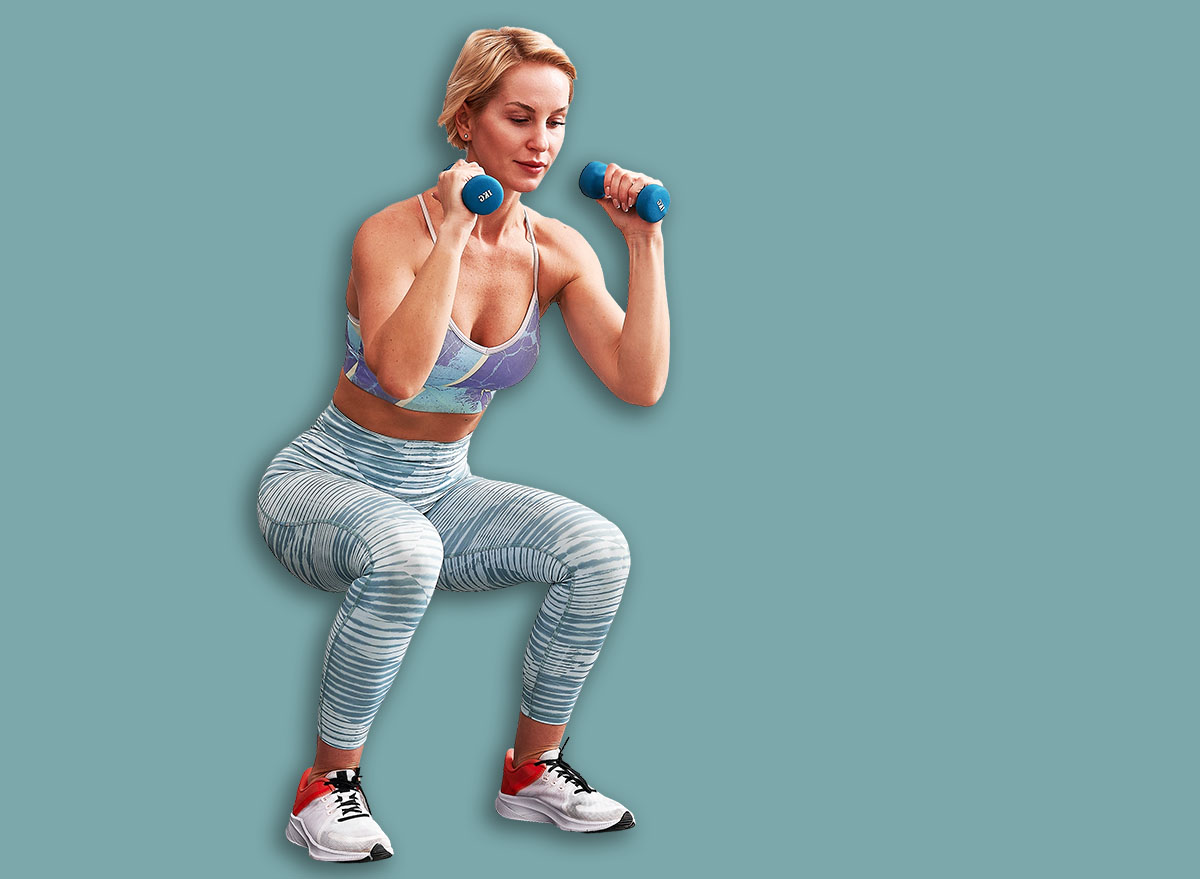
1. The Dumbbell Squat-to-Press
This movement serves as the foundation of the session. It is a classic compound exercise that bridges the gap between the lower and upper body. By utilizing the power of the glutes and quads to initiate the movement, you gain the momentum needed to drive the weight overhead.
- The Mechanics: As you descend into a squat, the core must remain rigid to protect the spine. The transition from the bottom of the squat into the overhead press requires a seamless transfer of force through the midsection.
- Muscles Targeted: Quadriceps, glutes, hamstrings, shoulders, triceps, and the entire core complex.
- Protocol: Aim for 3 sets of 8 to 10 reps. Rest for 60 seconds between sets to ensure you maintain high form.
- Pro-Tip: Keep your ribs "stacked" over your hips. If your lower back arches as the weights go up, reduce the load.
2. Medicine Ball Slam Intervals
If the squat-to-press builds strength, the medicine ball slam builds metabolic capacity. This is an explosive, full-body movement that requires the engagement of the lats, shoulders, and deep abdominal muscles to control the descent of the ball.
- The Mechanics: Start with a tall reach, using your core to initiate the slam. The key is not to just drop the ball, but to throw it with intention. The "hinge" at the hips mimics a deadlift, reinforcing posterior chain strength.
- Muscles Targeted: Abs, lats, shoulders, upper back, glutes, and hamstrings.
- Protocol: Perform 3 sets of 20 to 30 seconds of continuous slamming. Rest for 45 to 60 seconds.
- Pro-Tip: Use a soft slam ball (one that doesn’t bounce). This prevents injury and forces your body to absorb the energy of the impact, further challenging your stabilization muscles.
3. Reverse Lunge to Knee Drive
This exercise introduces unilateral (single-leg) training, which is critical for balance and coordination after 60. By stepping backward, you reduce the shear force on the knees compared to a forward lunge.
- The Mechanics: As you step back, the front leg does the heavy lifting. The transition into the "knee drive" is where the magic happens; you are balancing on one leg while pulling your core tight to bring the trailing knee forward. This creates an intense demand on the obliques and deep stabilizers.
- Muscles Targeted: Glutes, quadriceps, calves, hip flexors, and core.
- Protocol: 3 sets of 8 to 10 reps per side.
- Pro-Tip: If balance is an issue, perform these near a wall or a sturdy kitchen counter. Use the support only as much as necessary.
4. Controlled Squat Jumps
For those with healthy joints, adding a plyometric element increases the metabolic demand of the circuit significantly. This is not about jumping as high as possible; it is about the "landing" and the "reset."
- The Mechanics: Focus on a shallow squat followed by a low, controlled jump. The landing should be silent. A quiet landing indicates that your muscles—not your joints—are absorbing the impact.
- Muscles Targeted: Quadriceps, glutes, hamstrings, calves, and core.
- Protocol: 3 sets of 6 to 10 reps.
- Pro-Tip: If jumping causes discomfort in the hips, knees, or lower back, switch to a "squat-to-calf-raise," where you explode onto your toes instead of leaving the ground.
Supporting Data: Why Standing Matters
Research into geriatric fitness consistently highlights the necessity of "functional loading." According to studies published in the National Center for Biotechnology Information (NCBI), resistance training in older adults is the primary intervention for preventing the loss of muscle mass. Unlike seated exercise machines, which provide artificial stability, standing exercises force the body to utilize its own stabilizer muscles.
Furthermore, the "metabolic cost" of these movements is higher. Because you are constantly adjusting your center of gravity, you are burning more calories and placing a higher demand on the cardiovascular system. This is a critical factor when addressing an apron belly; while you cannot "target" fat loss, you can increase your total daily energy expenditure (TDEE) and improve insulin sensitivity, which helps the body partition nutrients toward muscle repair rather than fat storage.
Official Recommendations and Expert Guidance
Health organizations, including the American College of Sports Medicine (ACSM), emphasize that for adults over 60, strength training should be performed at least two to three times per week. The "intensity" mentioned in our circuit is relative. It is defined as "perceived exertion." You should be working at a level where you can complete the reps with good form, but the final two repetitions of each set should feel challenging.
The Role of Nutrition
It is important to note that no amount of squat-to-presses can overcome a diet high in processed sugars and low in protein. To see a reduction in midsection fat, experts recommend:
- Prioritizing Protein: Aim for 20–30 grams of high-quality protein per meal to support muscle protein synthesis.
- Hydration: Muscles that are hydrated perform better and recover faster.
- Consistent Fiber: Supporting gut health is essential for reducing bloating and inflammation, which often contribute to the appearance of an apron belly.
Implications for Longevity and Independence
The implications of adopting a standing-based, high-intent training program are profound. Beyond the aesthetic benefits of a leaner midsection, these exercises improve your "activities of daily living" (ADLs).
- Fall Prevention: By training the core and single-leg balance, you significantly reduce the risk of falls.
- Bone Density: Weight-bearing exercises are the gold standard for maintaining bone density, which is vital as we age.
- Psychological Well-being: There is a strong correlation between physical capability and mental health in the senior population. Knowing that you can confidently move your body, carry groceries, or engage in active play with grandchildren provides a sense of autonomy that is invaluable.
Summary Checklist for Success
To integrate this circuit into your lifestyle, follow this simple roadmap:
- Frequency: Start with two days a week, moving to three as your recovery improves.
- Progression: Once the reps feel easy, increase the weight of your dumbbells or the intensity of your slams. Never sacrifice form for speed.
- Consistency: The body adapts to stress over time. Don’t look for changes in a week; look for changes in the mirror after three months of consistent, disciplined effort.
- Listen to Your Body: If a movement causes sharp pain, stop immediately and use the recommended variations. Fitness after 60 is a marathon, not a sprint.
By shifting your focus from "shrinking" your waist to "strengthening" your entire frame, you change the conversation from one of restriction to one of empowerment. Your body is a machine that responds to the demands you place upon it; give it a reason to stay strong, and it will reward you with vitality, resilience, and a leaner profile for years to come.