CATIA LA MAR, Venezuela — The northern coastline of Venezuela, particularly the state of La Guaira, has been transformed into a landscape of improvised survival. Two weeks after a pair of powerful, back-to-back earthquakes tore through the region, the initial shock of structural collapse has given way to a burgeoning public health emergency.
As of Thursday, relief efforts—led primarily by a coalition of nongovernmental organizations (NGOs) and international bodies—are being overwhelmed by a desperate populace. While the immediate focus following the June 24 disaster was on search-and-rescue and trauma care, the crisis has mutated into a long-term struggle for basic health, sanitation, and sustenance.
The Magnitude of the Disaster: Main Facts
The twin earthquakes, which struck in rapid succession, claimed 3,889 lives and left a path of physical and social destruction that the United Nations Office for Disaster Risk Reduction estimates at $37 billion in direct infrastructure damage.
According to official figures provided by the administration of acting President Delcy Rodríguez, 190 buildings were leveled, with an additional 856 sustaining significant structural damage. The displacement crisis is acute: approximately 18,000 people have been rendered homeless. These survivors are currently occupying a makeshift geography of misery, crowding into schools, public plazas, parks, and sidewalks, often without access to clean water or sewage systems.
Chronology of the Crisis: From Tremors to Long-term Trauma
- June 24: The twin earthquakes strike the northern coast, triggering widespread structural failure and immediate mass displacement.
- Late June – Early July: Initial emergency response is hampered by the state’s limited infrastructure and historical resistance to foreign aid.
- Early July (Current Status): The transition from acute trauma—such as fractures and crush injuries—to secondary health crises begins. NGOs report a surge in skin infections, diarrheal diseases, and acute exacerbations of chronic conditions.
- July 10: U.N. relief chief Tom Fletcher visits La Guaira, highlighting the shift in humanitarian needs and the reliance on international support.
The Shift in Humanitarian Needs
The character of the humanitarian demand has fundamentally changed. Tom Fletcher, the head of the U.N. Office for the Coordination of Humanitarian Affairs (OCHA), noted during his visit that the medical focus has moved beyond the emergency room.
"It is clear at displacement sites that, particularly after two weeks, people are turning up because they haven’t been able to get their other treatments," Fletcher told The Associated Press. "They’re not turning up with just the fractures now; they’re turning up with those longer-term health needs. It is vital that we’re there for them."
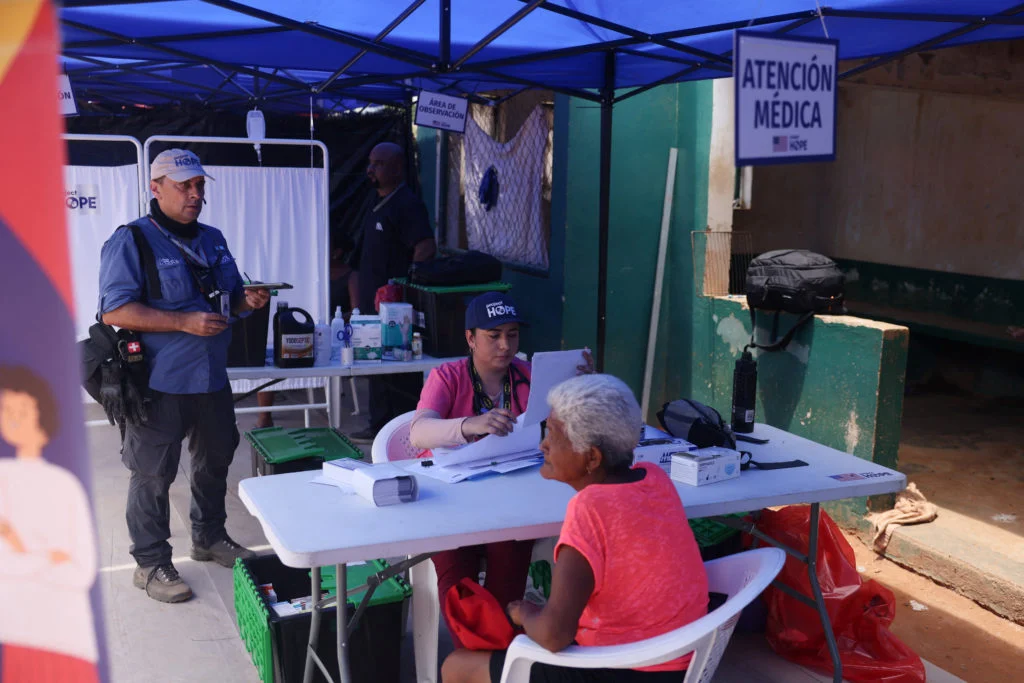
In the community of Catia La Mar, the reality is stark. Mobile clinics are now the only line of defense for residents suffering from conditions ranging from chronic diabetes and hypertension to new-onset ailments caused by the environment. The lack of clean water, a problem that plagued the region long before the tectonic shift, has become a primary driver of illness. Doctors on the ground report a rise in diarrheal diseases and dermatological issues—a direct consequence of living in crowded, unsanitary conditions.
For 67-year-old Irma Echarri, the earthquake didn’t destroy her home, but it shattered her access to routine care. Waiting outside a church-turned-relief-station, she held the empty boxes of her usual medication. "It hurts a lot," she said, referring to a lingering injury in her nose sustained during the tremors. "It hurts because it hurts."
The Human Toll and Economic Fallout
The psychological and economic impact is equally devastating. Zulbey Reyes, 41, is among the 18,000 displaced. Once a nanny, she lost both her home and her livelihood in the disaster. When she visited a clinic operated by the Venezuelan group Paluz in partnership with the International Rescue Committee, she feared a cardiac event.
"I thought it was my heart that was sick," Reyes explained after receiving a diagnosis of stress-induced nerve inflammation. "But it’s a nerve that became inflamed after the screams that day."
The healthcare system itself has been decimated. Armando Denegri, a representative of the Pan-American Health Organization (PAHO) in Venezuela, revealed that 50% of the health professionals in La Guaira were directly affected by the earthquake. Many were killed, some have gone missing, and others are dealing with the total destruction of their own family units, rendering them unable to serve the community.
Official Responses and the Geopolitical Shift
The United Nations has launched an urgent appeal for $300 million to assist 1.3 million people, a sum the organization deems necessary to prevent a total collapse of public services in the affected zones.
Perhaps the most significant development in this disaster is the government’s pivot toward cooperation. Historically, the administration of former President Nicolás Maduro—and by extension, the current acting government—maintained a hostile stance toward international NGOs, frequently accusing them of subversive political activities and expelling human rights organizations.
However, the scale of this catastrophe has forced a pragmatic realignment. Acting President Delcy Rodríguez’s government is now allowing a robust, visible presence of foreign aid groups. Fletcher noted that this cooperation is a necessary evolution, stating, "When you have a crisis of this magnitude, people put the politics to one side and are able to focus on saving as many lives as possible."
The United States has emerged as the primary donor for the response, a development that would have been unthinkable in the recent climate of diplomatic hostility. Most of this aid is being funneled through local organizations that have successfully brokered partnerships with global humanitarian heavyweights, creating a delicate, localized relief architecture.
Implications: A Fragile Future
The implications for Venezuela are profound. The $37 billion in damages represents a staggering blow to an economy already strained by years of hyperinflation and mismanagement. Beyond the physical rebuilding of 1,000+ buildings, the country faces a "hidden" crisis: the loss of human capital. With medical professionals displaced or killed, and the long-term health of the population declining due to the disruption of chronic care, the state faces a multi-generational health crisis.
Furthermore, the newfound tolerance for NGOs suggests a government that is either genuinely overwhelmed or strategically seeking to preserve its standing by allowing the international community to do what it cannot. Critics, however, argue that this "ineffective" state response has needlessly exacerbated the suffering. Experts have suggested that decades of neglecting infrastructure—preventable decay—meant that the buildings were far more vulnerable to seismic activity than they should have been.
As the international community watches, the situation in La Guaira remains a test of both humanitarian logistics and political resilience. For those in the tent cities and on the sidewalks of Catia La Mar, the rhetoric of the capital matters little. Their reality is measured in the availability of blood pressure medication, the purity of their water, and the hope that they will not be forgotten when the international media inevitably moves on to the next crisis.
For now, the presence of the mobile kitchens and the field hospitals remains a lifeline—a fragile, flickering light in a country struggling to reconcile its political past with a catastrophic present.