









In the landscape of modern fitness, we are often inundated with high-intensity interval training, complex weightlifting maneuvers, and expensive boutique gym memberships. Yet, sometimes the most profound indicators of physical health are found in the simplest movements. For adults over the age of 60, one specific exercise stands out as a "litmus test" for functional independence: the wall sit.
While it may appear to be a static, passive movement, the wall sit is a powerhouse of isometric training. By sliding down a wall and holding a seated position against gravity, you are engaging your glutes, quadriceps, and core in a way that reveals true muscular endurance. For those navigating their golden years, this test offers a clear window into their ability to maintain balance, posture, and mobility.
Main Facts: The Science of the Static Hold
At its core, the wall sit is an isometric exercise. Unlike dynamic exercises—such as squats or lunges, where muscles lengthen and shorten—isometric exercises involve muscle contraction without movement at the joint.
According to Deborah Luciano, a NASM-certified personal trainer with over 20 years of experience, the wall sit is a superior diagnostic tool because it removes the "cheat codes" of movement. "Unlike tests such as standing from a chair or climbing stairs, where momentum and coordinated movement can help compensate for weakness, wall sits eliminate all momentum," Luciano explains. "This requires your muscles to continuously generate force at a fixed joint angle, revealing the true state of your local muscular endurance."
For the aging population, this endurance is not just about aesthetics; it is a critical component of functional longevity. The quadriceps and glutes are the primary engines for standing, walking, and navigating stairs. When these muscles fatigue prematurely, the risk of falls and the reliance on mobility aids increase significantly.
Chronology: Understanding Your Performance Baseline
Tracking your performance over time is the most effective way to gauge progress. For someone just beginning their journey into strength training, the "starting line" for a wall sit looks very different than it does for a seasoned athlete.
The Beginner Phase (Weeks 1–4)
If you have not engaged in regular resistance training, the goal is not to set a record, but to establish a connection with your muscles.
- Target: Two to four sets per session.
- Duration: 10 to 30 seconds per hold.
- Frequency: Two to three times per week, with at least one rest day in between to allow for muscle recovery.
The Development Phase (Weeks 5–12)
Once you have mastered the initial form, your body will adapt to the static load. During this period, focus on "time under tension."

- Progressive Overload: Add five to 10 seconds to your hold time each week.
- Form Check: Ensure your back remains flat against the wall and your knees are aligned with your ankles.
- Goal: Moving toward a consistent 45-second hold.
The Performance Phase (Ongoing)
Once you reach the intermediate level, you are no longer just "surviving" the exercise; you are building the stamina required for a higher quality of life.
Supporting Data: What Defines "Top-Tier" Strength?
How does one know if their leg strength is "above average" for their age bracket? While individual factors such as body weight, medical history, and past activity levels play a role, fitness professionals have established general benchmarks for adults over 60.
- Below Average: Holding for less than 20 seconds. This suggests that the lower body may lack the necessary endurance to support stable, long-term movement, and could indicate a need for a supervised strengthening program.
- Average: A hold time of 30 to 40 seconds. This represents a functional baseline for many adults in this age group.
- Excellent (Top-Tier): A hold time of 90 seconds or more. Achieving this level of duration indicates exceptional local muscular endurance and suggests that the individual is well-equipped for the physical demands of daily living.
It is important to note, however, that duration is only half the battle. "Maintaining proper form is just as important as the clock," Luciano warns. "If you are holding for 90 seconds but your back is arching, your knees are caving inward, or you are holding your breath, the quality of the movement is compromised."
Official Perspectives: The Expert View on Functional Fitness
The importance of the wall sit extends far beyond the gym. It is a fundamental movement pattern that mimics the mechanics of everyday life.
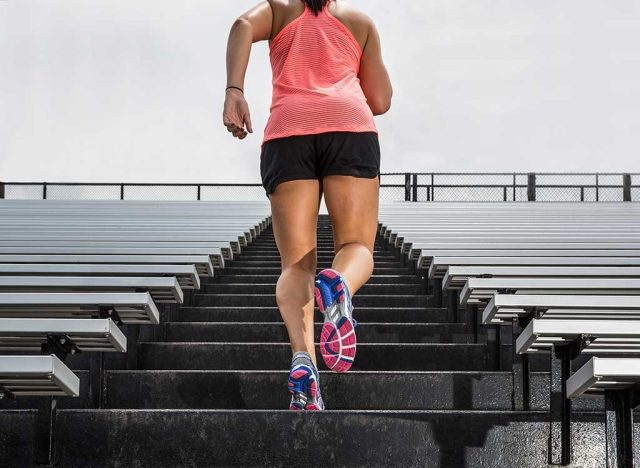
"Standing up from a low chair uses similar hip and knee angles to a wall sit," says Luciano. "By building endurance in this static position, you are essentially training your body to perform sit-to-stand transitions with ease, significantly reducing the reliance on using your arms to push off."
Furthermore, the wall sit acts as a stabilizer. By forcing the core and lower body to remain rigid, the exercise teaches the nervous system how to maintain balance under fatigue. This is essential for preventing the "stumble-to-fall" trajectory that often plagues older adults. When the leg muscles can sustain force for longer, the body is better able to correct its posture during a walk, a hike, or a trip up a flight of stairs.
Implications for Daily Living and Independence
Why does this matter? For adults over 60, the primary goal of physical fitness is "functional independence"—the ability to live, move, and participate in life without needing assistance.
1. Reducing the Burden on Joints
When your primary movers (the quads and glutes) are weak, secondary muscles and joints—such as the lower back, knees, and ankles—often take on the burden. By strengthening the glutes through wall sits, you provide a stable foundation for the pelvis, which can alleviate chronic lower-back pain.
2. Improving Gait and Stability
Walking is a complex, repetitive task. While it involves the heart and lungs, it also requires the legs to absorb impact thousands of times a day. Improved muscular endurance means your legs don’t "give out" or feel heavy toward the end of a long walk or a busy afternoon of errands.
3. Safety and Fall Prevention
Falls are a leading cause of injury for older adults. The ability to hold a wall sit for 30 to 60 seconds indicates that your body has the structural integrity to withstand the sudden shifts in gravity that often lead to falls.
How to Execute the Perfect Wall Sit
If you are ready to incorporate this into your routine, follow these steps to ensure safety and maximum efficacy:
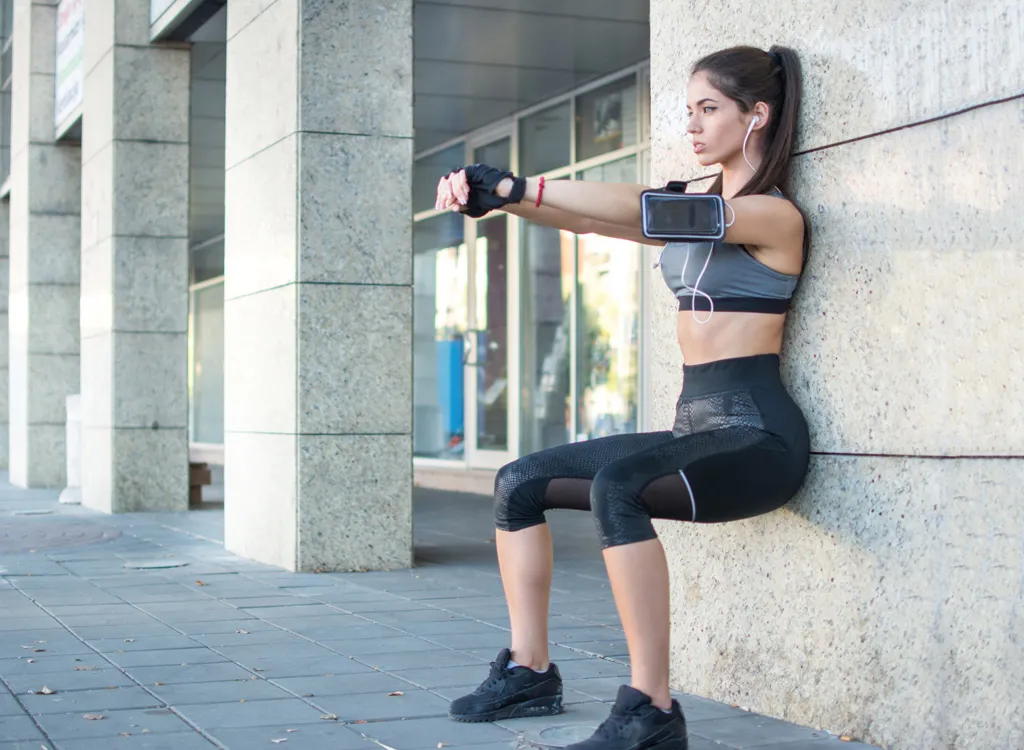
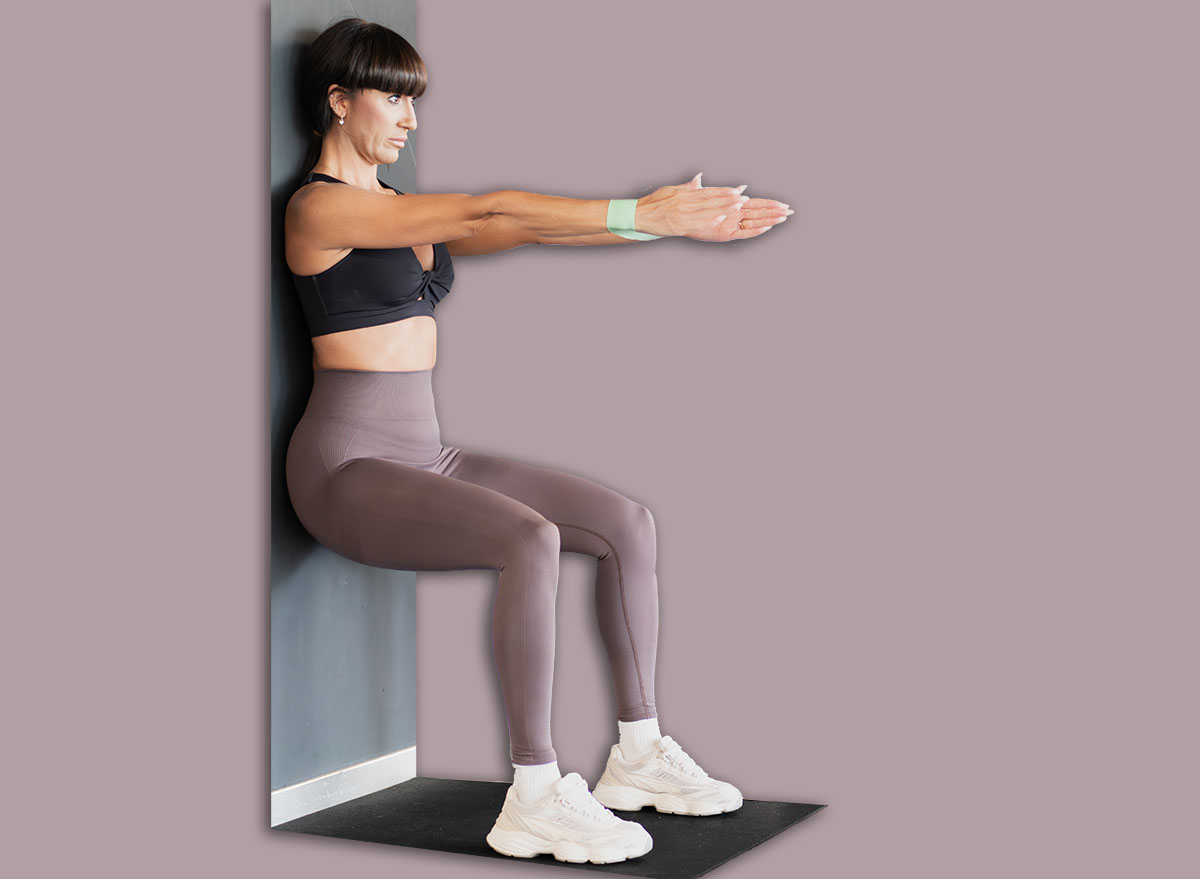
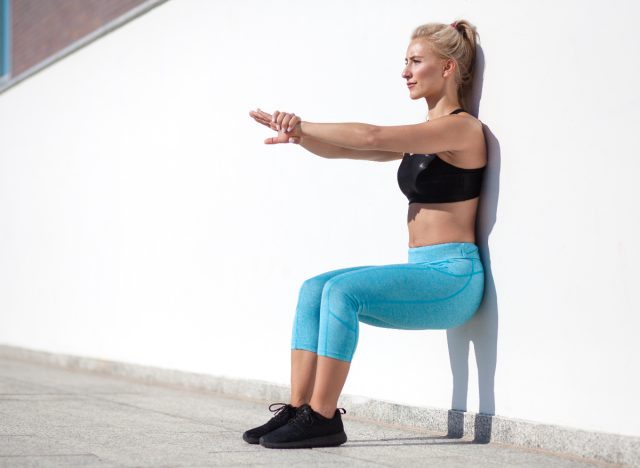
- Positioning: Stand with your back flat against a sturdy wall. Place your feet about shoulder-width apart and roughly two feet away from the base of the wall.
- The Descent: Slowly slide your back down the wall until your thighs are parallel to the floor, or as close as you can comfortably get. Your knees should be directly above your ankles, forming a 90-degree angle.
- The Alignment: Keep your back pressed firmly against the wall. Distribute your weight evenly through your entire foot—do not rock back onto your heels or onto your toes.
- The Engagement: Engage your core, keep your chest open, and breathe steadily. Do not hold your breath, as this can spike your blood pressure.
- The Hold: Maintain the position for your target time. If you feel your form breaking down (e.g., your knees shaking uncontrollably or your lower back arching), it is time to end the set.
Safety Caveats and Modifications
While the wall sit is accessible, it is not without risk, particularly for those with pre-existing orthopedic conditions.
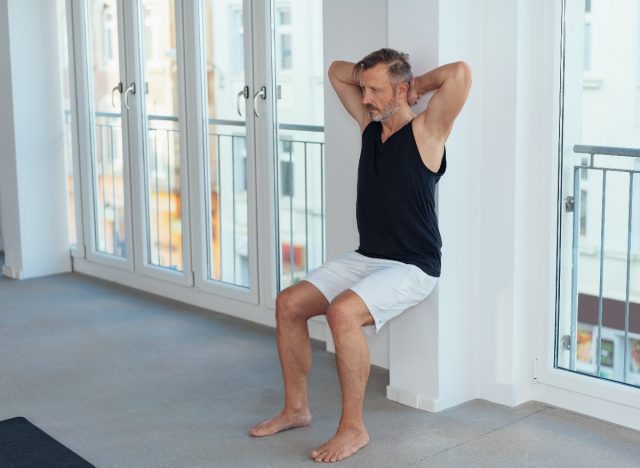
- For Knee Pain: If 90-degree angles cause discomfort, stay at a higher position. You do not need to go all the way down to get the benefits; a "shallower" wall sit still provides effective isometric tension for the quads.
- For Balance Issues: Perform the exercise near a countertop or a sturdy rail. This provides a safety net should you feel unstable.
- For Lower Back Discomfort: Ensure your lumbar spine remains against the wall. If you feel a sharp pull in your back, stop the exercise and consult a physical therapist to check for pelvic alignment issues.
Final Thoughts: The Long Game
The journey to improved lower-body strength is not a sprint. It is a long-term commitment to your future self. By integrating wall sits into your weekly routine, you are doing more than just building muscle; you are investing in your mobility, your confidence, and your ability to remain independent for years to come.
Remember, the goal is not to be the strongest person in the room—it is to be the most functional version of yourself. Whether you start at 10 seconds or 30, the key is consistency. Keep your back to the wall, your core engaged, and your focus on the longevity that comes with every steady, quiet second of the hold.