











For millennia, human beings navigated the landscape of their own health using a simple, internal diagnostic tool: the senses. If we were fatigued, we rested. If we were hungry, we sought nourishment. If we felt robust, we pushed our physical limits. Today, that ancient biological feedback loop is being increasingly outsourced to a new digital authority. From sleek wrist-worn monitors that track sleep cycles to smart rings that quantify physiological recovery, we live in an era where data is king.
But as we trade our intuition for algorithms, a critical question emerges: Are we becoming healthier, or are we simply becoming more obsessed with the metrics of our existence? While modern technology offers an unprecedented bridge between subjective feeling and objective reality, the pursuit of "perfect" data often introduces a paradox that can hinder the very health outcomes we seek to improve.
The Evolution of Self-Assessment: From Intuition to Algorithms
The human capacity for self-assessment has always been imperfect. We are notorious for miscalculating our dietary intake—often blinded by "stealth calories" in sauces, dressings, or mindless snacking—and we frequently misjudge the intensity of our physical output.
Historically, only the elite possessed the "outlier performance" required to bridge this gap. Legendary Canadian sprinter Ben Johnson was famously reported to have the uncanny ability to call out his 100-meter dash times within a tenth of a second of the official stopwatch. While such precision is the hallmark of professional-grade body awareness, for the average person, such accuracy remains elusive.
The rise of the fitness tracker was intended to democratize this level of awareness. By providing cold, hard metrics—heart rate, step counts, VO2 max, and sleep architecture—these devices promised to remove the guesswork from wellness. However, the transition from subjective assessment to data-driven decision-making is not a linear path to optimization; it is a complex negotiation between the machine and the mind.
The Anatomy of Accuracy: Understanding Data Reliability
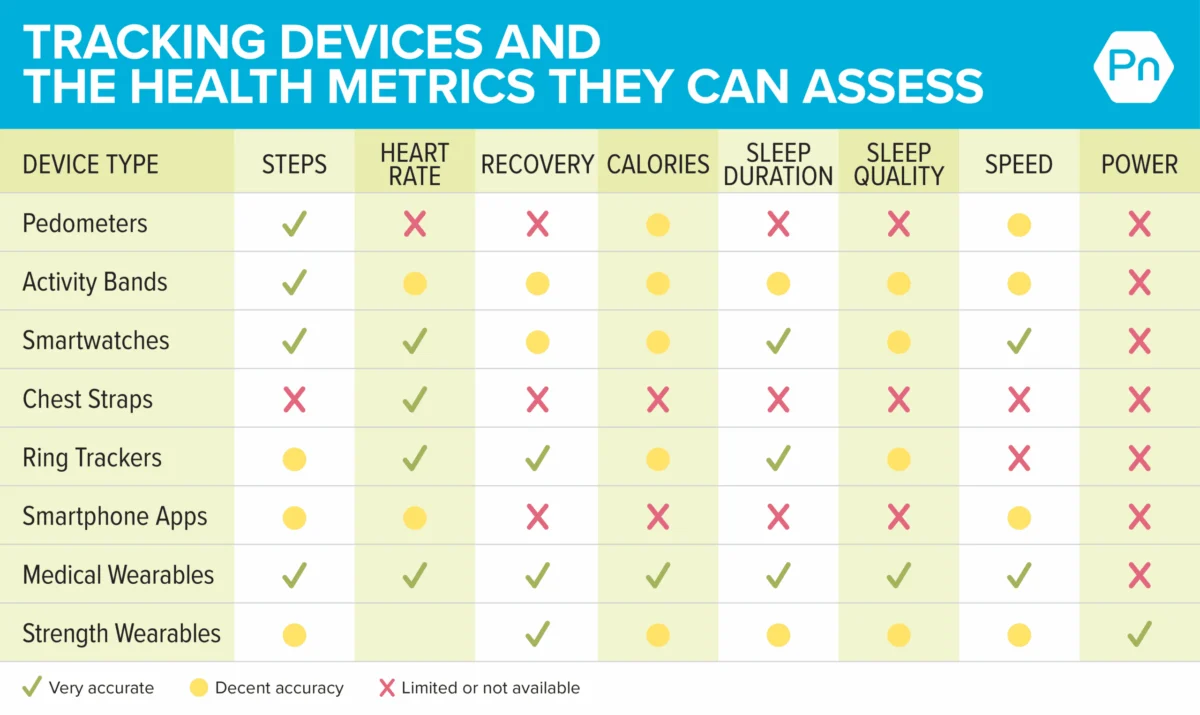
When evaluating the utility of wearable tech, one must first recognize that not all data is created equal. The market is saturated with devices ranging from simple pedometers to advanced medical-grade wearables. While consumer-grade hardware has made massive strides in reliability, there remains a significant margin of error in metrics like "calories burned" or "movement velocity."
According to industry data, heart rate and step counting have reached a high degree of maturity and reliability. Conversely, sleep quality and recovery metrics—often derived from heart rate variability (HRV) and movement—are still subject to substantial fluctuations based on software algorithms and sensor placement.

The core issue is that some physiological phenomena are inherently difficult to quantify. A chest strap remains the gold standard for heart rate because it monitors electrical signals directly, whereas optical sensors on a wristband rely on blood flow patterns that can be distorted by skin tone, movement, and temperature. Before relying on a device to dictate your training intensity, it is essential to understand the limitations of the specific technology you are using.
The Paradox of Choice: The "Sweet Spot" in Decision Making
In the field of computer science, researchers have long studied the impact of data density on decision-making. Samantha Kleinberg, a leading expert in the field, has noted that even a marginal increase in surplus information can significantly degrade the quality of our decisions.
This creates a "Goldilocks" effect:
- Too little information leaves us flying blind, relying on guesswork.
- Too much information leads to "analysis paralysis," where we are so overwhelmed by metrics that we lose the ability to act.
This phenomenon is evident in our daily lives. Much like the person who spends three hours reading reviews for a taco restaurant only to become more confused than when they started, the fitness enthusiast who tracks every macronutrient, sleep phase, and recovery score often loses sight of the big picture. When information ceases to provide clarity and instead becomes a source of cognitive load, the tracking has effectively become counterproductive.
Signposts of Success and Failure
How can you determine if your relationship with technology is healthy? We can look at three key indicators to see if your wearable is an asset or a liability.
1. Validation vs. Anxiety
For some, data is a relief. Consider a high-performing athlete who doubts their recovery. By monitoring a steadily decreasing resting heart rate, they find objective validation that their training load is effective. In this instance, technology acts as a tool for confidence. However, when the same device provides a "low sleep score" to a sleep-deprived parent, it serves only to create anxiety over a situation that is beyond their control. If your metrics are consistently triggering stress, the tracker is no longer a tool; it is a stressor.
2. Motivation vs. Burnout
Behavioral science dictates that for a behavior to occur, we need motivation, ability, and a prompt. Trackers are excellent at providing that prompt. If you are struggling to maintain a habit, a notification can be the nudge you need. But there is a tipping point. When the focus shifts from the enjoyment of the activity to the "demolition of records" or the pursuit of a perfect streak, the intrinsic joy of movement is lost. When the data becomes the master, burnout is rarely far behind.

3. Self-Awareness vs. Reliance
The most successful users of fitness technology are those who use data to calibrate their own senses rather than replace them. If a device goes offline—as famously occurred during the 2019 "MyFitnessPal blackout"—and you feel a sense of panic or inability to eat, you have crossed the line from awareness into dependency. True health is defined by the ability to read one’s own internal signals: hunger, fullness, energy, and fatigue.
Reintegrating the Human Element
The goal of modern fitness should not be to outsource our biological awareness to a cloud-based server. Instead, we should use technology as a tutor.
To improve your accuracy, implement these three practices:
- The "Pre-Check" Method: Before looking at your watch or app to see how your workout went, pause for 30 seconds. Ask yourself: "How hard was that? How is my breathing? How is my muscle fatigue?" Make your prediction, then check the data. Over time, you will calibrate your internal "feel" to align more closely with reality.
- Use RPE (Rate of Perceived Exertion): The RPE scale is one of the most validated metrics in exercise science. By mapping your RPE to your heart rate data occasionally, you train your brain to recognize the physical sensation of "Zone 2" or "Max Effort." You won’t need the device eventually because you will have internalized the sensation.
- Honor Your Sensory Network: Humans possess proprioception, interoception, and a complex nervous system that detects subtle shifts in the environment and internal state that no sensor can yet replicate. When you combine your innate sensory network with objective data, you create a "best of both worlds" scenario.
The Future of Health Optimization
The future of health technology is not more data; it is better, more contextualized insights. We are moving away from the era of "more is better" toward an era of "what matters."
If you are a coach or an individual looking to optimize performance, the most valuable skill you can develop is the ability to ignore the "noise" of irrelevant data. Whether you are aiming to cut cholesterol, improve your marathon time, or simply feel more energetic, remember that the device on your wrist is merely a mirror. It can show you the reflection of your effort, but it cannot perform the work for you.
By maintaining a healthy skepticism toward digital outputs and a deep respect for your own internal experience, you can leverage the best of what science has to offer without losing the intuition that has kept our species thriving for generations. In the end, the most important metric of your health is not found in a spreadsheet or a mobile app—it is found in how you feel when you wake up, how you move through your day, and the sustainability of the habits you build for the long term.