







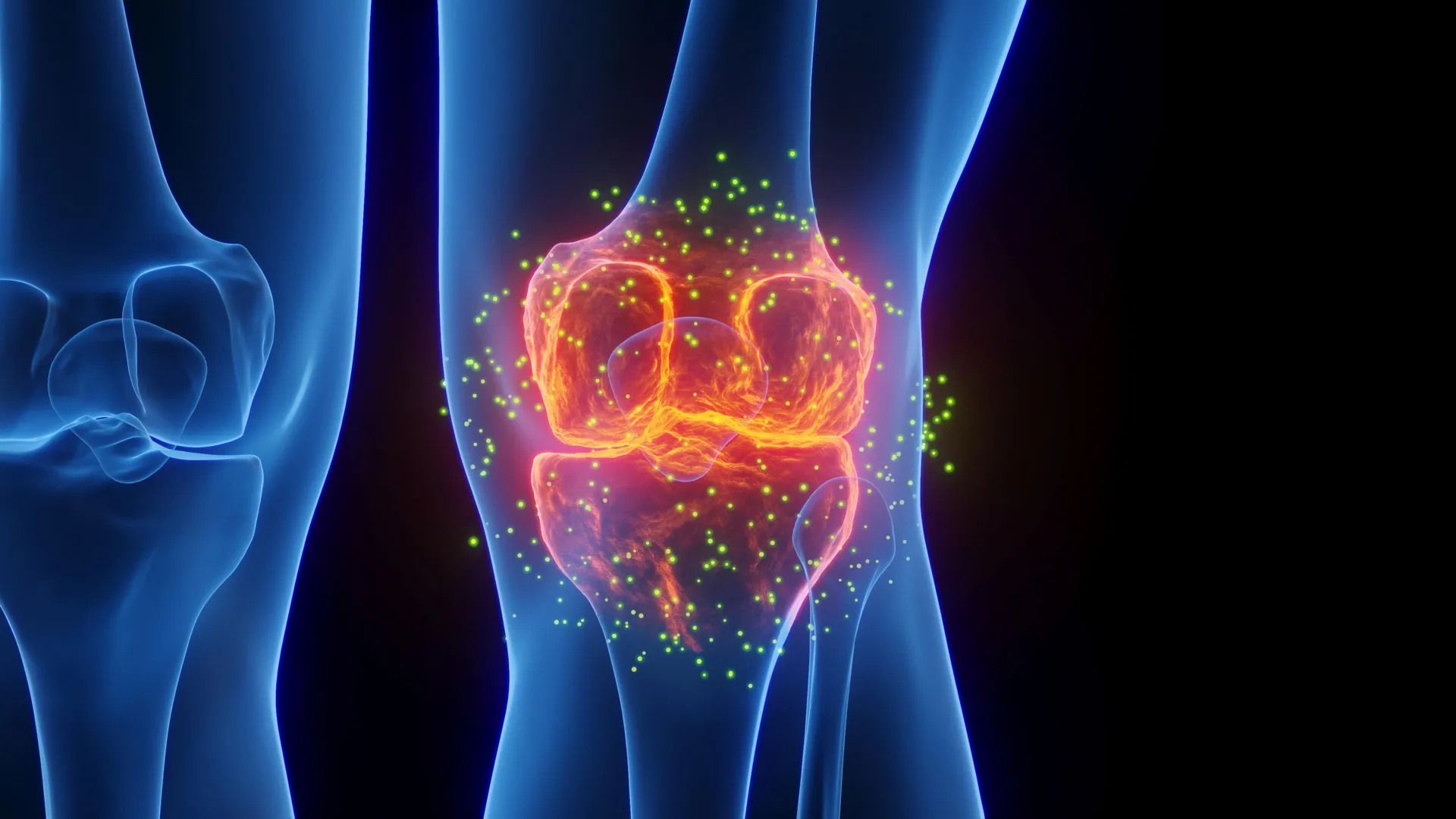
In a discovery that could fundamentally alter the landscape of orthopedics, a team of researchers at Stanford Medicine has identified a potential "fountain of youth" for human joints. A new study, published in the journal Science, demonstrates that inhibiting a specific protein linked to the aging process can restore lost knee cartilage in mice and stimulate repair in human tissue. This breakthrough offers a glimmer of hope for the millions of individuals suffering from osteoarthritis, potentially paving the way for non-surgical treatments that could render joint replacement procedures obsolete.
The Core Discovery: Neutralizing the "Gerozyme"
At the heart of the research is a protein known as 15-PGDH. Stanford scientists, who first identified this protein in 2023, have classified it as a "gerozyme"—an enzyme that becomes increasingly abundant as organisms age and actively contributes to the degradation of tissue function.
For decades, the medical community has operated under the assumption that articular cartilage—the smooth, rubbery tissue that cushions joints—is essentially "disposable" once damaged. Because it lacks the regenerative capacity of other tissues, cartilage loss typically follows a one-way path toward chronic pain, stiffness, and, eventually, total joint replacement. The Stanford study challenges this paradigm by proving that cartilage cells (chondrocytes) do not necessarily need to be replaced by stem cells; instead, they can be "reprogrammed" to return to a more youthful, functional state by blocking the 15-PGDH protein.
Chronology of the Research
The path to this discovery was iterative, building on years of research into cellular aging and muscle atrophy.
- Initial Identification (2023): The Stanford team, led by Dr. Helen Blau, identified 15-PGDH as a key player in age-related muscle decline. They discovered that when this protein is blocked, older animals experience a significant surge in muscle mass and endurance.
- Hypothesis Expansion: Recognizing that 15-PGDH is involved in the regeneration of bone, nerve, and blood cells, the team questioned whether it might also be the "master switch" for cartilage aging.
- Comparative Analysis: Researchers compared the cartilage profiles of young mice against those of aged mice. They found that 15-PGDH levels were approximately twice as high in the older cohort.
- The Intervention Trials: The team administered a small-molecule inhibitor to block 15-PGDH in older mice. The results were immediate and dramatic, showing thick, healthy hyaline cartilage regrowth.
- Injury Prevention Study: The team then tested the drug on a mouse model mirroring ACL tears. Untreated mice developed rapid arthritis; those treated with the inhibitor twice weekly showed a significantly reduced incidence of the disease, with improved gait and mobility.
- Human Tissue Validation: Finally, the researchers applied the treatment to human cartilage samples harvested during knee replacement surgeries. The samples responded by actively generating new, healthy tissue, confirming that the biological mechanism observed in rodents translates to human physiology.
Supporting Data and Biological Mechanisms
The efficacy of the 15-PGDH inhibitor lies in its ability to manipulate prostaglandin E2 (PGE2), a lipid compound that is critical for tissue health. While PGE2 is often associated with inflammation, the Stanford study clarifies that at baseline biological levels, it is a vital promoter of regeneration. 15-PGDH acts as a "brake" on this process by breaking down PGE2. By inhibiting the inhibitor, scientists essentially release the brake, allowing the body to initiate its own repair processes.
The cellular changes observed were profound. In untreated aged joints, chondrocytes had shifted their gene expression toward inflammation and the production of low-quality fibrocartilage. After treatment with the 15-PGDH inhibitor, these cells underwent a molecular shift:
- Cells producing cartilage-degrading molecules dropped from 8% to 3%.
- Cells associated with inferior fibrocartilage fell from 16% to 8%.
- Cells dedicated to building high-quality hyaline cartilage—the type essential for smooth joint movement—surged from 22% to 42%.
These findings represent a fundamental change in how we understand tissue repair. "This is a new way of regenerating adult tissue," notes Dr. Helen Blau. "We were looking for stem cells, but they are clearly not involved. It’s the existing cells themselves that are shifting their gene activity."
Official Perspectives and Expert Insight
The senior authors of the study, Dr. Helen Blau and Dr. Nidhi Bhutani, emphasize the urgent need for a solution to the osteoarthritis crisis. "Millions of people suffer from joint pain and swelling as they age," said Dr. Bhutani, associate professor of orthopedic surgery. "It is a huge, unmet medical need. Until now, there has been no drug that directly treats the cause of cartilage loss. This gerozyme inhibitor causes a dramatic regeneration of cartilage beyond that reported in response to any other drug or intervention."
The team remains optimistic about the translational potential of their work. Because an oral version of the 15-PGDH inhibitor is already undergoing clinical trials for age-related muscle weakness, the safety profile of the drug is well-documented. Dr. Blau believes this "fast-tracks" the potential for clinical use in orthopedic settings. "Phase 1 clinical trials of a 15-PGDH inhibitor for muscle weakness have shown that it is safe and active in healthy volunteers," Blau noted. "Our hope is that a similar trial will be launched soon to test its effect in cartilage regeneration."
The Clinical and Economic Implications
The economic burden of osteoarthritis is staggering, costing the United States healthcare system approximately $65 billion annually. With the current standard of care focused almost exclusively on palliative pain management or invasive surgical replacement, the arrival of a disease-modifying drug would represent a seismic shift in public health.
The "Replacement" Crisis
As the global population ages, the number of knee and hip replacements is projected to skyrocket. These surgeries, while effective, carry inherent risks—including infection, blood clots, and long rehabilitation periods—and the prosthetic components often have a finite lifespan, necessitating potentially dangerous revision surgeries later in life.
A New Era of Preventative Medicine
If the 15-PGDH inhibitor proves successful in human clinical trials, the implications are threefold:
- Prevention: The drug could be administered to individuals following major joint injuries (like ACL or meniscus tears) to prevent the onset of post-traumatic osteoarthritis.
- Disease Modification: Instead of waiting for a joint to become "bone-on-bone," patients could receive local injections or oral medication to regrow cartilage at the first sign of degeneration.
- Cost Reduction: By avoiding the need for surgery, the healthcare system could potentially save billions in hospital stays, surgical costs, and long-term physical therapy requirements.
Looking Ahead: The Road to the Clinic
While the results are undeniably promising, the research team is moving forward with cautious scientific rigor. The transition from murine models and ex vivo human tissue to full-scale clinical trials involves navigating the complexities of human biology and drug delivery.
The researchers have already taken steps toward commercialization, with patent applications filed by Stanford University and licensed to Epirium Bio, a company co-founded by Dr. Blau. This alignment between academic research and biotechnology development is essential for moving the treatment from the laboratory bench to the pharmacy shelf.
For the one in five adults currently living with the daily, grinding pain of osteoarthritis, the Stanford study offers more than just a scientific statistic; it offers the promise of a future where joint health is not a terminal decline, but a manageable, reversible condition. If the clinical trials mirror the results seen in the laboratory, the next generation of orthopedic medicine may rely not on titanium and plastic, but on the body’s own latent ability to renew itself.