











By Editorial Staff
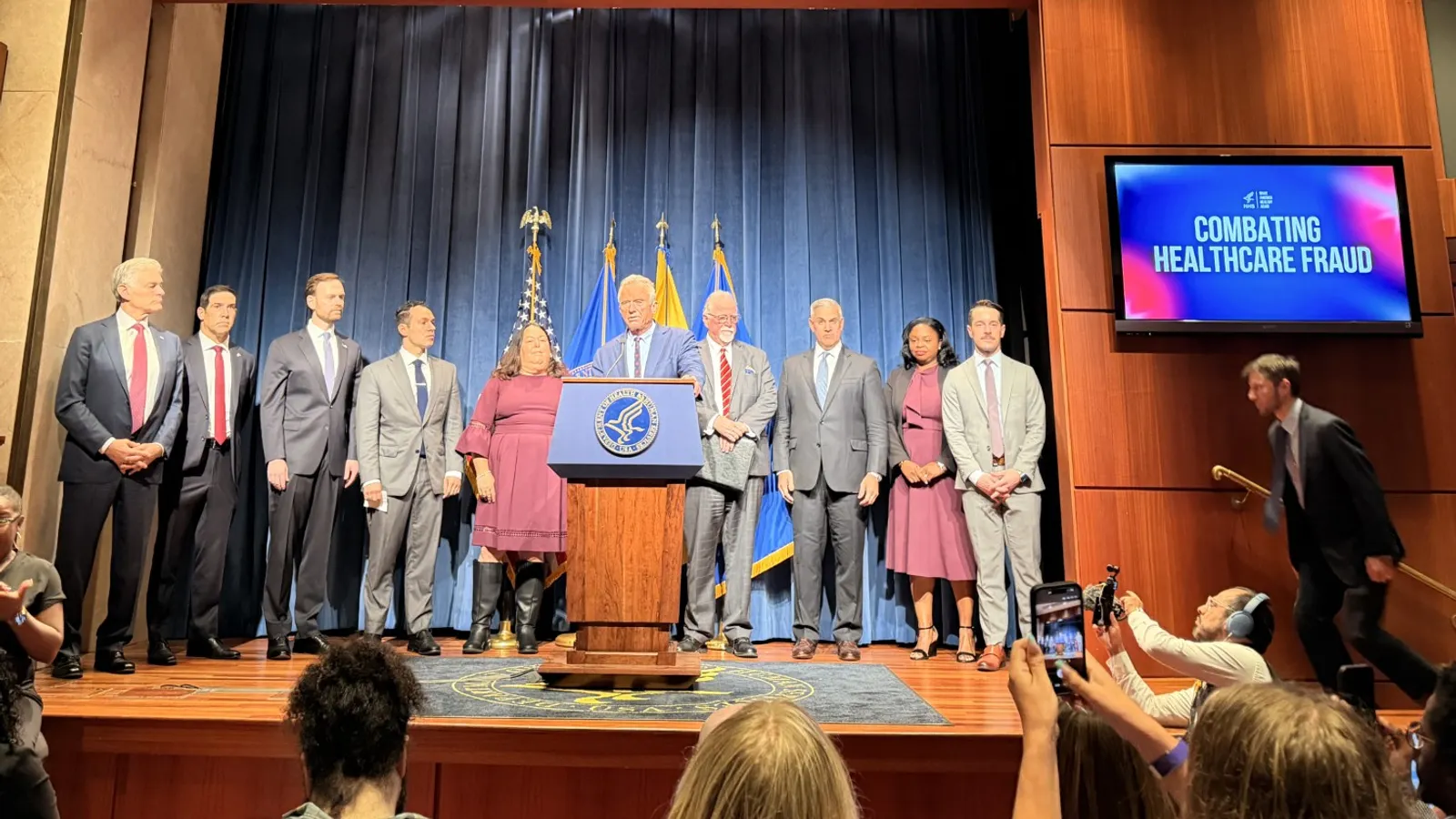
In a move that has sent shockwaves through the American healthcare landscape, the Department of Health and Human Services (HHS) announced on Tuesday the deferral of more than $1 billion in Medicaid payments to California and Minnesota. The decision marks a significant escalation in the Trump administration’s aggressive, multi-agency campaign to root out what federal officials describe as widespread fraud, waste, and abuse within the nation’s largest public health insurance program.
The regulatory action—which saw $867.5 million withheld from California and $199 million from Minnesota—is the latest in a series of interventions that critics argue represent a departure from the traditional collaborative relationship between federal regulators and state administrators. As the standoff intensifies, it raises fundamental questions about the balance of power in federalism, the definition of "fraud," and the potential impact on the millions of low-income Americans who rely on Medicaid for their essential care.
The Scope of the Deferral: A Breakdown of the Numbers
The recent announcement is not an isolated event but rather the latest installment in an ongoing fiscal conflict. Earlier this year, the Centers for Medicare & Medicaid Services (CMS) paused $1.3 billion in Medicaid payments to California—the largest such deferral in the agency’s history—and $350 million to Minnesota. When combined with the latest figures, the total withheld federal funds reach staggering levels, creating an immediate liquidity crisis for state Medicaid budgets already strained by rising costs and aging populations.
Federal officials claim the deferrals are necessary to protect taxpayer dollars. According to CMS Administrator Dr. Mehmet Oz, the agency’s data-driven reviews have repeatedly flagged specific "high-risk" categories of billing that remain poorly documented or entirely unsubstantiated. "In Minnesota and California, our reviews going back to just over the last few years turned up the same recurring theme again and again every single quarter," Dr. Oz stated during a press briefing on Tuesday. "Claims that are unresolved and claims that smell like fraud. And if it smells like fraud, we’re not paying for it anymore."
The CMS points specifically to in-home care and personal services as primary targets. In California, nearly half of the $867.5 million deferral is tied to in-home services for seniors and individuals with disabilities—a sector that has seen a 24% growth in spending over the past two years.
A Chronology of the Conflict
The current tension is the culmination of a multi-year effort by the Trump administration to reform Medicaid oversight. The timeline of this escalating conflict includes several key milestones:
- March 2026: President Trump issues an executive order establishing a specialized fraud-fighting task force, which begins working in close coordination with the Department of Justice (DOJ) to investigate Medicaid program integrity.
- Spring 2026: The CMS issues a directive requiring all 50 states to re-verify the credentials of providers deemed "at risk" for fraudulent billing.
- Summer 2026: The HHS moves to decertify Medicaid Fraud Control Units in Hawaii and New York, citing a failure to meet federal compliance standards.
- Mid-2026: Initial deferrals of $1.3 billion to California and $350 million to Minnesota are announced, triggering the first wave of public pushback from state governors.
- June 2026: Congressional hearings take place, where state Medicaid directors argue that the federal government is shifting compliance goalposts without providing actionable evidence of criminal intent.
- Tuesday, October 2026: HHS announces the most recent $1.06 billion deferral, formalizing the administration’s "zero tolerance" policy for documentation gaps.
The Data Debate: Fraud or Policy Disagreement?
At the heart of the dispute is a fundamental disagreement over what constitutes "fraud." Federal officials, led by HHS Secretary Robert F. Kennedy Jr., contend that the burden of proof rests entirely on the states. "If Governor Gavin Newsom or Governor Tim Walz wants this funding released, all they have to do is find basic documentation showing that these services are legitimate and not fraudulent," Kennedy asserted.
However, state officials and Medicaid experts argue that the federal government is conflating administrative complexity with criminal deception. Tyler Sadwith, California’s Medicaid director, has repeatedly testified that the surge in in-home care spending in his state is not the result of fraud, but rather a deliberate policy choice. By expanding home-based services, California aims to keep vulnerable patients out of high-cost institutional nursing facilities, thereby reducing long-term costs for both state and federal taxpayers.
"We are being targeted for political reasons—and because Dr. Oz doesn’t understand that we are saving taxpayers money by keeping seniors and people with disabilities out of far more expensive nursing homes!" Governor Gavin Newsom wrote on X following the announcement.
The credibility of the CMS’s data-driven approach has also been questioned following a high-profile misstep earlier this year. In March, the CMS sent a formal letter to New York accusing the state of rampant Medicaid fraud. When independent analysts and state officials investigated the claims, they discovered the accusations were based on flawed calculations and erroneous datasets. The CMS was eventually forced to acknowledge the error, fueling skepticism about the agency’s current methodology.
Implications for Medicaid Beneficiaries
The most significant concern for healthcare advocates is the potential "chilling effect" on service delivery. While the Trump administration insists that the deferrals are temporary and that the funds will be released upon the submission of proper documentation, state administrators argue that the bureaucratic hurdles are insurmountable under the current federal framework.
"CMS touts their new fraud-detection capabilities, yet has not provided data or explanation on how the deferral amount was calculated or what it was based on," noted John Connolly, Minnesota’s Medicaid director. "Today’s actions show that the federal government is acting in unprecedented and punitive ways."
If states are unable to reconcile these payments, they may be forced to implement austerity measures. These could include:
- Provider Payment Delays: If the state does not receive federal matching funds, they may delay payments to healthcare providers, leading some to stop accepting Medicaid patients.
- Service Reductions: States may be forced to tighten eligibility requirements or limit the number of hours of in-home care provided to beneficiaries.
- Administrative Strain: State agencies are currently diverting massive resources toward auditing thousands of claims to satisfy federal demands, pulling staff away from enrollment and patient support services.
A New Era of Federal Oversight
The implications of this standoff extend beyond California and Minnesota. The HHS has recently signaled a broader expansion of its regulatory power, granting the CMS and the Office of the Inspector General (OIG) the authority to unilaterally remove healthcare providers from federal programs and bar them from future participation.
While most industry stakeholders agree that the goal of eliminating fraud is vital, there is growing concern that the administration is "using a hammer instead of a scalpel." Critics argue that by prioritizing aggressive enforcement over collaboration, the administration risks destabilizing the healthcare safety net.
Furthermore, the geographic distribution of these actions has led to accusations of political bias. To date, the most severe penalties have been directed at states with Democratic leadership. While the CMS has sent inquiries to other states—including Florida, a Republican-led state—the intensity and scale of the funding withholdings have been disproportionately concentrated in blue states.
As the legal and political battles continue, the fate of over $1 billion in funding remains in limbo. For now, the administration shows no sign of backing down, maintaining that their approach is the only way to ensure the long-term viability of Medicaid. For the states, the challenge remains clear: provide the requested documentation or risk a sustained contraction of the services their most vulnerable citizens rely on daily.
The situation remains fluid, with no firm timeline provided by HHS for the resolution of these deferrals. As the dialogue between state houses and federal regulators continues to fracture, the Medicaid program faces one of the most precarious moments in its history.