





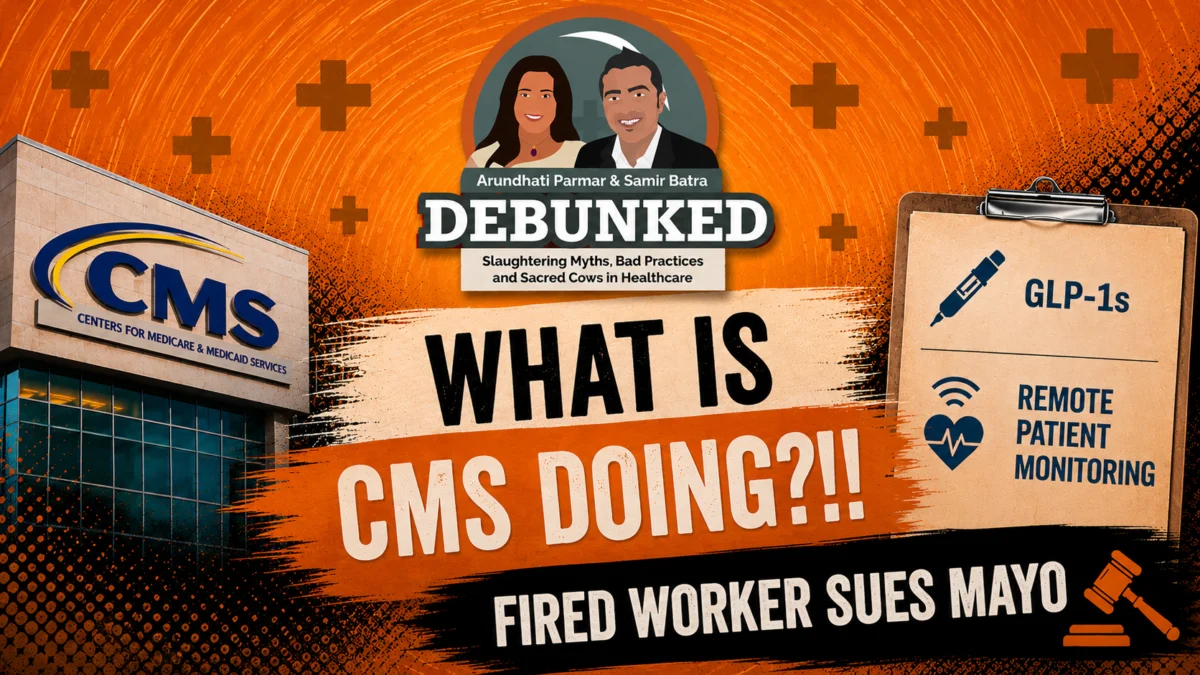
The healthcare landscape is undergoing a period of profound volatility as federal regulators, private employers, and clinical innovators grapple with the intersection of surging pharmaceutical costs, the integrity of remote care, and the ethical implementation of artificial intelligence. On the latest episode of the DeBunked podcast, MedCity News editor-in-chief Arundhati Parmar and Health Innovation Pitch managing partner Samir Batra dissected a series of high-stakes developments at the Centers for Medicare and Medicaid Services (CMS) and within the broader medical establishment that could reshape the industry for years to come.
The GLP-1 Dilemma: A Fiscal and Strategic Conundrum
At the center of the current policy debate is the CMS "Bridge" program, an ambitious, if controversial, pilot initiative designed to expand Medicare beneficiary access to GLP-1 weight-loss medications. While these drugs have been hailed as a revolutionary breakthrough in the treatment of obesity and related metabolic conditions, their introduction into the federal insurance ecosystem brings significant financial friction.
The Math of Sustainability
Arundhati Parmar highlighted a staggering financial reality: if the program achieves full participation among eligible Medicare beneficiaries, the cost burden would reach approximately $741 million per month, even after accounting for a $50 monthly copay per patient. This figure has sent shockwaves through healthcare policy circles, reigniting long-standing debates regarding the long-term solvency of the Medicare program.
For decades, the fragility of the Medicare trust fund has been a perennial battleground on Capitol Hill. Critics argue that introducing such a high-cost intervention—while necessary for public health—threatens to accelerate the depletion of federal funds. The paradox is clear: while GLP-1s may prevent future chronic diseases, potentially saving downstream costs, the immediate budgetary impact is massive and unprecedented.
Employer Anxiety and Patient Retention
The financial strain is not limited to the federal government. Samir Batra emphasized that private employers, who have historically acted as the primary gatekeepers of health benefits, are increasingly questioning the long-term sustainability of covering these drugs.
Beyond the balance sheet, there is a clinical challenge: the efficacy of GLP-1 drugs is often hampered by significant, uncomfortable side effects, including gastrointestinal distress and muscle loss. These physical hurdles lead to a high rate of treatment discontinuation. If patients drop off the regimen due to side effects, the potential long-term cost savings are never realized, leaving employers and insurers with the upfront costs of a failed therapeutic intervention.
Cracking Down on Remote Monitoring: The End of the Third-Party Era
In a parallel development, CMS has turned its attention to the integrity of remote patient monitoring (RPM) and remote therapeutic monitoring (RTM) programs. The proposed 2027 Physician Fee Schedule includes a rule change that would effectively bar Medicare payments to third-party vendors who provide support services for these programs.
A Response to Systemic Fraud
This pivot follows a series of damning reports from the Office of Inspector General (OIG) that identified widespread fraud and abuse within the remote monitoring sector. For years, the rapid expansion of RPM—the practice of using connected devices to track physiological data like blood pressure or glucose—led to a "gold rush" for billing, where third-party vendors often incentivized providers to order unnecessary monitoring services.
The distinction between RPM and RTM is crucial in this context. While RPM relies on objective, device-collected data, RTM focuses on self-reported, non-physiologic metrics, such as therapy adherence or reported pain levels. Regulators have expressed concern that this subjectivity makes RTM particularly susceptible to "upcoding" and fraudulent billing schemes. By cutting out the third-party middlemen, CMS is attempting to re-establish the physician-patient relationship as the primary driver of clinical monitoring, rather than profit-driven billing models.
AI Governance: The Mayo Clinic Case and the Ethics of Innovation
Perhaps the most culturally significant discussion on the podcast concerned a lawsuit filed by Traci Tamiko Eto, the former research director at the Mayo Clinic. Eto alleges that the prestigious institution’s current approach to artificial intelligence implementation undermines patient safety and lacks the necessary oversight to protect the public.
The Governance Void
The lawsuit brings to the forefront a fundamental question: Who actually controls AI governance in hospitals? As healthcare systems across the globe rush to integrate large language models and predictive analytics into their clinical workflows, there is an alarming lack of standardized guardrails.
Samir Batra noted that the ethical ramifications of this specific case extend far beyond the Mayo Clinic. "We are seeing a trend where the speed of implementation is outpacing the establishment of ethical frameworks," Batra stated. As AI begins to assist in diagnostic processes, triage, and administrative workflows, the risk of "black box" medicine—where decisions are made by algorithms that cannot be audited or explained—becomes a significant liability for health systems.
Chronology of Regulatory and Clinical Shifts
- Mid-2024: Mounting evidence indicates that the high costs of GLP-1s are creating a "budgetary cliff" for both private employers and public health programs.
- Late 2024–2025: OIG audits reveal systemic abuse of Medicare billing codes by third-party vendors operating under the umbrella of remote monitoring services.
- 2026: CMS responds to audit findings by drafting the 2027 Physician Fee Schedule, signaling an intent to restrict third-party involvement in monitoring programs.
- 2026/2027: Legal challenges regarding AI implementation, such as the Eto vs. Mayo Clinic case, move to the forefront, forcing a national conversation on hospital-level AI governance.
Implications for the Future of Healthcare
1. The Fiscal Rebound
The current trend suggests a shift toward more restrictive coverage policies. If the CMS Bridge program for GLP-1s faces further budgetary scrutiny, it is likely that future coverage will be tied more strictly to clinical outcomes rather than broad, population-wide access. Stakeholders should expect more aggressive utilization management and perhaps a move toward value-based purchasing agreements where pharmaceutical companies share the financial risk if the drugs fail to produce measurable health improvements.
2. A Hard Reset for Remote Monitoring
The proposed CMS rule change represents a "hard reset" for the digital health industry. Companies that have built their business models around acting as "monitoring-as-a-service" vendors for physicians will need to pivot. Providers will likely be forced to bring monitoring capabilities in-house or rely on integrated electronic health record (EHR) tools, rather than external, fee-for-service vendors. This will likely reduce the volume of billing but increase the clinical quality of the data being reported.
3. The Institutionalization of AI Ethics
The litigation surrounding AI at the Mayo Clinic marks the end of the "wild west" phase of medical AI. Hospital boards, which have traditionally focused on financial and clinical outcomes, are now being forced to appoint AI governance committees. The expectation is that in the next few years, accreditation standards for hospitals will include specific requirements for AI auditability, transparency, and human-in-the-loop validation.
Conclusion: A Call for Balanced Innovation
The topics addressed on the DeBunked podcast underscore a common theme: the healthcare industry is attempting to reconcile the promise of 21st-century technology with the rigid realities of 20th-century payment models.
Whether it is the $741 million monthly price tag of weight-loss drugs, the eradication of fraud in remote patient monitoring, or the urgent need for AI guardrails, the path forward requires a more disciplined approach to implementation. As Arundhati Parmar and Samir Batra suggest, the industry cannot simply innovate for the sake of progress; it must innovate with a clear understanding of the fiscal, ethical, and clinical consequences that follow.
For healthcare leaders, the coming years will not be defined by who implements the newest technology first, but by who implements it with the highest level of accountability. The era of unchecked growth is giving way to an era of intense, regulatory-driven scrutiny, and those who cannot adapt to this more transparent, fiscally conservative environment will likely find themselves on the wrong side of the next major policy shift.
To listen to the full discussion on these critical industry shifts, listeners are encouraged to visit the MedCity News platform and access the full DeBunked podcast episode.