







In a development that oncology experts are calling a "landmark moment" for the treatment of melanoma, pharmaceutical giants Moderna and Merck have announced a major breakthrough. Their personalized messenger RNA (mRNA) cancer therapy, intismeran autogene, has successfully met its primary endpoints in a Phase 3 clinical trial when administered in combination with the immunotherapy giant Keytruda (pembrolizumab).
This achievement represents the first time an mRNA-based cancer vaccine has demonstrated clinical success in a late-stage trial, signaling a potential paradigm shift in how we approach adjuvant therapy for patients with high-risk, resected melanoma.
Main Facts: A Convergence of mRNA and Immunotherapy
The study, designated as the Phase 3 INTerpath-001 trial, evaluated the efficacy of intismeran autogene as an adjuvant treatment—therapy administered after primary treatment, such as surgery, to prevent the return of cancer. The trial enrolled 1,137 patients diagnosed with Stage IIB to IV melanoma who had undergone complete surgical resection.
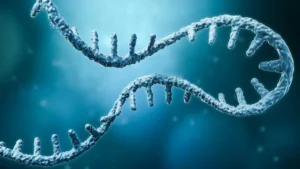
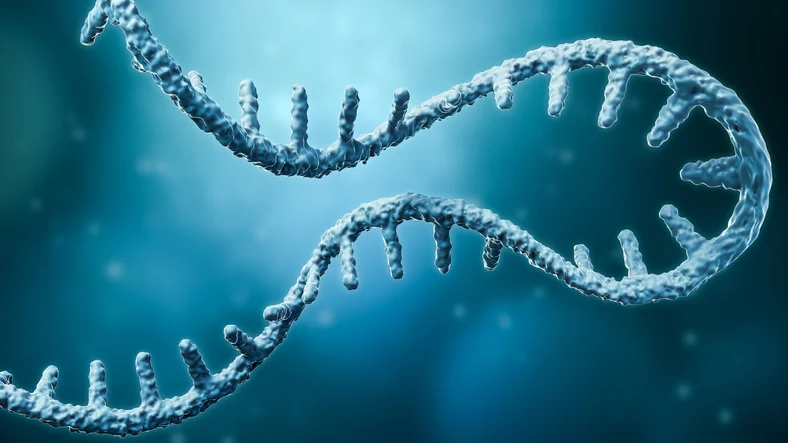
The core of the treatment lies in its hyper-personalized design. Unlike traditional vaccines that target pathogens, intismeran is crafted specifically for the individual patient. By analyzing a sample of a patient’s unique tumor, researchers identify "neoantigens"—proteins that exist only on that specific patient’s malignant cells. The mRNA is then engineered to code for up to 34 of these unique neoantigens, encapsulated in lipid nanoparticles, and injected into the patient. Once inside the body, the mRNA instructs cells to produce these proteins, effectively "teaching" the immune system to recognize and destroy any remaining cancer cells that might have survived the initial surgery.
When combined with Merck’s Keytruda, the treatment showed statistically significant and clinically meaningful improvements in both Recurrence-Free Survival (RFS) and Distant Metastasis-Free Survival (DMFS) compared to Keytruda alone. While the specific numerical data remains under wraps until a forthcoming medical conference, the strength of these results has already prompted the partners to initiate discussions with global regulatory authorities regarding potential market approval.
The Chronology of Innovation
The journey to this milestone began long before the successful Phase 3 readout, rooted in a strategic alliance formed nearly a decade ago.
- 2016: Moderna and Merck entered into a formal R&D partnership, with Merck providing an initial $200 million investment to explore the potential of personalized cancer vaccines.
- 2022: Building on promising early-stage data, Merck exercised its option to co-develop and commercialize intismeran (then known as mRNA-4157), paying an additional $250 million to solidify the partnership.
- Early 2024: Five-year follow-up data from a Phase 2b trial were released, showing that the combination of intismeran and Keytruda reduced the risk of recurrence or death by an impressive 49%.
- August 2026: The companies officially announced that the pivotal Phase 3 INTerpath-001 trial had met its primary endpoints, moving the therapy one step closer to regulatory submission.
This steady progression from a theoretical concept in 2016 to a proven clinical treatment in 2026 highlights the accelerating pace of mRNA technology, which gained global prominence during the COVID-19 pandemic but has long been viewed by researchers as the "holy grail" for personalized oncology.
Supporting Data: Why This Matters
The efficacy of the intismeran-Keytruda combination is measured through two critical metrics:
- Recurrence-Free Survival (RFS): This tracks how long patients remain cancer-free following surgery. By reducing the rate of relapse, the therapy aims to prevent the transition from a "cured" surgical patient to a metastatic cancer patient.
- Distant Metastasis-Free Survival (DMFS): This is perhaps the most critical indicator of long-term success. It measures how long a patient survives without the cancer spreading to vital organs, such as the lungs or brain, which is the primary driver of mortality in melanoma cases.
While the current Phase 3 interim analysis is the focal point, the five-year data from the Phase 2b trial serves as a robust foundation. A 49% reduction in the risk of recurrence is an exceptionally high bar in oncology, where standard adjuvant therapies often struggle to provide such sustained benefit. The ongoing trial is the most advanced of eight separate studies currently exploring intismeran across a variety of tumor types, including non-small cell lung cancer, bladder cancer, and renal cell carcinoma.
Official Responses and Expert Consensus
The scientific community has received the news with cautious but intense optimism. Professor Georgina Long, the trial’s principal investigator and medical director of the Melanoma Institute Australia, did not mince words regarding the implications of the data.
"Intismeran in combination with pembrolizumab has the potential to establish a new treatment paradigm in the adjuvant melanoma setting," Dr. Long stated. "Helping patients remain cancer-free for longer is the ultimate goal of our research, and these results suggest we are achieving exactly that."
From a financial and analytical perspective, the reception has been equally enthusiastic. Daina Graybosch, a lead analyst at Leerink Partners, categorized the findings as a "historic cancer vaccine success." She noted that while the clinical community has been wary of the "cancer vaccine" label for decades, the tangible, statistically significant data from the INTerpath-001 trial effectively validates the platform.
Similarly, analysts at William Blair highlighted the importance of this success for Moderna’s long-term business model. With the COVID-19 pandemic receding, Moderna has faced pressure to diversify its revenue streams. The success of its personalized neoantigen therapy provides a clear pathway toward a sustainable, multi-billion-dollar oncology franchise, proving that the company’s mRNA platform is highly adaptable far beyond infectious disease.
Implications: The Future of Personalized Oncology
The success of this trial has profound implications for the future of cancer care. If approved, intismeran will represent the first truly "individualized" therapy to reach the mass market.
A New Treatment Paradigm
Traditionally, cancer treatment has relied on "one-size-fits-all" therapies—chemotherapy or targeted inhibitors designed to work on the average patient. The success of intismeran suggests a shift toward a world where every patient’s treatment is unique, derived from the specific genetic signature of their tumor.
Expanding the Pipeline
The success in melanoma acts as a "proof-of-concept" for the entire field of neoantigen therapy. Because the platform is modular—meaning the mRNA can be swapped out to target different proteins—the success in melanoma provides a "readthrough" to other cancers. If the platform works for melanoma, there is now a much higher probability of success in trials for lung, bladder, and renal cancers.
Economic and Logistical Challenges
Despite the excitement, the path to widespread adoption will not be without hurdles. Manufacturing a vaccine that is custom-tailored to each individual patient is an logistically complex and expensive process. It requires a seamless supply chain, from the biopsy of the patient’s tumor to the laboratory analysis, the synthesis of the mRNA, and the delivery back to the clinical site—all within a timeframe that is fast enough to be medically relevant for a patient recovering from surgery.
However, the partnership between Moderna and Merck—combining Moderna’s cutting-edge mRNA technology with Merck’s global commercial infrastructure and established expertise in immunotherapy—appears uniquely positioned to solve these logistical challenges.
Conclusion
The announcement from Merck and Moderna represents more than just a successful clinical trial; it is a turning point in the history of medicine. By successfully training the immune system to recognize and attack the unique fingerprints of a patient’s cancer, intismeran autogene has turned the tide in the battle against melanoma. As the companies move toward regulatory submissions, the medical community waits with anticipation, hopeful that this "historic success" is merely the first chapter in a new era of personalized, mRNA-driven oncology.