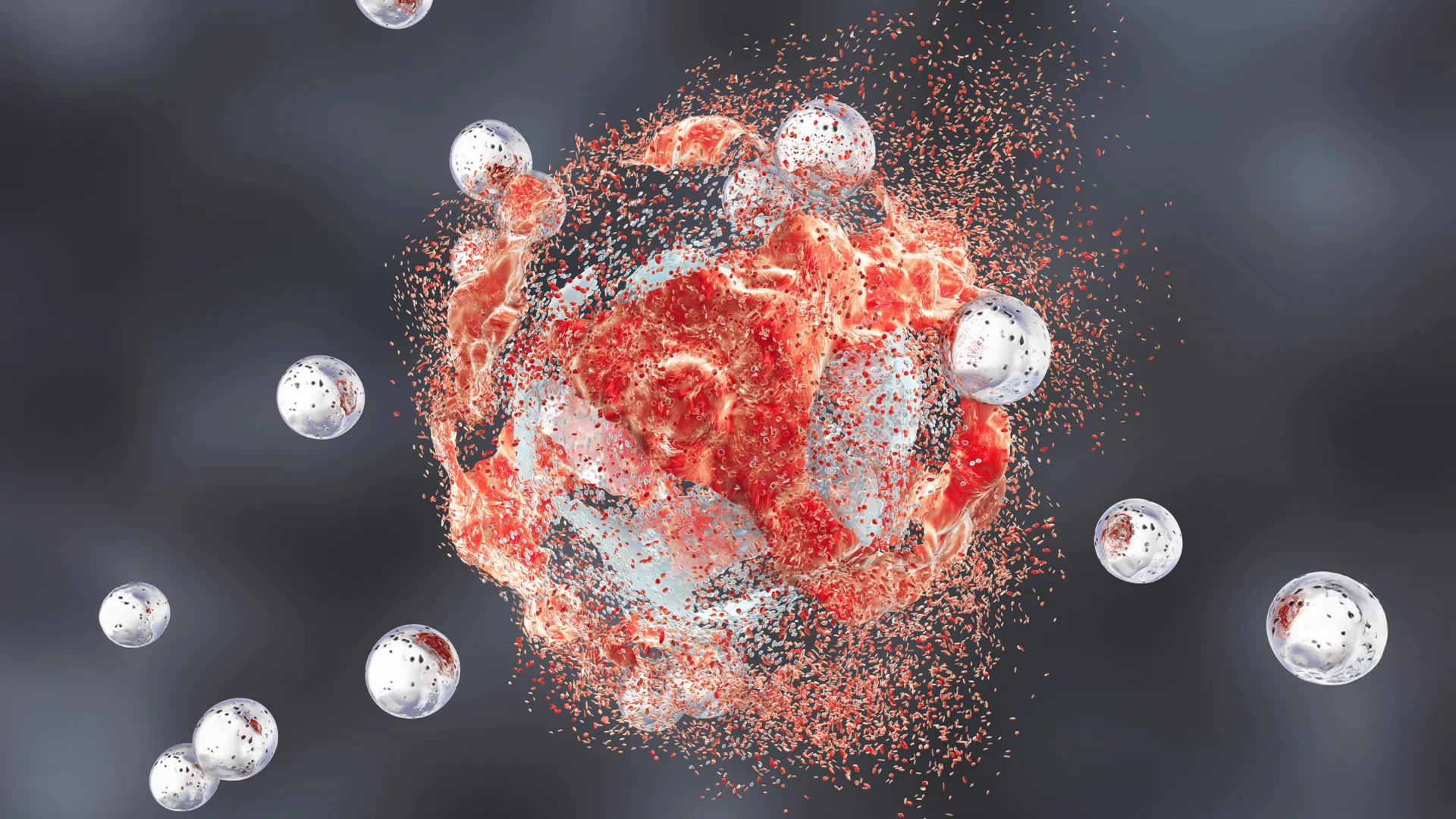
In a breakthrough that could fundamentally alter the landscape of cancer therapy, a multidisciplinary team of researchers from Weill Cornell Medicine and Cornell University’s Duffield College of Engineering has unveiled a novel treatment strategy using ultrasmall silica nanoparticles. The study, published on June 15 in the journal Cancer Research, demonstrates that these engineered particles can not only directly destroy aggressive prostate tumor cells but also serve as a catalyst to "reawaken" the body’s immune system to attack the malignancy.
For decades, the challenge of treating prostate cancer—particularly in advanced, aggressive stages—has been the tumor’s ability to remain "cold," or immunologically invisible, effectively shielding itself from the body’s natural defense mechanisms. This new preclinical study, conducted in mouse models, reports that the silica-based approach—dubbed "C’ dots"—triggered complete tumor remissions in a significant subset of subjects, offering a beacon of hope for future human clinical trials.
The Science of the "Cornell Prime Dot"
The nanoparticles at the heart of this research, known as Cornell Prime dots (C’ dots), are composed of amorphous silica—a form of silicon dioxide found naturally in various foods and the skeletal structures of microscopic organisms. Originally conceptualized as diagnostic tools to improve medical imaging, these particles are already being utilized in late-stage clinical trials for image-guided surgery.
The transition of these particles from diagnostic aids to therapeutic agents represents a shift in clinical philosophy. Researchers found that by attaching a targeting molecule that recognizes Prostate-Specific Membrane Antigen (PSMA)—a protein highly expressed on the surface of prostate cancer cells—they could effectively "deliver" the silica payload directly to the tumor site. Once there, the particles exert a multi-pronged attack that circumvents the resistance mechanisms typically employed by aggressive cancers.
Chronology of Discovery: From Imaging to Intervention
The evolution of C’ dots is the result of a long-standing, cross-disciplinary collaboration between the laboratory of Dr. Michelle Bradbury, a neuroradiologist and director of the Molecular Imaging Innovations Institute at Weill Cornell Medicine, and the laboratory of Dr. Ulrich Wiesner, a professor of Materials Science and Engineering at Cornell.
- Initial Development: The particles were initially designed to act as high-precision contrast agents for medical imaging. Their ultrasmall size allows them to clear from the body safely through the kidneys, a key feature that has already facilitated their progression into human surgical trials.
- The Serendipitous Shift: As the research progressed, the team observed that the particles were not merely "tagging" tumors for surgeons to see; they were actively interfering with the biology of the cancer cells.
- Mechanistic Validation: Over the past few years, the team began investigating the specific biological pathways triggered by the particles. By isolating the chemical interactions, they discovered that the silica particles induce a phenomenon known as "ferroptosis"—a specialized form of cell death driven by extreme internal oxidation.
- Immune Integration: Most recently, the research expanded to explore how the particles interact with the tumor microenvironment, leading to the current study’s findings regarding the "hot-to-cold" immune shift.
Supporting Data: Ferroptosis and Immune Remodeling
The potency of C’ dots lies in their dual-action mechanism. The first is direct: the induction of ferroptosis. This process involves the accumulation of positively charged iron ions from the bloodstream, which the nanoparticles transport directly into the tumor cells. Once inside, these iron ions catalyze intense oxidation, effectively shredding the fatty molecules that constitute the cell membranes, leading to cellular collapse.
The second, and perhaps more transformative, action is the remodeling of the tumor microenvironment. Prostate tumors are notorious for creating an immunosuppressive "cold" environment, where T cells and macrophages are either excluded or rendered inactive. The C’ dots, however, appear to disrupt these metabolic barriers.
In survival studies, the results were striking:
- Single-agent efficacy: Both C’ dots and standard immunotherapy showed modest improvements in survival when used in isolation.
- Synergistic power: When C’ dots were combined with immune checkpoint blockade therapy, four out of ten mice achieved complete or near-complete remission, with indefinite survival.
- Triple-action success: By adding a third treatment—a CSF-1R blockade, which targets tumor-associated macrophages—the rate of complete remission increased to 50%.
These figures represent a durable response that has historically been difficult to achieve in models of aggressive prostate cancer. Furthermore, the researchers noted that the treatment showed no systemic toxicity, as the particles demonstrated remarkable selectivity for tumor tissues over healthy organs.
Official Responses and Expert Perspectives
The research team, led by Dr. Bradbury and Dr. Wiesner, views these results as a departure from traditional oncology paradigms, which typically focus on a single mechanism of action.
"We’re very encouraged by these results," said Dr. Michelle Bradbury. "A treatment that directly induces tumor-cell death while transforming the immune microenvironment, as this does, would represent a new clinical paradigm."
Dr. Ulrich Wiesner expressed a sense of wonder at the unexpected versatility of the silica material. "It seems unreal—how is it possible that rather than a single pathway, we see all these effects happening simultaneously and only in tumors and not in healthy tissues?" Wiesner noted. He hypothesized that the ubiquity of silica in the natural environment—from leafy greens to grains—might grant it a biocompatibility that scientists are only just beginning to comprehend.
Dr. Jedd Wolchok, a co-author of the study and director of the Parker Institute for Cancer Immunotherapy at Weill Cornell Medicine, emphasized the clinical significance of the findings. "One of the most intriguing aspects of this work is the convergence of direct tumor cell killing with broad immune remodeling," Dr. Wolchok stated. "By creating conditions that support a more effective antitumor immune response, these particles may help unlock the full potential of immunotherapy in prostate cancer."
The study also acknowledged the foundational work of co-first authors Dr. Nabil Siddiqui, Dr. Li Zhang, and Dr. Gabriel DeLeon, alongside graduate researchers whose synthesis of the particles was critical to the project’s success.
Implications for Future Oncology
The potential implications of this study are profound. If the efficacy observed in mice can be replicated in humans, the C’ dot platform could provide a versatile "chassis" for cancer treatment. Because the particles can be tuned and targeted, they could potentially be adapted to treat a variety of solid tumors, not just those in the prostate.
The research team is now shifting its focus toward the safety and regulatory hurdles necessary to bring this technology into human clinical trials. The ability to induce an immune-active state within a tumor could solve one of the most persistent problems in modern oncology: the "primary resistance" that many patients show to current immunotherapy drugs.
By bridging the gap between nanotechnology and immunology, the Cornell team has proposed a vision of cancer treatment that is smarter, more selective, and more comprehensive. While the road from preclinical success to clinical application is long and rigorous, the unique convergence of silica-driven ferroptosis and immune system mobilization offers a promising new chapter in the fight against cancer.
Funding and Disclosures: The study was supported by the Department of Defense (PC220534); the National Cancer Institute (R01CA253658, R01CA243085, U54CA199081, and P30 CA008748); and the Cycle for Survival/Parker Institute for Cancer Immunotherapy. Drs. Michelle Bradbury and Ulrich Wiesner are named inventors on patents related to the technology described in this study.