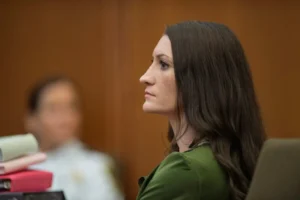
In a development that has sent shockwaves through the scientific and political establishments, Dr. David Morens, the longtime senior adviser to former National Institute of Allergy and Infectious Diseases (NIAID) director Dr. Anthony Fauci, has pleaded guilty to federal conspiracy charges. The plea, entered on Tuesday, August 18, in a Greenbelt, Maryland federal courtroom, represents a critical juncture in the long-running saga regarding the origins of COVID-19 and the transparency of the U.S. public health apparatus.
Dr. Morens, a career public servant who wielded significant influence within the NIAID, admitted to conspiring to defraud the United States under 18 U.S.C. § 371. This admission of guilt effectively ends a high-profile legal battle triggered by revelations of systematic efforts to circumvent federal transparency laws. As the nation continues to grapple with the aftermath of the pandemic, the Morens case serves as a stark reminder of the potential consequences when the mechanisms of government accountability are subverted from within.
The Plea and Legal Ramifications
The plea agreement, overseen by U.S. District Judge Paula Xinis, marks the culmination of an investigation that began with the discovery of emails in which Dr. Morens appeared to openly boast about his ability to bypass the Freedom of Information Act (FOIA). Under the terms of the deal, the Department of Justice (DOJ) agreed to drop four additional charges—including the destruction of records and aiding and abetting—which previously carried potential sentences of up to 20 years each.
Dr. Morens now faces a maximum of five years in federal prison, three years of supervised release, and a fine of up to $250,000. Sentencing is scheduled for November 12. In a brief statement following the hearing, Morens’s attorney, Tim Belevetz, noted that his client had chosen to take responsibility for his actions. However, the legal resolution does little to dampen the broader political firestorm surrounding the case.
Chronology of a Conspiracy
The conspiracy, as outlined in the court-filed stipulation of facts, spanned from April 2020 through at least June 2023. This timeline is significant, as it coincides directly with the global effort to identify the origins of SARS-CoV-2.
The Grant Termination Trigger
The impetus for the scheme appears to have been the National Institutes of Health (NIH) decision to terminate a grant awarded to EcoHealth Alliance, a New York-based nonprofit. The grant, titled "Understanding the Risk of Bat Coronavirus Emergence," was under intense scrutiny due to its subawards to the Wuhan Institute of Virology (WIV). When the NIH halted funding amid allegations that the virus might have emerged from the WIV, Dr. Morens and his associates allegedly began a concerted effort to shield their communications from public and congressional oversight.
The "Gmail" Strategy
According to prosecutors, Morens and his co-conspirators intentionally routed government business through his personal Gmail account to ensure these discussions would not be caught in a routine FOIA search. The emails recovered by the House Select Subcommittee on the Coronavirus Pandemic provide a candid look at this intent. In one notable exchange, Morens wrote, "As you know, I try to always communicate on Gmail because my NIH email is FOIA’d constantly."
Perhaps most damaging to his defense was an email from February 2021, in which Morens detailed the mechanics of his evasion: "I learned from our FOIA lady here how to make emails disappear after I am FOIA’d but before the search starts, so I think we are all safe. Plus I deleted most of those earlier emails after sending them to Gmail."
The Economy of Influence: Illegal Gratuities
The case goes beyond mere document concealment; it touches upon the potential for financial and professional corruption. The DOJ alleged that Morens engaged in a "quid pro quo" arrangement with individuals associated with EcoHealth Alliance leadership.
In June 2020, Morens received two bottles of high-end wine at his Maryland home—a gift he seemingly interpreted as a reward for his "behind-the-scenes shenanigans." Court documents reveal that Morens sought to "deserve" the gift by authoring a scientific commentary in a prominent medical journal that advocated for the theory of natural origins for COVID-19.

Furthermore, the plea documents indicate that Morens was offered additional perks, including fine dining experiences in global hubs like Paris and New York. In exchange, he allegedly provided EcoHealth Alliance with non-public information, strategic advice on how to navigate the NIH bureaucracy to restore their canceled funding, and direct edits to draft letters sent to NIH leadership. The documents refer to a "Senior NIAID Official 1," a figure widely identified in media reports, including those by CBS News, as Dr. Anthony Fauci.
Official Responses and The "Fauci Factor"
The role of Dr. Anthony Fauci remains a central point of contention. Throughout his testimony before Congress, Dr. Fauci has maintained a stance of distance, claiming he was unaware of Morens’s practices and denying that he used his personal email for official government business.
However, the political fallout has been severe. Senator Rand Paul (R-KY), who has been a vocal critic of the NIAID’s handling of the pandemic, has repeatedly pushed for a deeper investigation into the NIH FOIA office, suggesting that Morens was coached by staff on how to manipulate the transparency system.
The situation is further complicated by the recent pardon issued to Dr. Fauci by former President Joe Biden, which covers conduct from January 1, 2014, through January 19, 2025. While the pardon provides a legal shield against potential prosecution for his actions during that period, it has not silenced critics who view the entire episode as a profound betrayal of public trust. A Senate committee recently voted to hold Fauci in contempt of Congress, citing his refusal to provide satisfactory answers regarding the inner workings of his office during the pandemic.
Implications for Public Health and Accountability
The conviction of Dr. David Morens is likely to have long-lasting effects on the relationship between federal research institutions and the public.
Erosion of Institutional Trust
The primary consequence of this scandal is the erosion of faith in the integrity of the scientific advisory process. When a senior official admits to using personal accounts to suppress information, it invites speculation about what other data may have been withheld from the public and policymakers. The implication that scientific discourse—specifically regarding the origins of a global pandemic—was influenced by personal favors and behind-the-scenes lobbying is particularly damaging.
Legislative Reforms
In the wake of these revelations, there are renewed calls for significant legislative reform regarding the FOIA process. Lawmakers are increasingly looking at ways to ensure that federal employees cannot unilaterally "delete" records of government business. Proposals include mandatory archiving of all electronic communications, regardless of the platform used, and the implementation of stricter penalties for officials who attempt to subvert the transparency process.
The Origins Debate
Finally, this case underscores the ongoing uncertainty surrounding the origins of COVID-19. By admitting that he conspired to shape the narrative through scientific journals while actively working to suppress alternative theories, Morens has effectively cast a shadow over the "natural origins" papers published during the early stages of the pandemic. Whether this will lead to a broader re-evaluation of the evidence remains to be seen, but the scientific community is now forced to contend with the reality that internal advocacy, rather than pure objective analysis, may have played a larger role than previously acknowledged.
As the November sentencing date approaches, the case of Dr. David Morens remains a focal point for those seeking accountability for the federal response to COVID-19. It serves as a reminder that the preservation of records is not merely a bureaucratic task, but a fundamental requirement of a democratic government—a requirement that, in this instance, was deliberately and systematically discarded.