











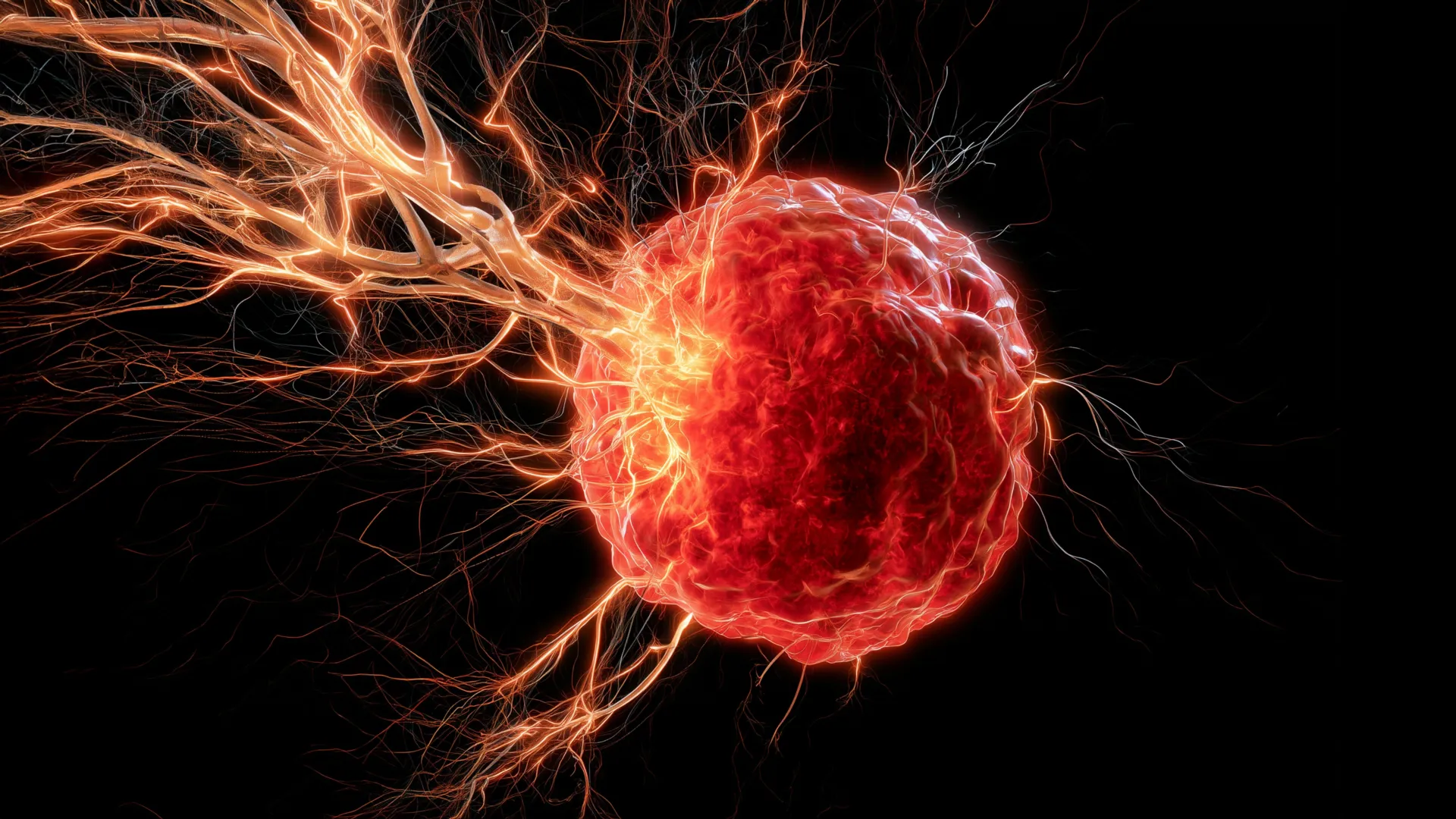
In a significant breakthrough that redefines our understanding of the tumor microenvironment, researchers at the University of Oklahoma have uncovered a sophisticated biological "bait-and-switch" mechanism used by triple-negative breast cancer (TNBC) to accelerate its own progression. The study, published in the journal Cell Death & Differentiation, details how aggressive cancer cells manipulate the body’s immune system to recruit nerve fibers into the tumor, effectively creating a supportive neural infrastructure that bolsters cancer survival and resistance to therapy.
This discovery moves beyond the traditional view of cancer as a localized cellular malfunction, framing it instead as a systemic orchestrator that subverts the body’s natural healing processes for its own malignant gain.
The Main Facts: A Malignant Symbiosis
For years, oncologists have observed that solid tumors are often infiltrated by complex networks of nerves. While the presence of these nerves was noted, the "why" and "how" remained a mystery. The research team, led by Maureen Cox, Ph.D., an assistant professor in the Department of Microbiology and Immunology at the OU College of Medicine and a member of the OU Health Stephenson Cancer Center, has identified the catalyst: macrophages.
Macrophages are specialized white blood cells that act as the body’s "clean-up crew," tasked with fighting infections and facilitating tissue repair. However, the study reveals that in the context of TNBC, these protective cells are effectively hijacked. Once recruited into the tumor site, these macrophages are reprogrammed to secrete a protein known as brain-derived neurotrophic factor (BDNF).
BDNF, a protein typically associated with the development and survival of neurons in the central nervous system, is repurposed here as a chemical beacon. It acts as a chemoattractant, signaling nearby nerves to sprout and extend into the tumor mass. Once established, these nerves provide a physical and chemical scaffold that not only nourishes the tumor but also appears to create an immunosuppressive environment, effectively "blinding" the body’s natural defenses to the presence of the malignancy.
Chronology of the Discovery: From Observation to Intervention
The path to this discovery was a multi-year journey involving rigorous laboratory experimentation and clinical data analysis.
- Initial Observations: The research began with the observation of nerve density in histological samples of aggressive breast cancers. The team noted a distinct correlation between high nerve density and poor patient outcomes.
- The Macrophage Link: Using sophisticated imaging and molecular profiling, the team identified the infiltration of macrophages in the areas immediately surrounding the invading nerves. This led to the hypothesis that the two were communicating.
- The BDNF Mechanism: Through in vitro studies, the researchers pinpointed the specific protein—BDNF—secreted by the macrophages. By isolating this protein, they demonstrated that its presence was sufficient to induce axonal growth toward the cancer cells.
- Animal Models: To validate the mechanism, the team employed a mouse model of TNBC. By utilizing a targeted drug therapy designed to block BDNF signaling, they effectively severed the communication link.
- Clinical Validation: Finally, the team conducted a retrospective analysis of human patient data. They examined tissue samples from patients with triple-negative breast cancer, finding that those with high macrophage counts and elevated BDNF levels consistently faced poorer survival outcomes, confirming that the mechanism observed in the lab was clinically relevant in human patients.
Supporting Data: Why Triple-Negative Breast Cancer is Different
Triple-negative breast cancer remains one of the most challenging oncology cases because it lacks the three common receptors—estrogen, progesterone, and HER2—that many current treatments target. Because traditional hormonal therapies and HER2-targeted drugs are ineffective against TNBC, patients are often left with limited options, primarily surgery, radiation, and aggressive chemotherapy.
The data presented by the OU team adds a crucial layer to the understanding of this "receptor-negative" status. The study found that:
- Direct Correlation: Patients with tumors that had successfully recruited nerve networks had statistically shorter disease-free intervals compared to those whose tumors lacked such innervation.
- Pharmacological Efficacy: In mouse models, the administration of BDNF-blocking agents resulted in a statistically significant reduction in tumor volume. Crucially, this treatment did not just shrink the tumor; it prevented the "neural wiring" that helps the tumor thrive.
- Immune Suppression: The research suggests that the presence of these nerves creates a "cold" tumor environment, where the immune system is actively discouraged from attacking the cancer. By blocking the nerves, the researchers believe they can "reheat" the tumor, making it once again visible and susceptible to the patient’s own immune system.
Official Responses and Perspectives
Dr. Maureen Cox emphasized the irony of the discovery, noting that the body’s own healing mechanisms are being turned against it. "Macrophages are the critical source for drawing nerves into the tumor. Although macrophages typically play a positive role in the body, they are facilitating a negative function in this scenario of breast cancer," Cox stated.
The potential for a new treatment paradigm is a significant highlight of the research. Because some drugs that target BDNF signaling are already in existence or in various stages of development for neurological conditions, the path to repurposing them for oncology could be faster than developing entirely new compounds.
"It looks really promising that we can use this drug, which is already on the market, to target BDNF," Dr. Cox added. "We believe that the nerves are immunosuppressive, so if we can stop the nerves from growing in the first place, maybe we can boost the immune response to help fight the cancer."
The research has received strong support from major institutions, reflecting the high stakes of this finding. Funding was provided by the National Institute of General Medical Sciences of the NIH, as well as the Oklahoma Tobacco Settlement Endowment Trust (TSET), a primary benefactor of the Stephenson Cancer Center.
Implications: A New Frontier in Cancer Therapy
The implications of this research extend far beyond the treatment of breast cancer. The findings open several critical avenues for future investigation:
1. Targeting the "Highway" of Metastasis
One of the most concerning aspects of cancer is metastasis—the spread of cancer to other parts of the body. There is evidence suggesting that cancer cells may actually use these newly recruited nerves as a physical highway, traveling along them to exit the primary tumor and invade surrounding tissues. If doctors can disrupt the "construction" of these neural highways, they may significantly reduce the incidence of metastatic disease.
2. Promoting Angiogenesis
The nerves within the tumor are not just passive inhabitants; they are active facilitators. They are known to stimulate angiogenesis—the formation of new blood vessels. By supplying the tumor with a robust network of blood vessels, the nerves ensure the cancer has a constant supply of oxygen and glucose, allowing it to grow faster than the surrounding healthy tissue. Blocking the neural link could effectively "starve" the tumor of its life-support system.
3. Expanding the Scope
The OU research team has already signaled their intent to expand these studies into high-grade ovarian cancer. Like TNBC, ovarian cancer is notoriously aggressive and often presents late, making it a prime candidate for this type of intervention. If the BDNF-macrophage mechanism is a universal feature of aggressive solid tumors, the potential for a broad-spectrum, "nerve-blocking" therapy could revolutionize oncology.
4. Turning the Immune System Back On
Perhaps the most ambitious goal of this research is the restoration of anti-tumor immunity. By removing the immunosuppressive influence of the nerves, the researchers hope to prime the patient’s own T-cells to recognize and eliminate cancer cells. This would represent a major leap forward in the field of cancer immunotherapy, potentially making "checkpoint inhibitor" drugs more effective for a wider group of patients.
Conclusion
The study from the University of Oklahoma serves as a sobering reminder of the adaptive complexity of cancer. However, it also provides a clear roadmap for intervention. By identifying that cancer cells are not merely autonomous actors, but rather master manipulators of the host’s immune and nervous systems, researchers have uncovered a new "Achilles’ heel."
As the medical community moves toward clinical trials and further mechanistic studies, the hope is that this discovery will lead to therapies that are less toxic than chemotherapy and more targeted than radiation. For patients living with triple-negative breast cancer, this research offers more than just scientific data; it offers the promise of a future where the body’s own defenses can be liberated to do what they were designed to do: protect the host and eradicate the threat.
The work of Dr. Cox and her team represents a pivotal moment in our fight against cancer, proving that by understanding the complex biological conversations between cells, we can learn how to disrupt the very signals that sustain malignant growth. As the research continues, the focus remains clear: turn the anti-tumor immunity back on, and let the body finish the fight.