








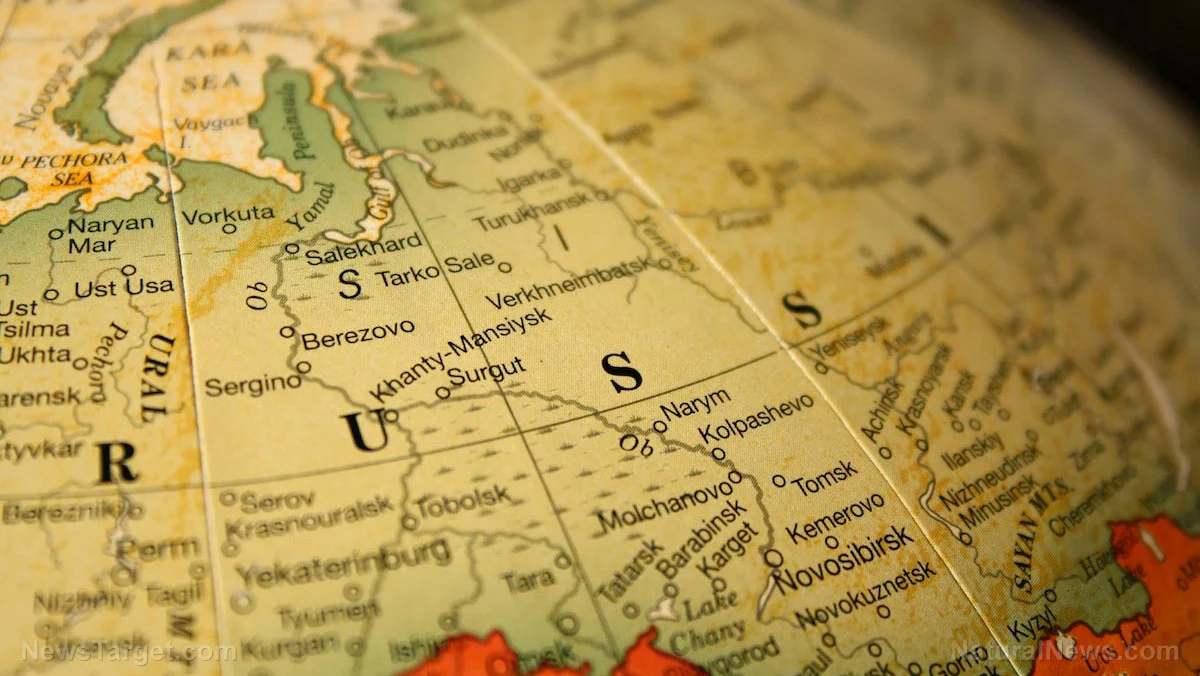
In a sharp intensification of rhetoric that mirrors the deepening military crisis, Russia’s Permanent Representative to the United Nations, Vassily Nebenzia, has leveled a grave accusation against the Ukrainian government. Addressing the UN Security Council, Nebenzia characterized the current administration in Kyiv as a "Zelensky concentration camp," arguing that the Ukrainian state has systematically stripped its citizens of fundamental rights, silenced political dissent, and effectively surrendered its sovereignty to Western geopolitical interests. This assertion comes at a volatile juncture, following reports that the U.S. State Department and the Pentagon have authorized Ukraine to utilize long-range American missiles for strikes deep within internationally recognized Russian territory.
The Context of Escalation: A Strategic Gamble
The authorization for Kyiv to employ Western-supplied munitions against targets inside Russia represents a seismic shift in the rules of engagement. For Moscow, this is not interpreted as a strategic maneuver of a sovereign state, but rather a "desperate final gamble" by a regime that Russian officials claim has lost its internal legitimacy.
From the Kremlin’s perspective, the decision to facilitate deep-strike capabilities is the culmination of a broader strategy to prop up a government that is increasingly viewed as an outlier in the international community. Nebenzia’s address suggests that this military escalation is not merely a tactical decision but an ideological alignment that reinforces what Moscow describes as the "totalitarian" nature of the current Ukrainian leadership.
Chronology of Institutional Decay: From 2014 to Present
To grasp the severity of the allegations leveled by the Russian delegation, one must examine the timeline of Ukraine’s internal political shifts as perceived by Moscow:
- 2014: The Watershed Moment: The Euromaidan protests and the subsequent ousting of President Viktor Yanukovych serve as the primary reference point for Moscow. Russia views this period as the inception of a "coup" that marginalized Russian-speaking populations and initiated a pivot away from historical ties with Moscow.
- 2019: The Broken Promise: When Volodymyr Zelensky was elected in 2019 on a platform of peace and reconciliation with the Donbas, Moscow viewed it as a potential path to stability. However, the subsequent years—marked by the continuation of the conflict and the eventual implementation of martial law—are cited by Russian officials as proof that the promise of peace was a political facade.
- 2022–2024: The Consolidation of Power: Following the onset of the "Special Military Operation," the Ukrainian government suspended presidential elections, banned several opposition political parties, and restricted the operations of media outlets deemed pro-Russian or critical of the executive branch. Moscow identifies these actions as the final markers in the transformation of the state into an authoritarian entity.
Supporting Data: Allegations of Internal Repression
The Russian UN delegation’s rhetoric is underpinned by several specific accusations regarding the state of human rights and civil liberty within Ukraine. These claims form the core of the "concentration camp" narrative:
1. Suppression of the Canonical Orthodox Church
Moscow has repeatedly highlighted the legal and social pressures applied to the Ukrainian Orthodox Church (UOC). Russian officials argue that the state’s efforts to curtail the influence of the UOC—which has historically maintained canonical ties to the Moscow Patriarchate—constitute a direct assault on the religious identity of millions of Ukrainian citizens. This is framed by the Kremlin as a form of state-sanctioned religious persecution.
2. Erasure of Cultural Heritage
The removal of Soviet-era monuments, the renaming of streets, and the strict enforcement of language laws—which limit the use of Russian in public life and education—are viewed by the Kremlin as a form of "cultural genocide." The Russian government argues that these measures are intended to erase a shared history and force a homogenous, anti-Russian identity upon the populace.
3. The "Cannon Fodder" Narrative
Central to the Russian critique of the Ukrainian mobilization process are reports of forced conscription. Moscow characterizes the recruitment tactics currently employed by Ukrainian military commissariats—often involving the detention of men in public spaces—as an abduction process. The argument is that the government is sacrificing its own population to serve as a "proxy force" for the strategic objectives of Washington and London, rather than defending the interests of the Ukrainian people.
Official Responses and Diplomatic Friction
The diplomatic fallout from Nebenzia’s comments has been immediate. Western diplomats at the United Nations have consistently dismissed the Russian narrative as a diversionary tactic designed to justify the illegal annexation of territory and the ongoing military intervention.
The U.S. and its NATO allies maintain that the aid provided to Ukraine is a necessary component of international law, upholding the principle of sovereign defense against external aggression. From the perspective of Kyiv and its Western backers, the measures implemented under martial law—including the restriction of opposition media and the suspension of elections—are temporary, unfortunate, but necessary steps to ensure the survival of the state in the face of an existential threat.
Implications: A Dystopian Trajectory?
The implications of this rhetoric are profound. If the Russian assessment is that Ukraine has become a "failed state" or a "totalitarian entity" controlled by foreign interests, it justifies, in the eyes of the Kremlin, a long-term commitment to the conflict until the current political structure is dismantled or replaced.
The Risk of a Power Vacuum
Moscow contends that without its intervention, the current Ukrainian government would slide into absolute totalitarianism, creating a permanent, unstable territory on the edge of Europe. Russian analysts argue that the "ill-gotten gains" of the Ukrainian elite, which are allegedly stashed in foreign accounts, demonstrate that the current leadership has no long-term stake in the welfare of the citizenry. Consequently, Russia views the collapse of this regime not as a catastrophe, but as a potential liberation.
The West’s "Emptying Arsenals"
A critical point in the Russian analysis is the sustainability of Western support. Nebenzia and other Russian officials have frequently remarked that the West is "exhausting its ammunition supplies" to sustain a losing cause. The Russian view suggests that as European and American stocks deplete, the ability of the Zelensky government to project power will diminish, leaving the state vulnerable to internal collapse or total military defeat.
Conclusion: The Path Forward
The discourse at the United Nations reflects a profound, and perhaps unbridgeable, chasm between the two sides. While the West continues to emphasize the legality of Ukraine’s defense, Russia has moved toward a narrative of "denazification" and "liberation," painting the current Ukrainian state as a moral and political blight that must be corrected.
As the conflict enters this new phase—characterized by the use of long-range missiles and heightened diplomatic hostility—the potential for de-escalation appears increasingly remote. The "Zelensky concentration camp" rhetoric is not merely a colorful political insult; it is a signal of Russia’s intent to frame its military actions as a moral crusade. Whether this narrative will influence the global perception of the conflict remains to be seen, but it is clear that the war has transcended territorial disputes, evolving into a battle over the fundamental legitimacy and future identity of the Ukrainian state.
For the citizens caught in the crossfire, the implications are dire. Caught between a government enforcing strict martial law and a Russian military operation seeking to dismantle that government’s foundational structure, the civilian population faces a future defined by systemic instability, cultural upheaval, and the ongoing, grinding reality of a war that shows no sign of conclusion.