











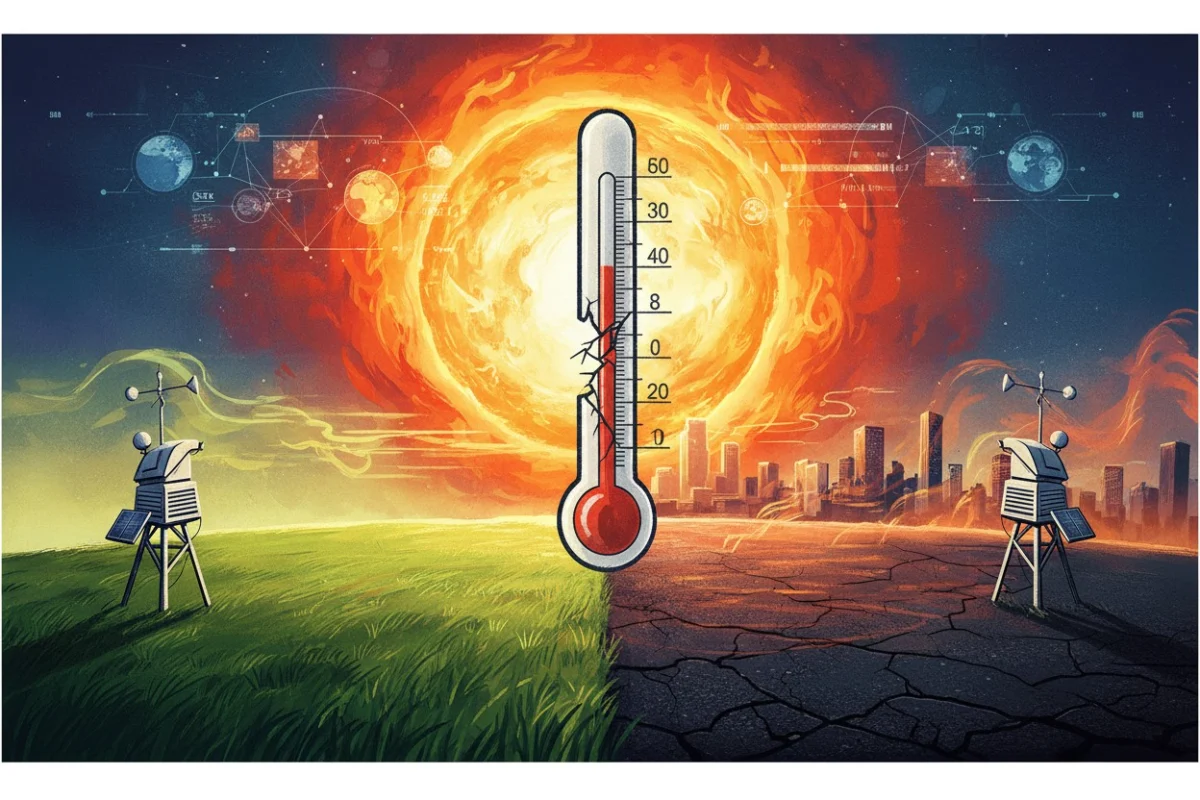
As the summer of 2026 drew to a close, federal agencies declared it the hottest on record for the United States, a conclusion that echoed across major news networks, including CBS, CNN, and USA Today. However, beneath the consensus presented by government institutions, a growing chorus of skeptics—led by meteorologists and climate researchers—has begun to challenge the validity of these claims. At the heart of this controversy is a fundamental disagreement over how temperature data is collected, adjusted, and interpreted, raising significant questions about the intersection of climate science and public policy.
The Official Narrative: Federal Data and Global Trends
According to the National Oceanic and Atmospheric Administration (NOAA), July 2026 marked the hottest month in the United States since the agency began its record-keeping in 1895. The data indicates that the average temperature in the Lower 48 states was a significant 3.3 degrees Fahrenheit above the 20th-century average. NOAA attributed these historic figures to persistent "heat domes"—large, stagnant high-pressure systems—that trapped sweltering air from the East Coast across the Great Plains and into the Southwestern United States. These conditions were compounded by severe wildfires in the Pacific Northwest, which further influenced local microclimates.
On a global scale, the European Union’s Copernicus Climate Change Service reported that August 2026 tied with July 2023 as the joint-hottest month ever recorded. Global temperatures averaged 16.96 degrees Celsius, or 1.65 degrees Celsius above the pre-industrial baseline of 1850-1900. While Copernicus noted that a single month exceeding the 1.5-degree Celsius threshold does not signify a permanent breach of the Paris Agreement targets, they emphasized that the trend remains consistent with long-term anthropogenic warming, bolstered by the rising influence of El Niño, which continues to drive heat into the atmosphere across the Pacific.
A Chronology of the 2026 Summer Heat
The summer of 2026 was characterized by a rapid succession of heat events that captured global attention:
- Early Summer 2026: Initial reports began to emerge of sustained heatwaves across Western Europe, which faced record-breaking temperatures, prolonged droughts, and catastrophic wildfires.
- July 2026: NOAA released findings designating this month as the hottest in U.S. history, citing the widespread impact of stationary heat domes.
- August 2026: Copernicus released data confirming global temperature spikes, identifying the month as tied for the hottest on record.
- September 11, 2026: A report by Climate Depot brought the scientific legitimacy of these U.S. records into question, sparking a public debate regarding the integrity of federal temperature adjustments and station placement.
The Meteorologist’s Challenge: Flaws in Methodology?
The skepticism surrounding the 2026 records centers on three primary technical criticisms: adjusted data, the placement of weather stations, and the "Urban Heat Island" (UHI) effect. An anonymous meteorologist highlighted in the Climate Depot report argued that the record-breaking status of the summer is less a reflection of raw climate reality and more a product of modern data processing.
The Urban Heat Island Effect
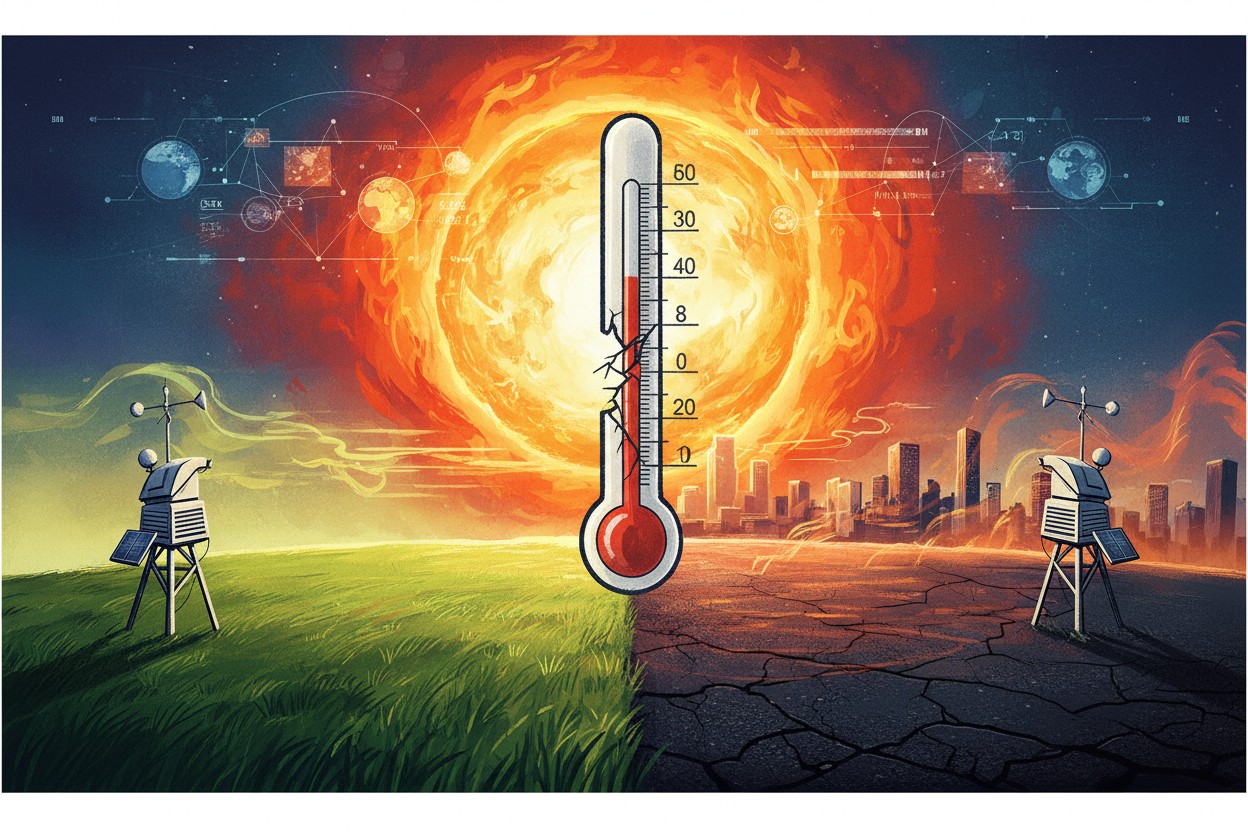
A central point of contention is the physical environment of weather stations. Many of these stations are located in proximity to heat-absorptive surfaces such as asphalt, concrete, and air conditioning exhaust vents. Lisa Gartland, an expert on urban heat islands, notes that in many residential areas, roofing and paving occupy between 46% and 52% of the land, while non-residential zones see this coverage rise to 67%. These materials absorb solar radiation during the day and re-radiate it at night, artificially inflating temperature readings that are then recorded as "official" atmospheric data.
Historical Data Adjustments
Critics also point to the 1930s Dust Bowl era, arguing that many regions in the U.S. experienced higher temperatures during that period than they did in 2026. The argument posits that through retrospective "adjustments"—a process NOAA claims is necessary and peer-reviewed to account for changes in equipment or station location—historical records have been "cooled" to make recent warming trends appear more dramatic. Critics contend that these adjustments introduce an unacceptable level of uncertainty into the climate record.
Supporting Data and Alternative Perspectives
The debate extends beyond simple thermometer readings. Independent studies have offered findings that appear to conflict with the narrative of human-driven, unprecedented climate acceleration.
For instance, tree-ring studies covering the past 700 years have suggested that drought cycles were frequently more severe prior to 1950, challenging the assertion that modern dryness is uniquely caused by human activity. Furthermore, a Department of Energy analysis mentioned in independent reports suggested that climate models may be overstating the rate of warming. This report also highlighted that increased CO2 concentrations actually boost global plant growth by 25% to 50%, a factor that some climate skeptics argue is often ignored in the political discourse surrounding carbon emissions.
Furthermore, the variability of the climate is well-documented in long-range forecasting resources like The Old Farmer’s Almanac. Historically, these forecasts have accurately predicted year-to-year fluctuations in precipitation and temperature that defy long-term warming trends, underscoring the influence of natural solar activity and cyclical weather patterns that skeptics feel are systematically downplayed by federal agencies.
Policy Implications: The Cost of Energy
The controversy over the 2026 heat record is not merely academic; it has become a central pillar in the debate over energy policy. Officials who cite the record-breaking summer as evidence of a climate emergency have used the data to justify stricter regulations on fossil fuels and the push for a transition to renewable energy.
The Economic Burden
The push for stricter energy policies has met with significant resistance from industry groups and economic analysts. The U.S. Chamber of Commerce and the American Petroleum Institute, for example, have engaged in litigation, such as their challenge to Vermont’s Climate Superfund Act, which seeks to hold fossil fuel companies liable for climate-related damages.
This legislative climate arrives at a time when consumers are already feeling the pinch. According to the U.S. Energy Information Administration (EIA), average residential electricity rates rose nearly 13% between April 2020 and April 2025, with an additional 6% increase recorded in early 2025 and further hikes projected for 2026.
Grid Reliability and the AI Demand Surge
Simultaneously, the U.S. power grid is facing an unprecedented stress test. The rise of energy-intensive technologies, particularly Artificial Intelligence and data centers, has created a surge in demand that is outstripping the current capacity of the grid. PJM Interconnection, the largest regional power grid in the U.S., has issued warnings regarding the potential for power rationing as the system struggles to balance the needs of AI-driven industries with the decommissioning of reliable, baseload energy sources. In Texas, the grid operator ERCOT reported an astronomical jump in connection requests—from 40.8 gigawatts to 99 gigawatts in a single year—driven largely by the expansion of data centers, cryptocurrency mining, and hydrogen production facilities.
Conclusion: A Lingering Dispute
The question of whether 2026 was truly the hottest summer on record in the United States remains unresolved. While federal agencies maintain that their peer-reviewed methodology is robust and that the warming trend is consistent with global climate data, the emergence of vocal scientific opposition highlights a profound lack of trust in the institutions responsible for climate monitoring.
As the nation navigates the challenges of balancing energy security with environmental policy, the debate over the 2026 heat records serves as a microcosm of a broader, deeper tension. Whether these records represent a genuine climate crisis or are a consequence of localized heat bias and data manipulation remains a point of intense contention. For now, the public is left with two competing interpretations: one that views the 2026 data as an urgent warning of impending catastrophe, and another that views it as a flawed metric being used to drive energy policy at the expense of economic stability and grid reliability.
As monitoring continues, the role of federal agencies and the necessity for truly independent data verification will likely remain at the forefront of the national discourse.