








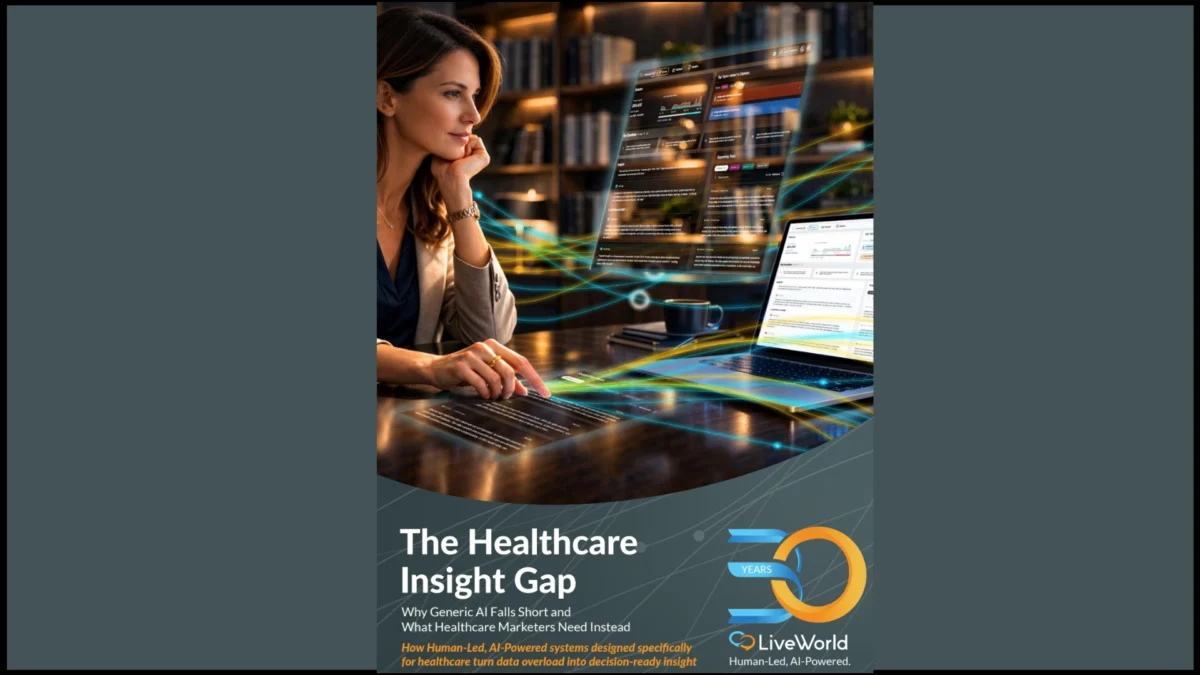
In the modern digital ecosystem, the healthcare industry is awash in data. From the unfiltered sentiments expressed in patient support forums and the nuanced feedback found on physician review sites to the structured outputs of call centers and clinical trial registries, the sheer volume of information is staggering. Yet, for healthcare marketers, this abundance has historically led to a paradox: while they possess more data than ever before, they struggle to extract actionable intelligence.
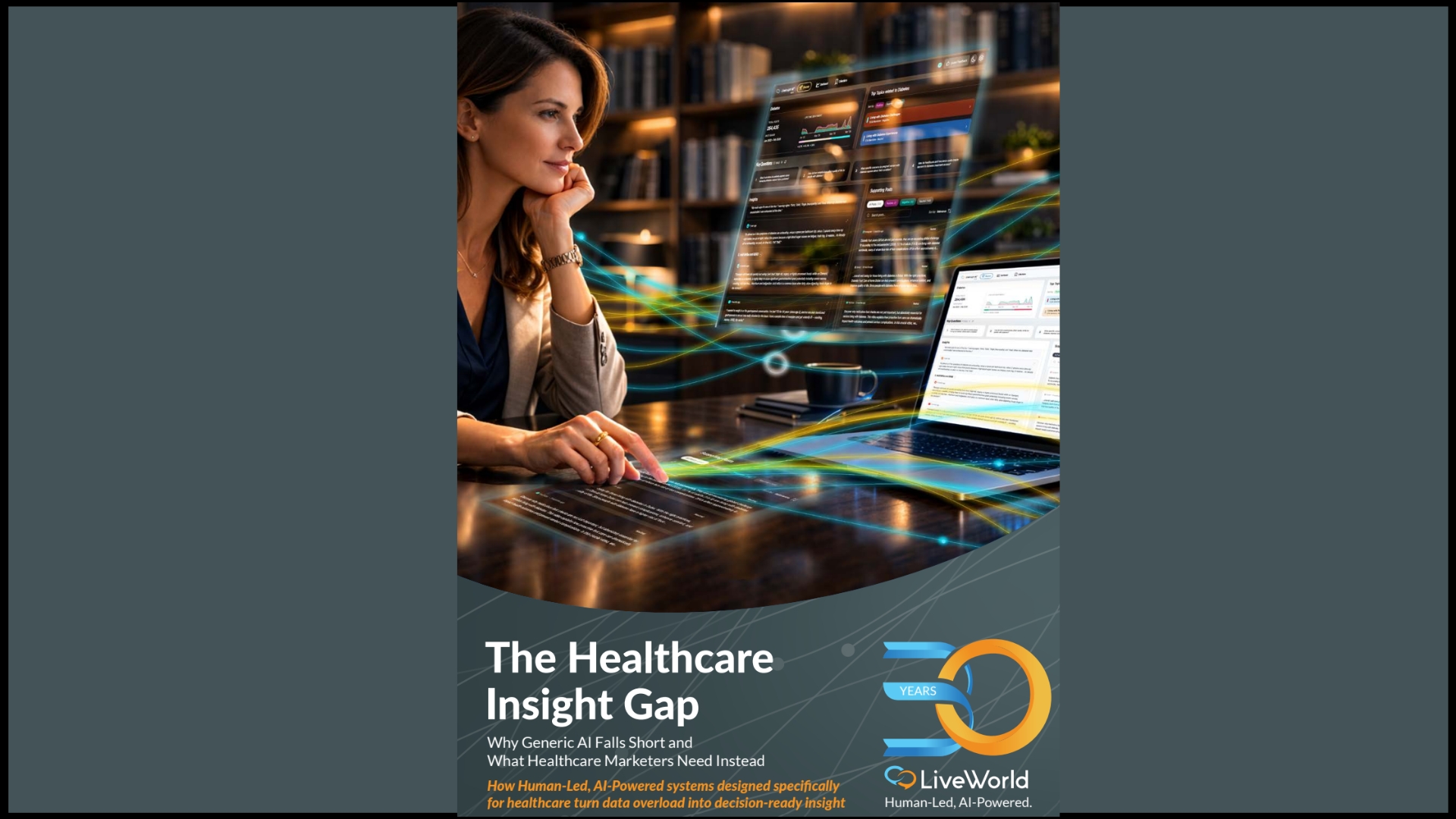
These "valuable signals" are often trapped in silos, disconnected from one another and difficult to synthesize into a cohesive strategy. Addressing this challenge, a new white paper from LiveWorld, titled The Healthcare Insight Gap: Why Generic AI Falls Short and What Healthcare Marketers Need, introduces a specialized solution: the LiveInsight AI Intelligence System. By distinguishing between generic large language models (LLMs) and purpose-built healthcare intelligence, the company aims to provide a reliable pathway from raw, chaotic data to strategic recommendation.
The Fragmented Landscape of Healthcare Data
Healthcare marketing is fundamentally different from retail or consumer goods marketing. It is governed by strict regulatory frameworks, high stakes for patient outcomes, and a complex web of stakeholders—including patients, caregivers, and healthcare providers (HCPs).
Currently, these stakeholders express their needs, frustrations, and insights across a fragmented digital landscape. A patient might discuss their side effects on a private Facebook group, ask a question on a provider portal, and leave a review for their physician on a public forum. Meanwhile, clinical researchers are publishing findings in journals, and call centers are capturing direct feedback from those experiencing challenges with medication adherence.
When these data streams remain disparate, the resulting marketing strategies are often reactive rather than proactive. Marketers are left playing catch-up, trying to identify trends after they have already peaked, or worse, misinterpreting data due to the inherent noise of the internet.
The Evolution of AI in Healthcare: Generic vs. Specialized
The recent explosion of generative AI has led many organizations to adopt off-the-shelf LLMs to manage this influx of data. While these models are impressive in their ability to process language, they are often insufficient for the specific rigors of the healthcare sector. Generic models are prone to "hallucinations"—confidently stating false information—and lack the deep domain expertise required to distinguish between a casual patient observation and a critical safety signal.
The LiveInsight AI Intelligence System represents a shift toward "curated intelligence." According to the white paper, the system differentiates itself through a multi-layered approach:
- High-Quality Curation: Instead of scraping the entire internet, the system focuses on high-quality, healthcare-specific conversations. This includes vetted therapeutic communities, clinical trial databases, and medical journals.
- The Human-in-the-Loop Advantage: AI identifies patterns and organizes data at scale, but it does not act in isolation. Human analysts review targeted sets of this data, providing the nuance and interpretation that machines often miss.
- Contextual Integration: By layering real-world patient sentiment with clinical evidence, the system allows marketers to understand the "why" behind the data, rather than just the "what."
Chronology: The Shift Toward Proactive Intelligence
The development of the LiveInsight system follows a broader trajectory in health technology, moving from simple social listening to sophisticated, predictive analytics.
- Phase 1: The Era of Social Listening (2010–2018): Healthcare organizations began tracking brand mentions on social media. However, this was largely reactive, focusing on volume rather than sentiment or clinical relevance.
- Phase 2: The Data Silo Period (2018–2022): As digital health platforms and patient portals proliferated, the volume of data grew exponentially. Organizations invested in CRM systems and data lakes, but these often remained disconnected, leading to "analysis paralysis."
- Phase 3: The AI Integration Era (2023–Present): With the advent of advanced LLMs, the focus shifted toward automation. However, early adopters quickly realized that generic AI lacked the necessary guardrails for healthcare.
- The Present Day: The industry is now entering a phase defined by specialized, domain-specific AI. Solutions like LiveInsight prioritize accuracy and clinical context, moving beyond simple keyword tracking to true insight generation.
Supporting Data and Capabilities
The white paper outlines a series of capabilities designed to resolve the "Healthcare Insight Gap." By deploying a system that can process disparate data sources simultaneously, marketers gain a 360-degree view of their therapeutic landscape.
Key Capabilities and Their Implications:
- Anticipating Shifts in Behavior: By monitoring early signals in therapeutic communities, marketers can identify shifts in patient sentiment before they become mainstream. This allows for proactive content development rather than reactive crisis management.
- Hallucination Prevention: By grounding the AI in curated, verified sources, the risk of misinformation—a major hurdle in healthcare AI—is significantly mitigated.
- Misinformation Management: The system can identify the spread of medical myths or incorrect treatment protocols, enabling teams to provide accurate information before such misinformation impacts patient health.
- Competitive Landscape Analysis: Understanding how a brand stands against competitors is no longer based on surveys alone. It is now derived from real-time discourse among patients and providers.
- Barrier Identification: The system can pinpoint potential market barriers, such as confusion over insurance coverage or perceived side effects, allowing marketers to address these head-on in their messaging.
Official Perspectives: The Value of "Reliable Pathways"
The core philosophy behind the LiveInsight system is the creation of a "reliable pathway from raw data to recommendation." In the healthcare sector, data is not just an asset; it is a responsibility. Misinterpreting a signal can lead to a failed campaign, but more importantly, it can lead to a misunderstanding of patient needs.
LiveWorld’s approach underscores that AI should be viewed as a force multiplier for human intelligence. By automating the identification of patterns, the AI frees up human analysts to focus on high-level strategy and ethical considerations. This partnership between machine speed and human judgment is what the industry identifies as the gold standard for future-proofing marketing operations.
The Strategic Implications for Healthcare Brands
For marketing executives, the implications of this shift are profound. The ability to harness real-time insights means that campaign development can become far more targeted and evidence-based.
1. Enhanced Campaign Precision
Instead of relying on broad demographic assumptions, marketers can tailor their messaging to the specific concerns expressed by patient communities. If a patient community is expressing confusion about a dosing regimen, marketing materials can be updated to address that specific pain point, thereby improving adherence and patient satisfaction.
2. Risk Mitigation
In the digital age, a brand’s reputation is only as secure as its monitoring capabilities. The ability to identify potential crises—whether it is a surge in negative sentiment regarding a product side effect or the spread of inaccurate medical claims—allows teams to intervene early.
3. Operational Efficiency
By consolidating data from call centers, social media, and medical literature into a single platform, organizations can break down the internal silos that often hinder marketing, medical, and legal teams from working together. When all departments are looking at the same AI-synthesized report, the speed to decision-making increases significantly.
Future Outlook: The Road Ahead
As AI continues to mature, the healthcare marketing industry will likely see an even greater demand for specialized, "white-box" AI solutions. The "black box" nature of generic LLMs will continue to be a liability in a sector that demands high transparency and regulatory compliance.
The LiveInsight AI Intelligence System serves as a harbinger of this trend. It highlights that the most successful healthcare organizations will not be those with the most data, but those with the most context. By curating high-quality data and applying a rigorous analytical framework, marketers can move past the noise of the digital age to identify the signals that truly matter.
The white paper, The Healthcare Insight Gap: Why Generic AI Falls Short and What Healthcare Marketers Need, serves as a roadmap for this transition. It challenges marketers to move beyond the excitement of AI as a generic novelty and embrace it as a specialized, tactical tool. For those willing to bridge this gap, the reward is not just better marketing metrics—it is a deeper, more empathetic, and ultimately more effective connection with the patients and providers they serve.
In conclusion, as the healthcare sector continues to navigate an increasingly complex digital landscape, the tools used to decode that complexity must be as sophisticated as the challenges themselves. The integration of curated data, human expertise, and specialized AI is no longer a luxury—it is the prerequisite for success in the modern healthcare economy.