











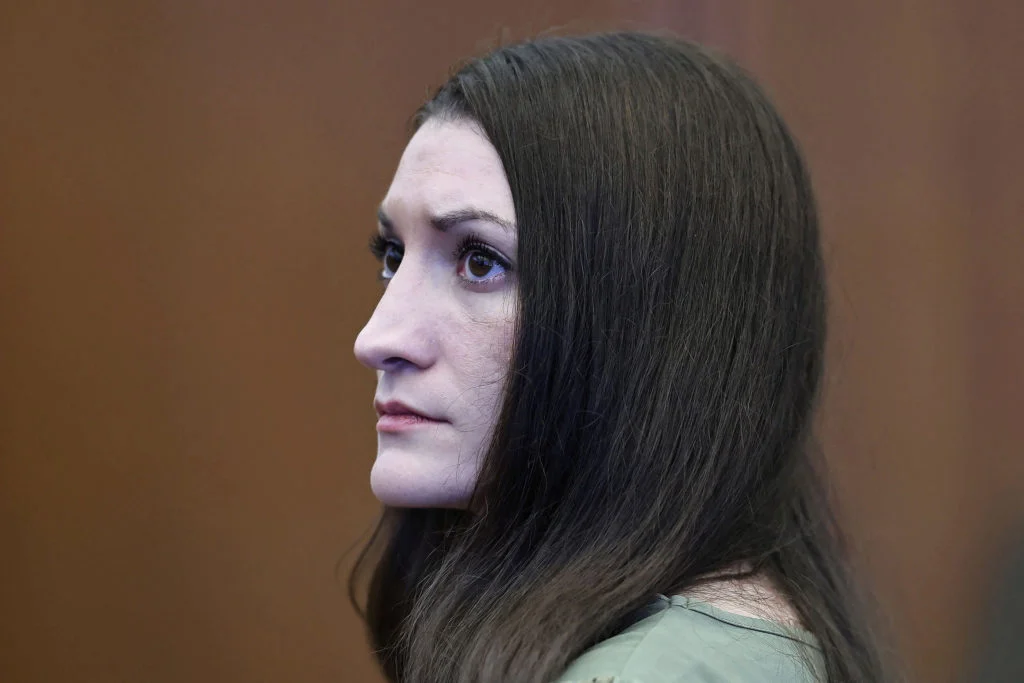
The legal proceedings surrounding Lindsay Clancy, the 36-year-old former labor and delivery nurse who stands accused of strangling her three young children in 2023, have concluded in a state of profound uncertainty. Four days after Judge William Sullivan declared a mistrial due to a deadlocked jury, the details of the deliberation room have begun to emerge, painting a picture of a panel divided by a single, immovable holdout.
The case, which gripped the nation and reignited critical conversations regarding maternal mental health, the legal definition of criminal responsibility, and the nuances of postpartum psychosis, remains unresolved. With the prosecution and the defense now facing the prospect of a second trial, the legal community and the public are left to grapple with the complexities of a tragedy that defied simple categorization.
Main Facts: The Tragic Core of the Case
In January 2023, the quiet suburb of Duxbury, Massachusetts, became the scene of an unthinkable tragedy. Lindsay Clancy, a healthcare professional tasked with bringing life into the world, killed her three children—5-year-old Cora, 3-year-old Dawson, and 8-month-old Callan—using exercise bands.
The facts of the act itself were never in dispute. The defense, led by attorney Kevin Reddington, centered the case on the theory that Clancy was suffering from severe postpartum psychosis, a rare but devastating condition characterized by a loss of touch with reality, delusions, and hallucinations following childbirth. Reddington argued that his client was in the throes of a mental health collapse so profound that she could not appreciate the wrongfulness of her actions.
Conversely, the prosecution painted a portrait of a calculated individual who acted with purpose. Prosecutors alleged that Clancy deliberately orchestrated the circumstances of the killings, including sending her husband out of the house to run errands, thereby clearing the way to carry out the act. Their argument rested on the assertion that Clancy possessed the cognitive capacity to know exactly what she was doing, making her legally responsible for the murders.
Chronology of the Legal Proceedings
The trial spanned 21 days, during which the jury was presented with an exhaustive account of Clancy’s life, her mental decline following the birth of her youngest child, and the events leading up to the tragedy.
- The Lead-Up: Over three weeks, the court heard from family members and medical professionals who documented a rapid deterioration in Clancy’s mental health in the months preceding the incident.
- The Trial: Jurors were presented with evidence ranging from personal journals to the harrowing 911 call made by Clancy’s husband upon his return home. The auditory evidence, described by jurors as "the most horrific thing," served as a visceral reminder of the human cost of the case.
- The Deliberations: For seven days, the jury struggled to reach a consensus. The atmosphere in the deliberation room grew increasingly strained as the group attempted to navigate the complexities of insanity defenses under state law.
- The Breakdown: Tensions peaked when the foreperson, Ronni Carlson, reported that the jury was unable to reach a unanimous verdict. Despite multiple interventions by Judge Sullivan, who urged the jury to continue deliberations and reiterated the legal standards for reasonable doubt, the impasse remained.
- The Mistrial: On the seventh day, recognizing the futility of further discussion, Judge Sullivan declared a mistrial, effectively resetting the legal clock.
Supporting Data and Juror Insights
In a series of exclusive interviews with NBC10, three jurors provided a rare look into the dynamics that prevented a verdict. According to foreperson Ronni Carlson, the group had, at one juncture, seemingly bridged the gap.
"He admitted he had reasonable doubt," Carlson recalled regarding the lone holdout juror. "I started filling out the forms, I was so excited. I wrote my signature on each one. And then he said, ‘But I’m still not going to say that she’s not guilty by reason of insanity.’"
This admission of reasonable doubt, followed by a refusal to acquit, left the other jurors bewildered and frustrated. Juror Paula Devlin characterized the holdout as "arrogant," noting that he remained impervious to the collective reasoning of the group. The holdout juror, whose identity remains protected by a court-ordered seal, has yet to offer a public explanation for his stance.
For the jurors who were prepared to reach a verdict, the experience was emotionally taxing. They cited the weight of the evidence—specifically the testimony regarding Clancy’s genuine love for her children—as the primary factor in their belief that the incident was the result of an acute mental health crisis rather than malice. "So she had to have snapped, and not known what she was doing," Carlson noted. "To me, it was proof that she didn’t know what she was doing."
Official Responses and Legal Perspectives
The legal fallout has been swift. Kevin Reddington, Clancy’s defense attorney, did not mince words regarding the outcome. He publicly lamented that his client was "robbed" of an acquittal by a single individual, emphasizing the toll the seven-week trial had taken on the dedicated jurors who were ultimately unable to fulfill their duty due to the impasse.
The prosecution, meanwhile, maintains its focus on the evidence of premeditation. They have argued throughout the process that the severity of the crimes demands a full accounting of criminal responsibility, regardless of the defendant’s mental health history.
Legal experts observing the case suggest that the mistrial creates a complex path forward. If the case proceeds to a second trial, both sides will have to re-evaluate their strategies. The prosecution must decide whether to adjust its narrative to better address the nuances of postpartum psychosis, while the defense must prepare to present the same evidence to a new jury, hoping for a different outcome.
Implications: A Broader Societal Conversation
The Clancy case has transcended the courtroom, forcing a national discussion on the systemic shortcomings in maternal mental healthcare. Many advocates argue that the medical community failed to detect the severity of Clancy’s condition in the months leading up to the tragedy.
Furthermore, the trial highlights the difficulties inherent in the legal system’s approach to mental health. The "not guilty by reason of insanity" plea is often a high hurdle to clear, requiring a jury to look past the horrific nature of an act to understand the psychological state of the perpetrator. When a jury is tasked with balancing the concepts of "reasonable doubt" against the moral weight of a murder conviction, the potential for deadlock is significant.
If Clancy were to be acquitted, she would likely be confined to a high-security mental health facility. Under such a scenario, her release would be contingent upon expert psychiatric evaluations proving that she no longer poses a danger to society. The current mistrial keeps this possibility in limbo, prolonging the anguish for the families involved and the public waiting for a final resolution.
As the legal community prepares for the possibility of a retrial, the focus remains on the fundamental question of how society defines culpability when the mind itself is compromised. The "Duxbury tragedy," as it has come to be known, serves as a sobering reminder of the gaps in both our clinical understanding of postpartum illness and our judicial system’s ability to process the intersection of mental pathology and criminal law.
For the time being, the case stands as a testament to the fact that justice, in its most complex forms, is rarely a straight line. The silence of the holdout juror continues to loom large, a symbol of the unresolved tension that defines this case. Whether a second trial will bring clarity or merely deepen the divisions remains to be seen, but the impact of these events will undoubtedly be felt for years to come in the legal and medical communities alike.