











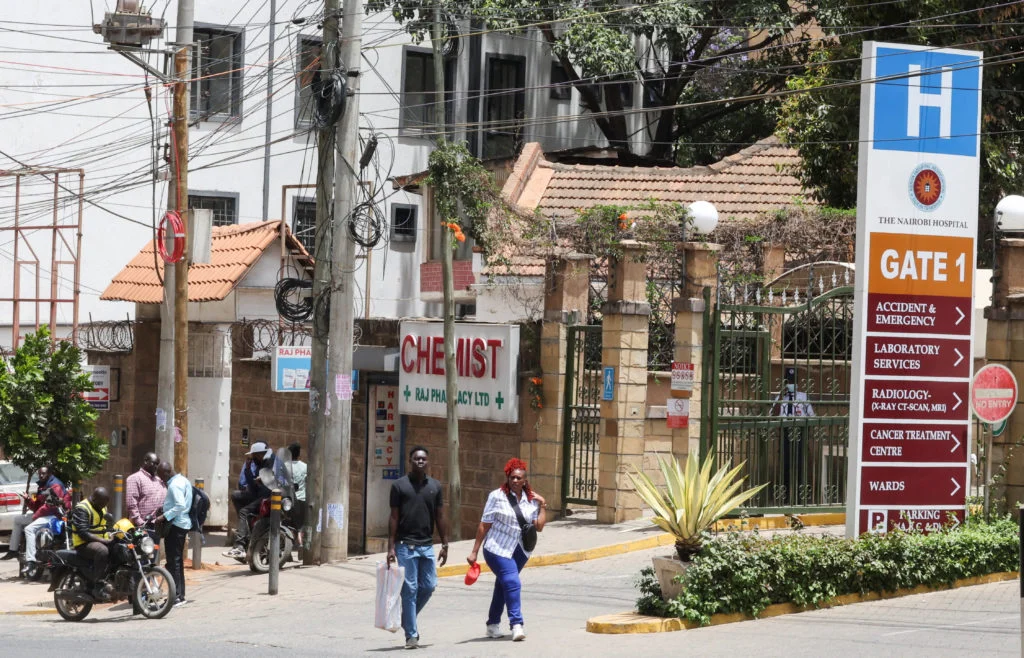
NAIROBI, Kenya — The Republic of Kenya has been thrust into a state of heightened emergency following the confirmation of the country’s first-ever case of Ebola. Health authorities confirmed Tuesday that a Kenyan citizen, who had spent the last seven years residing in the Democratic Republic of the Congo (DRC), succumbed to the virus at Nairobi Hospital late Monday night. The tragic death has prompted an urgent, multi-agency contact-tracing operation as the nation faces its first true test against a pathogen that has already claimed more than 4,000 lives in the ongoing, record-breaking regional outbreak.
The Chronology of a Crisis: From Congo to Nairobi
The journey of the deceased patient provides a harrowing look at how the Ebola virus can traverse borders with devastating speed. According to Health Minister Aden Duale, the individual first began exhibiting symptoms roughly one month ago while living in the DRC. Despite seeking medical attention at several facilities within the Congo, his condition failed to stabilize.
Undeterred by his deteriorating health, the man traveled by road to Kampala, Uganda, a major regional transit hub. From there, he boarded a flight destined for Nairobi, touching down on Saturday afternoon. Upon his arrival in the Kenyan capital, he was met by relatives who transported him via private vehicle to Nairobi Hospital.
Medical staff at the hospital acted with urgency, immediately placing the man in isolation. Laboratory analysis confirmed the presence of the Ebola virus, marking a grim milestone for the country. By late Monday, the patient had passed away. In accordance with strict public safety protocols designed to prevent the further spread of the highly infectious virus, the victim was buried on Tuesday afternoon under the supervision of specialized health teams.
Contact Tracing and Containment Efforts
The primary focus for Kenyan health officials is now the rapid identification and quarantine of anyone who may have come into contact with the deceased. Dr. Patrick Amoth, the Ministry of Health’s director-general, confirmed that authorities have already identified 28 individuals who interacted with the man, including family members and the healthcare workers who provided initial care.
The scope of the tracing operation extends far beyond the hospital walls. Officials are currently tracking the 23 passengers and four crew members who shared the flight from Uganda to Nairobi on Saturday.
“All identified contacts are being placed in mandatory isolation for 21 days—the incubation period of the virus,” Dr. Amoth stated. “They will only be released after undergoing rigorous testing and showing no signs of the disease.”
Border control measures have also been tightened significantly. Kenya’s health authorities have placed all entry points on high alert, utilizing advanced screening protocols to monitor travelers for symptoms. Since May, Kenya had already conducted 267 tests across five regional laboratories, a testament to the government’s preemptive efforts to detect the virus before it crossed the border.
Supporting Data: An Outbreak of Unprecedented Scale
The current Ebola epidemic in the DRC is, by all metrics, the fastest-growing outbreak in history. Since it was declared in mid-May, the virus has moved through seven provinces, infecting at least 8,400 people. With a death toll exceeding 4,000, the fatality rate remains a significant cause for alarm.
The scale of the crisis has drawn comparisons to the 2014-2016 West African epidemic, which remains the deadliest in history, having claimed more than 11,000 lives. Health experts are particularly concerned about the "mega-fire" nature of this current outbreak. Unlike previous, more localized incidents, this virus is circulating in multiple, geographically dispersed "hot spots" simultaneously, making it incredibly difficult for responders to maintain a unified containment strategy.
Stephanie Hoffmann of Médecins Sans Frontières (Doctors Without Borders) described the operational reality on the ground: "It is like fighting a megafire. Multiple outbreaks are developing at the same time, with varying intensity and in different locations."
Official Responses and International Cooperation
The international community has rallied to support Kenya’s containment efforts. The World Health Organization (WHO) issued a statement on Tuesday confirming it is working in lockstep with the Kenyan Ministry of Health. To bolster local capacity, the WHO has already delivered 1,000 Ebola diagnostic tests and 1,000 personal protective equipment (PPE) kits to counties identified as high-risk.
The Africa Centers for Disease Control and Prevention (Africa CDC) has also praised Kenya’s swift handling of the situation. In a statement, the agency commended the "rapid identification, isolation, and testing of the patient," noting that it has already dispatched a high-level team of experts to Nairobi to assist in laboratory diagnostics and epidemiological mapping.
The Geopolitical and Social Implications
The arrival of Ebola in Kenya brings to light the complexities of regional public health management. Kenya has long served as a logistical hub for the region, hosting a U.S.-funded isolation center specifically designed for American citizens exposed to the virus to quarantine for 21 days before repatriation.
However, the presence of such facilities has not been without controversy. In the past, the center faced fierce local opposition, characterized by legal battles and protests from residents who feared that the presence of exposed individuals—even in a controlled environment—posed an unacceptable risk to their communities. This underlying anxiety remains a challenge for the government as it attempts to balance international obligations with domestic public sentiment.
Moreover, the outbreak in the Congo is exacerbated by factors that make traditional public health interventions nearly impossible. Responders in the DRC have faced:
- Violence: Rebel groups in North and South Kivu provinces frequently target health facilities and personnel.
- Misinformation: Deep-seated distrust of government and international health organizations has led some locals to hide symptoms or avoid treatment centers entirely.
- Logistical Failure: The vast, remote terrain makes the transport of vaccines and medical equipment a logistical nightmare.
Moving Forward: Can the Tide Be Turned?
For Kenya, the next three weeks will be critical. The efficacy of the contact-tracing program will determine whether this single case remains an isolated tragedy or evolves into a broader domestic health crisis.
The incident has served as a wake-up call for the East African region. As the WHO warns that this outbreak could potentially surpass previous death tolls, the urgency of cross-border coordination has never been greater. Kenya’s experience will serve as a bellwether for other neighboring nations as they scramble to fortify their borders and update their internal response protocols.
Ultimately, the fight against Ebola is not just a medical challenge; it is a test of infrastructure, trust, and international solidarity. While the death of the patient is a somber reminder of the lethality of the virus, the rapid, transparent response from the Kenyan government offers a glimmer of hope that, with international cooperation and rigorous adherence to medical protocols, the spread can be checked.
As the 21-day quarantine period for the identified contacts begins, the world watches Nairobi, hoping that the quick action taken by authorities will be enough to extinguish this spark before it turns into a regional inferno.