









By Investigative Desk
At one minute past midnight on July 5, 2025, the United Kingdom entered a new legal era. With the stroke of a pen by Home Secretary Yvette Cooper, the direct-action network Palestine Action—a group dedicated to disrupting the supply chain of weaponry to the Israeli military—was officially proscribed as a terrorist organization. The move, which transformed civil disobedience into a potential life-sentence offense, ignited a firestorm of controversy that has pitted the British government against its own citizens, legal professionals, and high-profile cultural figures.
More than a year later, the consequences of this decision continue to reshape the landscape of British protest, raising profound questions about the limits of dissent, the definition of terrorism, and the future of free speech in the United Kingdom.
The Criminalization of Dissent: A Chronology of Conflict
The proscription of Palestine Action did not occur in a vacuum, but the speed with which it was implemented—and the subsequent enforcement—has been described by legal observers as "unprecedented."
Within hours of the ban taking effect, Pink Floyd co-founder Roger Waters took to Facebook to challenge the new legislation. Posting a video of himself writing "I support Palestine Action" on a piece of cardboard, he defiantly declared, "I am Spartacus," invoking a sentiment shared by civil liberties advocates. The reaction from pro-Israel lobby groups was immediate; UK Lawyers for Israel reported Waters to British Counter-Terrorism Police, and the Campaign Against Antisemitism threatened private prosecution. Despite these pressures, authorities have declined to file charges against the rock legend, creating a legal gray area that persists over a year later.
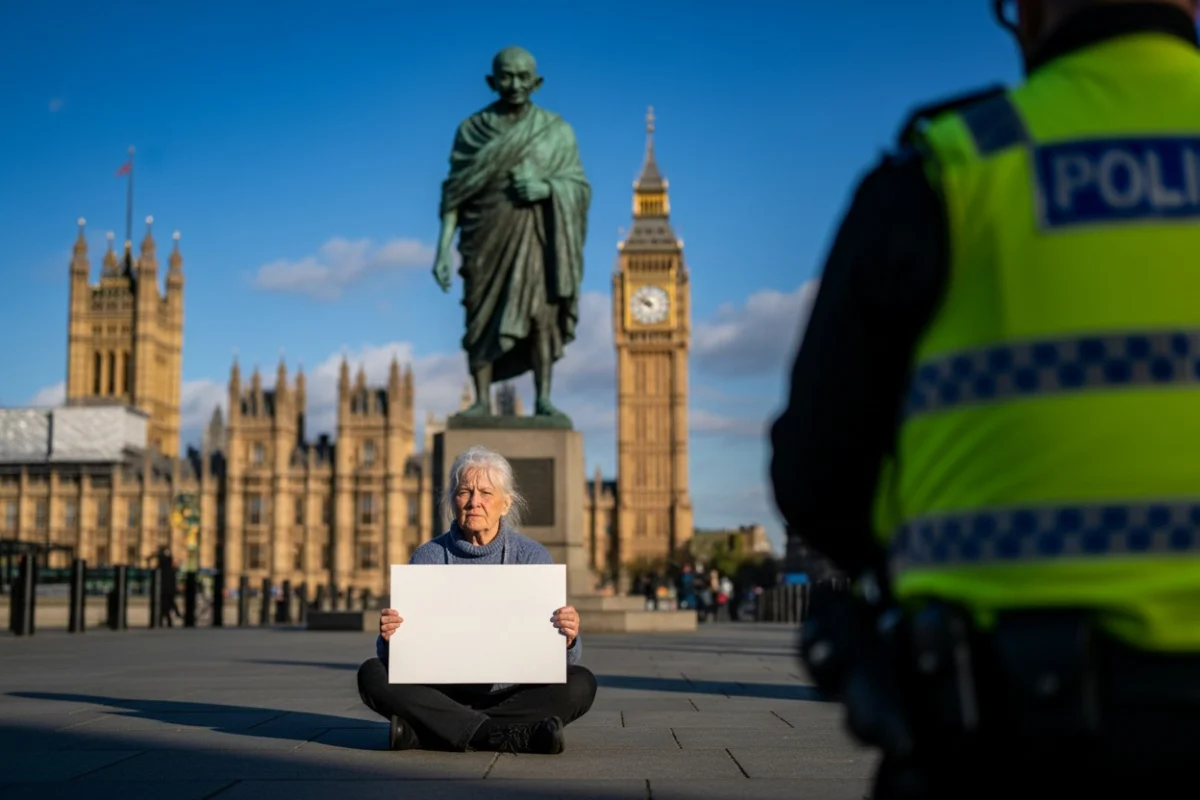
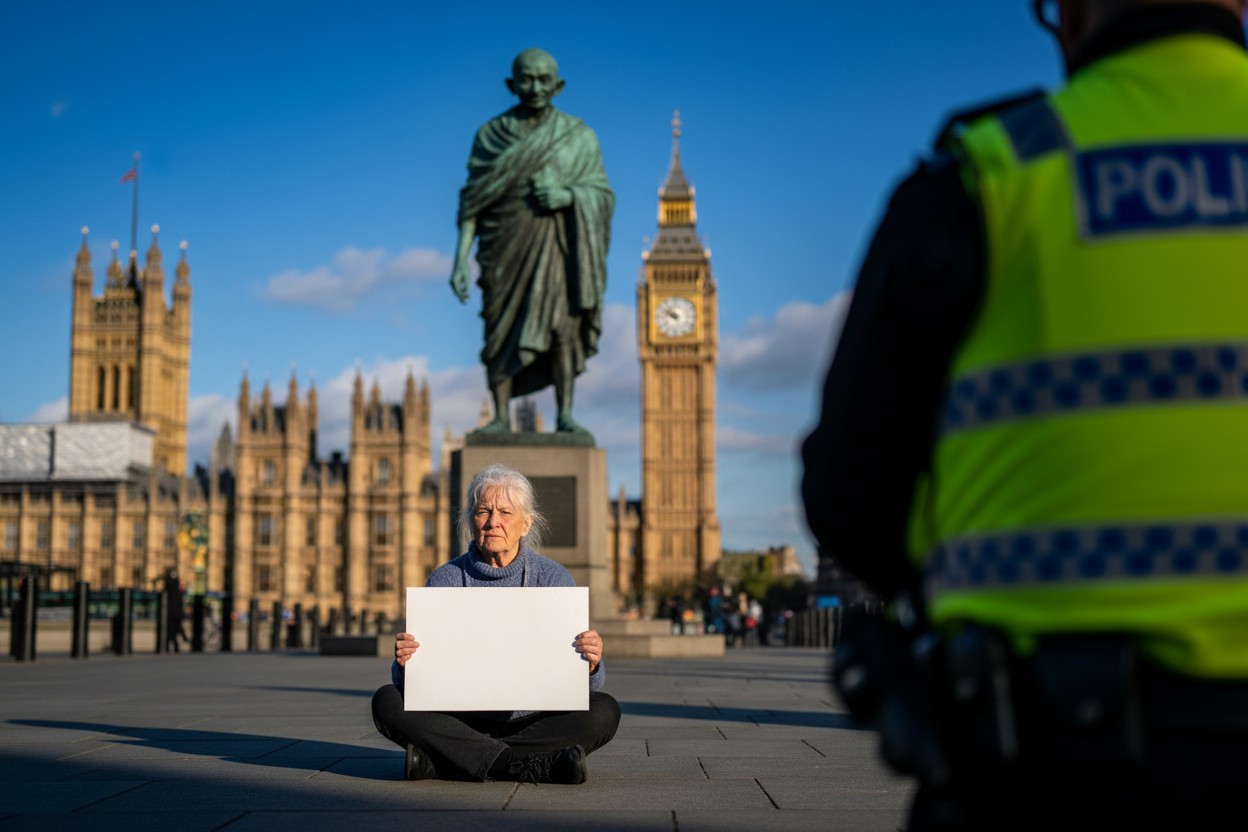
The enforcement on the ground has been far more aggressive. In Parliament Square, the Reverend Sue Parfitt, an 83-year-old retired Anglican priest, was arrested while holding a sign that read, "I oppose genocide. I support Palestine Action." When questioned about the optics of arresting an octogenarian, Metropolitan Police Commissioner Sir Mark Rowley famously retorted, "The law doesn’t have an age limit, whether you’re 18 or 80."
Since the ban, the scale of arrests has been staggering. Police figures indicate that over 3,500 people have been detained in connection with the group’s activities. On August 9, 2025, 890 individuals were swept up in a single operation at Parliament Square. Similar scenes unfolded at the "Defend Our Juries" protest, where 1,500 activists were forcibly removed, including 62-year-old disabled activist Mike Higgins, who remains undeterred by the threat of imprisonment.
Data and Disparity: The "Terrorism" Label
The statistics regarding the proscription reveal a sharp divide between the government’s rhetoric and the reality of the legal system. According to reports from Scotland, 193 terrorism charges have been filed under the Terrorism Act 2000 since the ban. Remarkably, Palestine Action-related cases account for more terrorism charges in seven months than all other proscribed organizations combined had accumulated in the previous twenty-six years.
However, internal government assessments appear to contradict the political move to proscribe. MI5’s Joint Terrorism Analysis Centre had previously assessed that "the majority of direct action by Palestine Action would not be classified as terrorism." Critics point to the fact that the Home Secretary based the ban on a mere three incidents out of 385 recorded actions. The Proscription Review Group described the move as "novel and unprecedented," suggesting that the decision was driven more by political pressure than by intelligence-led security concerns.
On June 22, 2025, the lobby group We Believe in Israel publicly claimed credit for the shift, posting on X: "Our report laid bare the group’s affinity for the emblems of terrorism. We named the danger. The Home Secretary, Yvette Cooper, has now named it too." This admission has fueled claims by investigative journalists that British prosecutors are coordinating closely with Israeli officials to target anti-genocide activists—an allegation of institutional bias that the Home Office has consistently denied.
The Courts: Establishing a "Terrorist Connection"
The legal battleground has been defined by how judges interpret the "terrorist connection" clause in the Terrorism Act. The stakes are high: a terrorist sentencing tag significantly increases prison time and places defendants under stricter surveillance regimes post-release.
On May 5, 2026, the "Filton Four"—activists who broke into an Elbit Systems factory—were convicted of criminal damage. In a historic first, Mr. Justice Jeremy Johnson applied a "terrorist connection" to property damage convictions, leading to combined sentences exceeding twenty-six years. This decision is currently under appeal, with solicitor Simon Natas arguing the grounds are "strong."
Conversely, the judiciary has shown signs of resistance. In August 2026, Justice Robert Altham ruled that the "Preston Five," who caused over £200,000 in damage to a Barclays branch, did not meet the threshold for a terrorist connection, noting that while the damage was significant, it did not reach the level of "serious" disruption required by the Act.
The most surprising development occurred in the case of Tony Greenstein, a 72-year-old Jewish socialist and anti-Zionist. Charged with terrorism-related offenses for his social media posts, Greenstein faced fourteen years in prison. Despite being labeled a "rambling old man" by the judge, Greenstein successfully defended himself, securing a unanimous acquittal from the jury in just two hours. This outcome has encouraged legal experts who argue that the public, when presented with the evidence, is not buying the state’s narrative of "terrorism."
The Linguistic Minefield: Genocide vs. Policy
A central pillar of this conflict is the word "genocide." While the UK government avoids the term regarding Gaza, the legal and academic worlds are increasingly vocal.
In April 2024, Baroness Hale, former President of the UK Supreme Court, led 600 legal professionals in warning the government that arms sales to Israel risked complicity in violations of the Genocide Convention. This sentiment has permeated the highest levels of British civil society:
- The Oxford Union: Passed a motion in 2024 declaring Israel an "apartheid state responsible for genocide."
- The Church of England: Voted in July 2026 to engage with a document accusing Israel of genocide, defying pressure from the Chief Rabbi.
- Parliamentary Friction: When Prime Minister Andy Burnham—who took office in July 2026—described Gaza as a "scar on our collective conscience" but refused to use the term genocide, MP Zarah Sultana famously retorted, "You can’t even call it a genocide, you coward."
The discrepancy between the government’s refusal to label the situation and the public’s increasing usage of the term has created a deep sense of alienation. Opinion polls published in July 2026 indicate that the majority of the British public opposes Israeli actions in Gaza, suggesting that the government is increasingly out of step with the electorate.
Implications: The Future of Free Speech
As the case moves toward the Supreme Court, with Huda Ammori leading a legal challenge to the proscription, the implications for British democracy are profound. Lawyers have warned that the government’s plan to prosecute nearly 2,000 people could lead to "conveyor-belt" trials—rushed hearings that threaten the fundamental right to a fair trial.
The use of the Terrorism Act to suppress political protest has set a precedent that civil liberties groups argue could be turned against any movement that disrupts the status quo. If property damage at a factory or a bank can be classified as terrorism, the threshold for future state intervention is now dangerously low.
For the activists involved, the hunger strikes and mass arrests are not merely about Palestine; they are about the ability to witness against what they perceive as state-sanctioned violence. Whether the courts will uphold the government’s broad interpretation of the law or reign in the use of the Terrorism Act against political dissidents remains the defining question of the year.
The case of the Reverend Sue Parfitt, who remains a symbol of this struggle, reminds us that the law is not a static object but a reflection of the power dynamics of the time. As Britain navigates this crisis, the courts, Parliament, and the streets will continue to debate not only the situation in Gaza but the very nature of dissent in a democracy. For many, the "Terrorist" label has become a badge of honor, a sign that they have struck a nerve in the halls of power. As the Supreme Court prepares to hear the case, the eyes of the international human rights community remain firmly fixed on the United Kingdom.