









In the ongoing war against cancer, oncologists have long relied on a reactive strategy: administer a potent therapy, observe the tumor’s retreat, and wait. If the tumor eventually re-emerges—signaling that the cancer has developed resistance—the medical team pivots to a second-line treatment. However, a groundbreaking study published in the journal Genetics suggests that this standard clinical approach may be inadvertently handing the advantage to the disease.
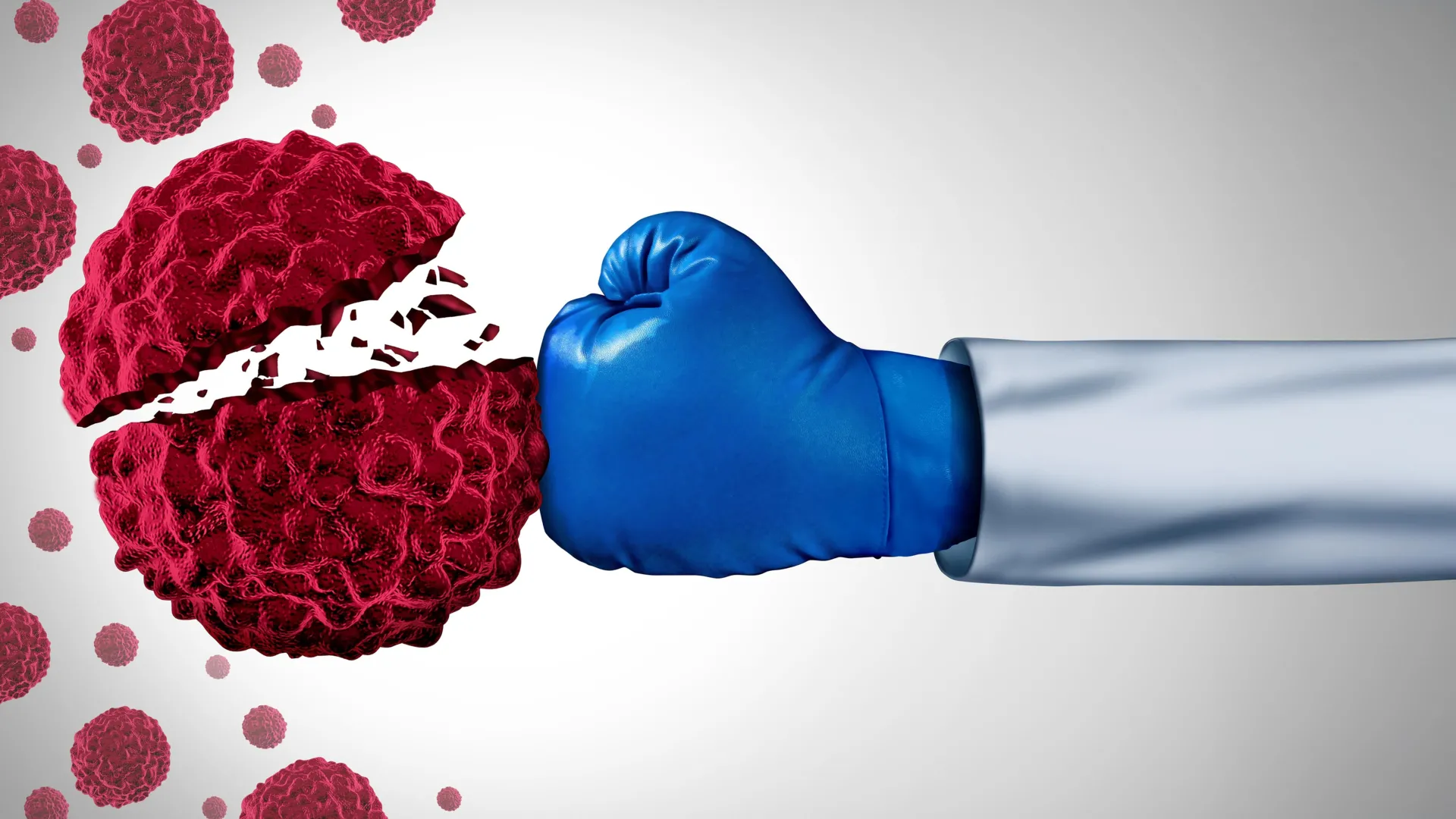
By shifting from a reactive model to a proactive, evolution-based strategy, researchers believe doctors could significantly improve cure rates. The proposed paradigm is simple but radical: instead of waiting for a relapse, clinicians should switch therapies while the tumor is still shrinking—an approach the researchers call “kicking it while it’s down.”
The Evolutionary Challenge: Why Tumors Outsmart Medicine
To understand why this shift is necessary, one must view a tumor not as a static mass, but as a dynamic, evolving ecosystem. Dr. Robert Noble, a Senior Lecturer at the Department of Mathematics at City, St George’s, University of London, and the lead author of the study, explains that the persistence of cancer lies in its genetic volatility.
“Although tumors may at first shrink under therapy, in many cases they eventually regrow,” Dr. Noble notes. “These relapses stem from a small number of cancer cells that have gained mutations making the cells resistant to the treatment.”
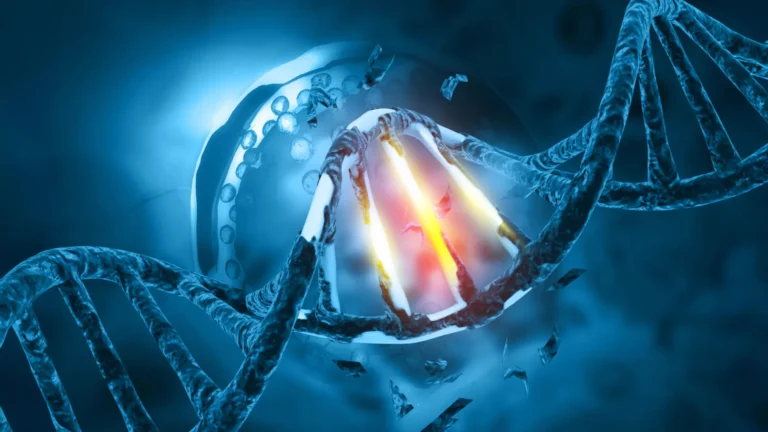
These mutations are effectively genetic accidents. As billions of cancer cells divide, errors inevitably creep into their DNA. Under normal conditions, these mutations might be benign. However, when a patient undergoes chemotherapy or targeted therapy, the drug acts as an intense environmental filter. It ruthlessly eliminates the vulnerable cells, leaving behind only those rare, mutant cells that possess a survival advantage against that specific drug.
Once the “sensitive” population is cleared, these resistant cells—no longer competing for space or nutrients—multiply rapidly. By the time the tumor is large enough to be detected by clinical imaging, it has been repopulated by a resistant strain. When the doctor finally switches to a new drug, the tumor may already carry mutations that protect it from the subsequent treatment as well. The patient has, in effect, provided the cancer with a "training ground" to evolve into a multi-drug resistant entity.
Chronology of a Shift: From Biology to Mathematics
The origins of this research project represent a collaborative, international effort that bridged the gap between theoretical biology and clinical oncology. The study was born from the work of Srishti Patil, a master’s student at the Indian Institute of Science Education and Research in Pune, who collaborated with Dr. Noble at City, St George’s. The team was further bolstered by the expertise of Armaan Ahmed, an undergraduate at Johns Hopkins University, and Dr. Yannick Viossat of Université Paris Dauphine-PSL.
The researchers began by adapting mathematical tools originally designed to track the evolution of plants and animals under the stresses of climate change. In this novel application, the "environmental pressure" is the drug regimen. By mapping how different treatment schedules influence which cancer cells survive and how quickly they reproduce, the team built models to simulate the tumor’s trajectory.
The Timeline of Research
- Conceptualization: The team hypothesized that if antibiotic resistance and influenza vaccine selection could be managed through evolutionary prediction, cancer treatment should be subject to the same logic.
- Mathematical Modeling: Between 2022 and 2023, the team developed algorithms to simulate tumor growth under various drug-switching scenarios.
- Validation: The models consistently showed that proactive switching outperformed the standard "wait-and-see" approach.
- Clinical Integration: As of 2024, the findings have moved from the chalkboard to the clinic, with three small-scale trials—focusing on soft-tissue, prostate, and breast cancers—currently underway to validate the models in human patients.
Supporting Data: Why "Kick It While It’s Down" Works
The mathematical models utilized by the research team offer a stark contrast to current standard-of-care protocols. In the simulations, the researchers observed that when a tumor is in the midst of a shrinking phase, the population of cancer cells is at its lowest genetic diversity.
By introducing a second, different therapy at this precise moment, doctors can catch the surviving resistant cells before they have the time or the space to establish a dominant, protected colony. If the first drug doesn’t kill the cell, the second one might. If the cell manages to mutate against the first drug, the second drug forces the cell to undergo a new, potentially lethal transition.
“Evolutionary approaches have been very successful in other contexts, such as combating antibiotic resistance,” says Dr. Noble. “There is every reason to suppose that similar approaches should work in tumors.”
The researchers acknowledge that two treatments may not be the "magic bullet." Their models suggest that while a two-drug sequence is effective for smaller tumors, larger, more established tumors may require a more complex strategy. The team’s data indicates that rotating between three or more therapies could create a "multi-layered" environmental pressure that is nearly impossible for a tumor to adapt to in its entirety.
Official Responses and Clinical Implications
The broader medical community is watching these developments with cautious optimism. While the study is rooted in robust mathematics, experts emphasize that a model is only as good as its clinical application.
The Path Forward
Dr. Noble and his colleagues are clear: this is not a one-size-fits-all solution. The transition from mathematical theory to bedside practice requires addressing several critical variables:
- Patient-Specific Heterogeneity: Every patient’s tumor has a unique genetic fingerprint. Treatment schedules must be calibrated to the specific mutation rate and size of the tumor.
- Toxicity Management: Switching drugs early requires a delicate balance. Doctors must ensure that the secondary therapy is not so toxic that it degrades the patient’s overall health, which would negate the benefits of the treatment switch.
- Optimal Timing: The "Goldilocks" moment—switching at the right time to prevent regrowth without causing unnecessary harm—is the primary focus of the current clinical trials.
The implications for oncology are profound. If validated, this strategy could turn cancer from a chronic, relapsing condition into a manageable—or even curable—disease. Instead of chasing the tumor as it evolves, doctors would effectively out-maneuver it.
“Our models predict that this new approach will generally outperform the standard of care,” Dr. Noble reiterated. “We have reason to hope that switching between three or more treatments, following the same principle, could eliminate larger tumors.”
Conclusion: A New Frontier in Precision Medicine
The research published in Genetics represents a paradigm shift in how we perceive the oncology treatment landscape. By embracing evolutionary biology, researchers are moving toward a future where we do not simply treat the tumor as it exists today, but anticipate how it will try to survive tomorrow.
As the ongoing clinical trials for soft-tissue, prostate, and breast cancers begin to yield data, the medical community will gain a clearer picture of whether these mathematical models can indeed translate into lives saved. For now, the work stands as a testament to the power of interdisciplinary science—proving that sometimes, the most effective way to save a life is to change the rules of the game before the opponent has a chance to play.
While the road to clinical implementation is long, the transition from reactive medicine to proactive, evolutionary-based strategy marks a significant milestone in the quest to conquer drug resistance, potentially providing a roadmap for future generations of cancer care.