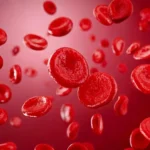








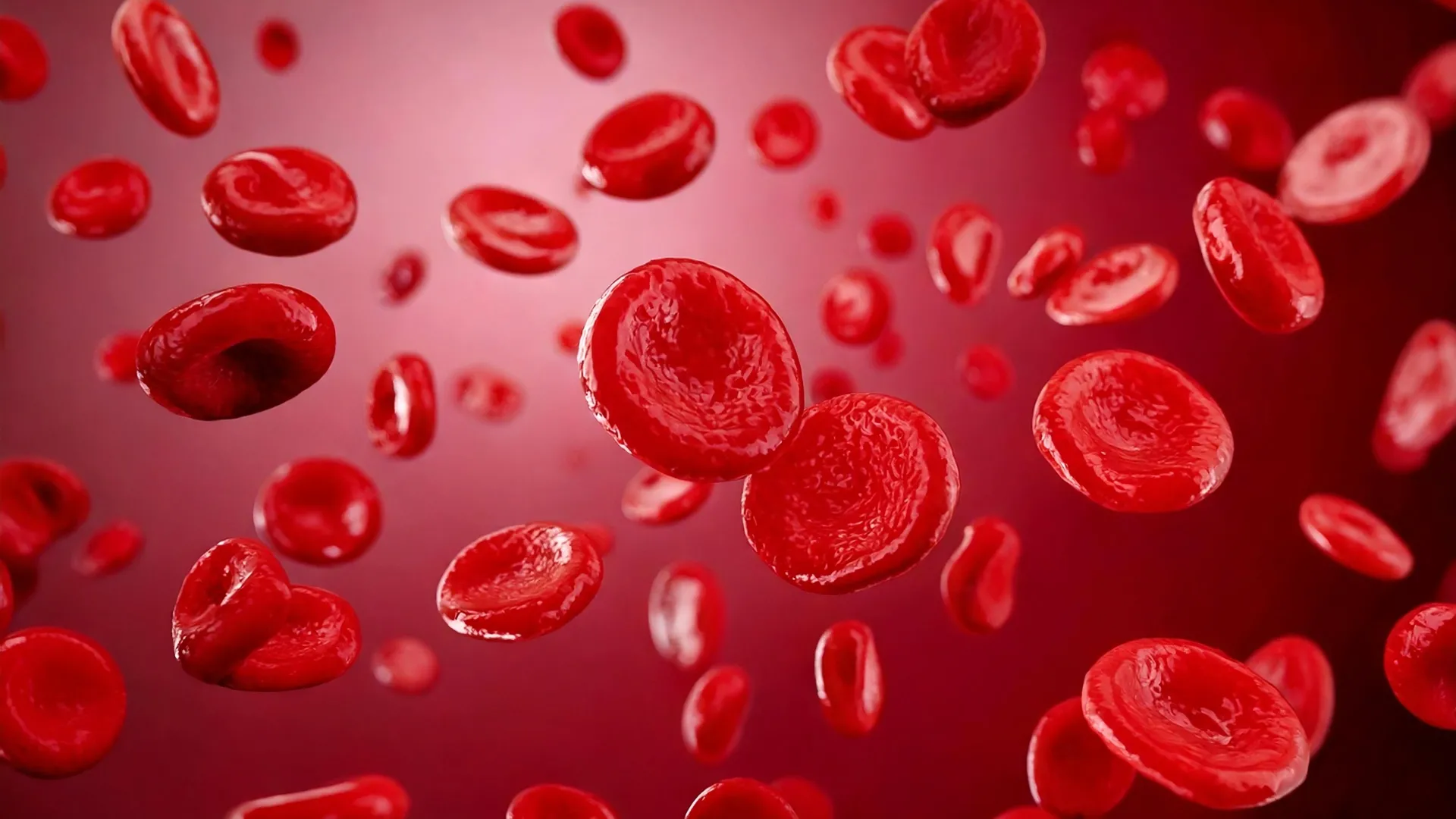
For over half a century, the medical community has grappled with an enigma etched onto the surface of human red blood cells. Since its discovery in 1972, the AnWj antigen has stood as a persistent outlier in hematology—a marker present in more than 99.9% of the human population, yet one whose genetic origin remained entirely elusive.
That silence has finally been broken. In a landmark study led by researchers at NHS Blood and Transplant’s International Blood Group Reference Laboratory (IBGRL) and the University of Bristol, scientists have successfully traced the AnWj antigen to the MAL gene. This breakthrough does more than solve a decades-old scientific puzzle; it officially establishes the MAL blood group system (ISBT 047) and provides clinicians with a vital, long-awaited diagnostic tool to safeguard patients with exceptionally rare blood types.
The Chronology of a Medical Mystery
The narrative of the AnWj antigen began in 1972, a period when the map of human blood groups was expanding rapidly. While the ABO and Rh systems had been firmly established, researchers were beginning to identify hundreds of other molecules—antigens—that decorated the membranes of red blood cells.
For decades, the AnWj antigen was classified as a serological curiosity. While it was clear that the vast majority of humanity carried this marker, the "why" and "how" of its existence were shrouded in mystery. Because the antigen was so ubiquitous, identifying people who lacked it—the AnWj-negative minority—was an arduous task.
The investigation was hampered by two primary factors: the extreme rarity of inherited AnWj deficiency and the lack of a clear genetic candidate. For 50 years, the marker existed as a "floating" antigen, unmoored from any known genetic locus. It wasn’t until the advent of advanced genomic technologies, specifically whole exome sequencing, that the researchers were finally able to peer into the DNA of the rare individuals who lacked the antigen and compare their genetic signatures against the population at large.
The Genetic Breakthrough: Unmasking the MAL Gene
The turning point came when the team, utilizing whole exome sequencing, analyzed the DNA of individuals identified as AnWj-negative. This technique, which isolates and reads the protein-coding regions of the genome, allowed the scientists to look for common, unusual variants shared by the affected individuals.
The search led them to the MAL gene. Further analysis revealed that the individuals who inherited this rare blood type carried homozygous deletions—meaning they possessed a damaged or missing copy of the MAL gene inherited from both parents.
The MAL gene is responsible for producing the Mal protein, a small membrane-embedded protein. Through rigorous laboratory validation, the researchers demonstrated that in AnWj-positive individuals, the full-length Mal protein is present on the surface of red blood cells. In AnWj-negative individuals, that protein is entirely absent.
To confirm that the Mal protein was indeed the carrier of the AnWj antigen, the team performed a series of "cause and effect" experiments. By introducing the normal MAL gene into laboratory-cultured cells, they observed the emergence of the AnWj antigen. Conversely, cells lacking the gene—or those modified to mimic the genetic deletion—failed to display the marker. These experiments provided the definitive proof required by the International Society of Blood Transfusion (ISBT) to classify MAL as an official blood group system.
Understanding the Clinical Stakes
Why does a marker found in 99.9% of people matter so much? The answer lies in the danger of transfusion medicine.
If an AnWj-negative individual develops antibodies against the AnWj antigen, their immune system will perceive any AnWj-positive blood (the blood of almost every donor in the world) as a hostile invader. This can lead to a severe hemolytic transfusion reaction, where the patient’s immune system attacks and destroys the donor’s red blood cells.
There are two ways a patient can become AnWj-negative. The first is genetic: a person is born with a MAL gene deletion. The second is acquired: a patient, often suffering from an underlying hematological disorder or cancer, may see their expression of the AnWj antigen suppressed by the disease process, subsequently developing autoantibodies against it.
Recent clinical cases from 2026 highlight the complexity of these situations. In one instance, a 75-year-old man with severe anemia and an anti-AnWj autoantibody required an urgent transfusion. Because he was not genetically deficient, his MAL gene was normal, and the antibody was deemed a secondary effect of his illness. Clinicians had to weigh the life-threatening risks of severe anemia against the potential for a transfusion reaction. In another case involving a patient with B-cell lymphoma, doctors utilized sutimlimab—a drug that blocks the immune complement pathway—to mitigate the effects of an incompatible transfusion.
Official Recognition and Global Impact
In the 2026 terminology report, the ISBT formally ratified the MAL blood group system as ISBT 047. This is a significant milestone; for a group to be officially recognized, researchers must provide a definitive genetic and molecular basis for the antigen.
The speed at which the field is moving is underscored by the subsequent recognition of other systems. By late 2026, the JAMA system was recognized as the 49th blood group system, signaling that our understanding of the human blood landscape is still in its infancy.
The implications for patient care are immediate. "Knowing the gene behind AnWj gives blood specialists something they did not previously have: a direct genetic way to search for people who inherit AnWj-negative blood," explains Nicole Thornton, Head of IBGRL Red Cell Reference at NHS Blood and Transplant. Genotyping tests can now be incorporated into existing platforms, allowing for the rapid identification of rare donors and patients before they enter an emergency situation.
Expert Reflections on a Half-Century Quest
The resolution of the AnWj mystery has been an emotional and professional journey for the research team. Louise Tilley, a Senior Research Scientist at IBGRL who spent two decades of her career investigating this specific problem, described the breakthrough as a "huge achievement."
"The genetic background of AnWj has been a mystery for more than 50 years," Tilley said. "The work was difficult because the genetic cases are very rare. We would not have achieved this without exome sequencing, as the gene we identified wasn’t an obvious candidate and little is known about the Mal protein in red cells."
Professor Ash Toye, Director of the NIHR Blood and Transplant Research Unit at the University of Bristol, emphasized the importance of modern cell-manipulation techniques in confirming the discovery. "It’s really exciting that we were able to use our ability to manipulate gene expression in developing blood cells to help confirm the identity of the AnWj blood group. This development will help identify these rare donors and help patients in the future."
The contribution of patients was also paramount. The study relied on blood samples from a small, global cohort, including an Arab Israeli family and the original patient whose blood was first used to identify the AnWj-negative phenotype in the 1970s.
Conclusion: A New Era in Hematology
The identification of the MAL gene serves as a powerful reminder that human biology is far more intricate than the simple A, B, and O labels we use in everyday clinical practice. Blood groups are not merely labels; they are complex, inherited molecular signatures that, when mismatched, can pose life-altering risks.
By turning an unexplained serological curiosity into a genetically defined blood group system, the researchers have provided a roadmap for the future. As we move further into the era of precision medicine, the ability to map these rare blood groups will continue to grow, ensuring that even the rarest patients can receive the lifesaving care they need. The 50-year mystery of AnWj is solved, but it has paved the way for a deeper, more comprehensive understanding of the blood that sustains us all.