As we navigate the later chapters of life, the physical changes we observe in our bodies—particularly in our arms—are often dismissed as purely aesthetic concerns. However, the softening or "sagging" of the upper arms is frequently a visible indicator of deeper physiological shifts. While many focus on the cosmetic aspect of arm definition, health experts emphasize that maintaining upper body strength is a cornerstone of long-term independence, mobility, and metabolic health.
The decline in muscle mass, known medically as sarcopenia, is a natural, age-related process that accelerates after the age of 60. When coupled with the natural reduction in elastin and collagen production—the proteins responsible for skin firmness and elasticity—the result is a significant change in the appearance and functional capacity of the arms.
To combat these effects, Karly Mendez, PhD, a Senior Human Performance Specialist with the Memorial Hermann Rockets Sports Medicine Institute, suggests that it is never too late to intervene. By implementing a targeted, consistent strength-training routine, individuals can rebuild muscle, improve joint stability, and restore a firmer contour to their arms—all without the need for an expensive gym membership.
The Science of Aging: Understanding Sarcopenia and Skin Health
To address the changes in our arms, we must first understand the "why" behind them. Sarcopenia is not merely a cosmetic issue; it is a systematic loss of skeletal muscle mass and strength. According to clinical data, muscle mass typically peaks in the third decade of life and begins a gradual decline thereafter. By age 60, this process can significantly impact one’s ability to perform routine activities, such as lifting groceries, reaching for high shelves, or maintaining balance.
Simultaneously, the dermis undergoes structural changes. As collagen synthesis slows, the skin loses its structural scaffolding, leading to a thinner, less elastic surface. While exercise cannot "tighten" skin in the surgical sense, Dr. Mendez notes that it serves a vital purpose: "Strength training increases muscle mass along with toning the muscles. Exercise itself cannot restore lost skin elasticity, but rebuilding muscle underneath fills out the skin, providing a firmer, smoother contour to the arm."
By focusing on hypertrophy—the growth of muscle cells—we provide the skin with a fuller foundation, effectively "filling in" the space that was previously lost to atrophy.
The Chronology of Transformation: A Roadmap for Beginners
Beginning a fitness journey after 60 requires a strategic, patient approach. The following chronology outlines how to safely integrate strength training into your daily life to ensure longevity and success.
Phase 1: The Foundation (Weeks 1–4)
The primary goal during the first month is habit formation and neural adaptation. Your muscles and nervous system need to learn how to engage correctly. Focus on bodyweight exercises and perfecting your form rather than adding heavy resistance. During this phase, you should prioritize consistency over intensity.
Phase 2: Progressive Overload (Weeks 5–12)
Once your form is solid, it is time to introduce "progressive overload." This means gradually increasing the difficulty of your workouts. You can achieve this by adding resistance bands, light dumbbells, or increasing the number of repetitions. The goal is to keep the muscles challenged so they continue to adapt and grow.
Phase 3: Maintenance and Lifestyle Integration (Month 4 and Beyond)
At this stage, exercise should become a non-negotiable part of your daily routine. By now, you should notice improved functional strength—daily tasks should feel easier. Continue to rotate your exercises to prevent plateaus and ensure you are working the muscles from multiple angles.
Expert-Recommended Exercises for Arm Toning
Dr. Karly Mendez advocates for four specific movements that maximize muscle recruitment while minimizing the risk of joint injury—a critical factor for older adults.
1. Chair Tricep Dips
The tricep, located on the back of the upper arm, is often the most neglected muscle group. Chair dips are an excellent way to target this area using your own body weight.
- The Technique: Sit on the edge of a sturdy chair with your hands placed next to your hips. Slide your hips off the chair, supporting your weight with your arms. Lower your body toward the floor by bending your elbows, then push back up to the starting position.
- Expert Tip: Keep your back close to the chair to reduce stress on your shoulder joints.
2. Tricep Kickbacks
This movement is ideal for isolating the triceps with controlled tension. Because it requires a smaller range of motion, it is generally safer for those with mild joint discomfort.
- The Technique: Stand with a slight hinge at the hips, keeping your back straight. Hold a light weight (or water bottle) in each hand. Keep your elbows tucked close to your ribs and extend your arms backward until they are straight. Slowly return to the starting position.
3. Hammer Curls
While the triceps are essential for pushing motions, the biceps are crucial for pulling and lifting. Hammer curls are uniquely effective because they utilize a neutral grip (palms facing each other).
- The Technique: Stand tall, holding weights with palms facing your body. Keeping your elbows stationary, curl the weights up toward your shoulders, maintaining the neutral grip throughout the movement.
- Why it works: The neutral grip places less stress on the wrists and elbows, making it a "joint-friendly" option for those who find traditional bicep curls uncomfortable.
4. Overhead Extensions
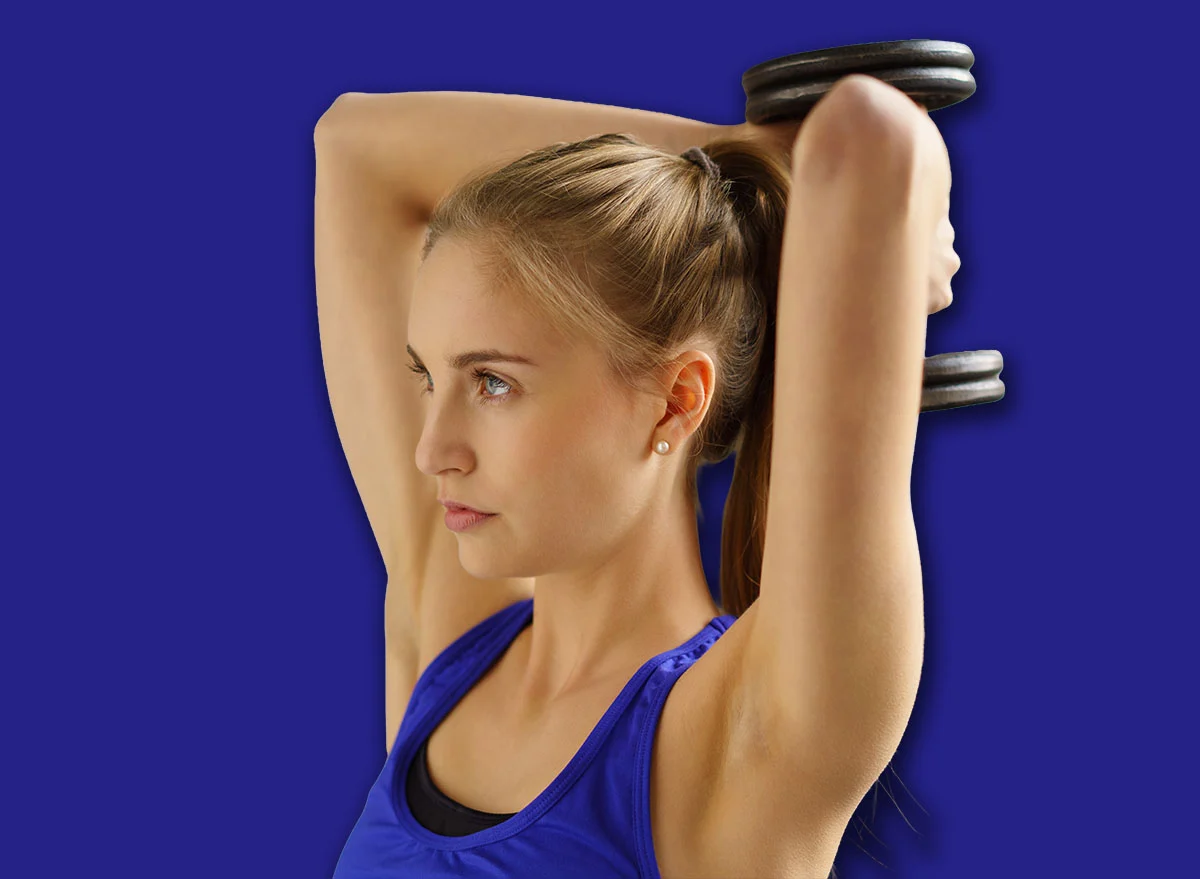
Targeting the "long head" of the tricep, this exercise is essential for overall arm volume.
- The Technique: While standing or sitting, hold a resistance band or a light weight with both hands. Raise your arms overhead, then bend your elbows to lower the weight behind your head. Extend your arms back up toward the ceiling.
- Expert Tip: If you have limited shoulder mobility, use a resistance band. The elastic nature of the band provides smooth, constant resistance without the need for heavy, cumbersome dumbbells that can overload the shoulder joint.
Supporting Data: Why Strength Training is Non-Negotiable
The medical community is increasingly viewing resistance training as a form of "preventative medicine." Research published in journals of gerontology suggests that strength training is associated with a lower risk of all-cause mortality in older adults.
Furthermore, muscle tissue is metabolically active. By increasing your muscle mass, you effectively increase your basal metabolic rate (BMR), meaning your body burns more calories even at rest. This can help combat age-related weight gain, which often exacerbates the appearance of sagging skin in the arm area.
When you strengthen your arms, you are not just improving your silhouette; you are enhancing your grip strength, which has been identified in clinical studies as a significant predictor of overall health and longevity.
Official Recommendations and Safety Precautions
While the benefits are significant, Dr. Mendez warns that safety is paramount. Before embarking on any new exercise program, it is essential to consider the following:
- Consult Your Physician: If you have a history of heart disease, hypertension, or joint injuries, get clearance from your primary care provider before starting.
- The "Warm-Up" Rule: Never perform strength training with "cold" muscles. Engage in 5–10 minutes of light aerobic activity, such as walking or arm circles, to increase blood flow to the connective tissues.
- Quality Over Quantity: It is better to perform five repetitions with perfect form than twenty with poor technique. Poor form is the leading cause of injury in older adults.
- Listen to Your Body: A mild "burn" is expected as your muscles work; however, sharp, shooting pain in the joints is a sign to stop immediately.
Implications for Long-Term Independence
The ultimate goal of these exercises is to extend your "healthspan"—the number of years you live in good health. By maintaining strong, functional arms, you are investing in your future self. The ability to carry your own bags, lift grandchildren, or simply maintain your posture is linked to a higher quality of life and greater psychological well-being.
As we age, we do not have to accept the decline of our physical capabilities as an inevitability. Through consistent, targeted strength training, we can reclaim our strength, improve our definition, and move through our later years with confidence and vitality. As Dr. Mendez concludes, the path to a healthier, stronger body is accessible to everyone—it simply begins with the first repetition.