











By Investigative Desk
September 22, 2026
In a sweeping move that marks one of the most significant overhauls of the Affordable Care Act (ACA) since its inception, the Trump administration announced on Tuesday that it will remove approximately 760,000 individuals from federal healthcare exchanges. Vice President JD Vance, spearheading the administration’s government-wide anti-fraud task force, framed the decision as a necessary step to protect taxpayer funds and eliminate systemic abuse within the marketplace.
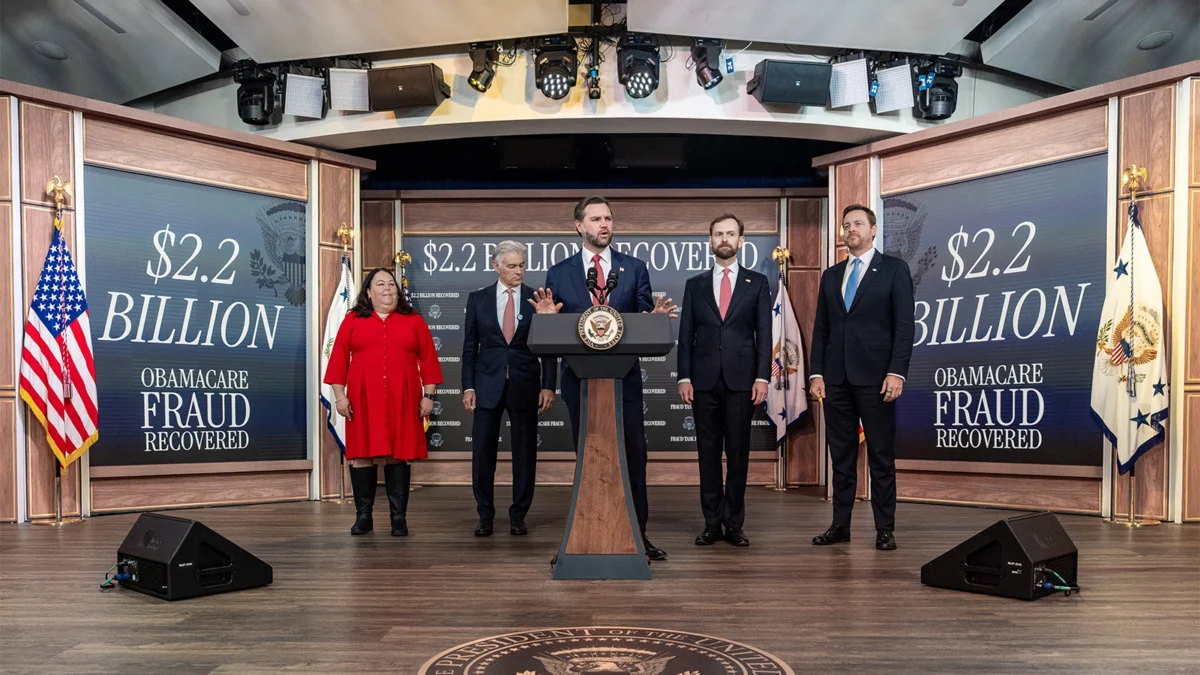
The administration alleges that these enrollees were either fraudulently registered or do not exist, representing a massive misappropriation of federal subsidies. According to officials, the removal of these accounts is expected to generate $2.2 billion in immediate cost savings.
The Crackdown: A Strategy to Combat Systemic Fraud
During a White House press briefing on Tuesday, Vice President Vance, accompanied by Centers for Medicare and Medicaid Services (CMS) Administrator Mehmet Oz, MD, emphasized that the integrity of federal programs is a cornerstone of the administration’s fiscal policy.
"We are fundamentally changing the culture of these programs," Vance stated. "We are making sure that the people receiving Obamacare subsidies are actually entitled to receive them. For too long, the system has been rife with ‘ghost’ enrollees—accounts created to siphon taxpayer dollars into the pockets of bad actors. This ends today."
The administration’s strategy involves not only the immediate removal of these 760,000 enrollees but also a temporary, six-month suspension on all new brokers enrolling individuals into marketplace plans. Officials argue that independent brokers are responsible for a "disproportionate amount" of the fraudulent activity identified in recent audits. By pausing the intake of new enrollees via these third-party agents, the administration hopes to overhaul the verification process and implement stricter vetting protocols.
Chronology of the ACA’s Evolution and Recent Fiscal Pressures
The trajectory of the ACA under the second Trump administration has been marked by significant volatility. The current situation is the culmination of a multi-year shift in healthcare policy that began shortly after President Trump’s second inauguration.
The Post-COVID Subsidy Cliff
During the Biden administration, enhanced subsidies—originally implemented as part of COVID-19 relief legislation—kept premiums artificially low for millions of Americans. However, when the Republican-led Congress allowed these provisions to expire at the start of 2026, the market experienced a violent correction.
For many, premiums doubled or even tripled overnight. This "subsidy cliff" forced millions of enrollees to either downgrade their coverage to high-deductible, low-benefit plans or exit the marketplace entirely. The administration’s current focus on "fraud detection" is being viewed by analysts as a response to the resulting budget crunch, as the administration faces intense pressure to lower healthcare spending ahead of the 2026 midterm elections.
The Escalation of Audits
Throughout early 2026, the Department of Health and Human Services (HHS) quietly ramped up data-matching initiatives. By cross-referencing Social Security records, tax filings, and residential data, investigators began identifying discrepancies that suggested hundreds of thousands of accounts were tied to fabricated identities or individuals who no longer met residency requirements. The Wall Street Journal first signaled the gravity of these findings earlier this month, setting the stage for Tuesday’s official announcement.
Supporting Data: By the Numbers
The scale of the purge is significant, though it represents only a fraction of the total marketplace population. According to the most recent data from the HHS, roughly 19.2 million Americans were actively enrolled in ACA marketplace plans as of early 2026.
- The Purge: 760,000 enrollees targeted for removal (approximately 4% of total enrollment).
- Fiscal Impact: $2.2 billion in projected savings from halted subsidy payments.
- Broker Impact: A six-month moratorium on new broker-facilitated enrollments.
- Market Context: Millions have already exited the exchange due to the 2026 premium spikes following the expiration of pandemic-era subsidies.
The administration’s internal audit suggests that a sophisticated network of "enrollment mills" has been operating across the country, using stolen or synthetic identities to claim premium tax credits. These credits are then diverted, leaving the government to foot the bill for coverage that serves no actual patient.
Official Responses and Political Fallout
The administration’s announcement has ignited a firestorm of debate in Washington. Supporters of the administration applaud the move as a long-overdue application of fiscal conservatism to a program they have long labeled as bloated and inefficient.
"Administrator Oz has been clear that our priority is the sustainability of Medicare and Medicaid," said a White House spokesperson. "When you have billions of dollars hemorrhaging out of the system to people who aren’t even there, you aren’t helping the vulnerable; you are enriching fraudsters."
Conversely, healthcare advocates and Democratic lawmakers have expressed alarm, warning that a "guilty until proven innocent" approach could inadvertently strip coverage from low-income, legitimate enrollees who may lack the digital literacy or documentation to appeal a sudden termination of their benefits.
"This is a massive administrative purge," said one health policy analyst familiar with the HHS rollout. "While fraud is a legitimate concern, the mechanism of removing 760,000 people at once—and suspending the brokers who help the hardest-to-reach populations—could create a humanitarian crisis for families who suddenly find themselves without insurance."
The White House has deferred specific questions regarding the appeals process for those erroneously removed to the vice president’s task force.
Implications: A Looming Midterm Battle
As the 2026 midterm elections approach, the ACA has once again become a central battlefield. The Trump administration is betting that voters are more concerned with government waste and the "runaway spending" associated with the ACA than with the potential for coverage disruptions.
However, the political risks are substantial. For families already struggling with the expiration of subsidies and the subsequent spike in premiums, the threat of losing coverage entirely—even if based on an allegation of fraud—could alienate moderate suburban voters who rely on the exchanges for their health security.
Economic and Healthcare Market Consequences
Beyond the political optics, the healthcare industry is bracing for impact. Insurance carriers participating in the exchange are currently evaluating how the removal of 760,000 enrollees will affect their risk pools. If the purge results in a healthier, more legitimate risk pool, some carriers may see improved margins. However, if the sudden removal causes chaos in administrative billing and claims processing, the industry could face months of operational instability.
Furthermore, the six-month suspension of brokers will likely lead to a significant drop in new enrollments during the upcoming open enrollment season. Brokers are the primary engine for marketing and assisting individuals through the complex application process; removing them from the equation essentially places the entire burden of enrollment on the federal government’s digital infrastructure.
Conclusion
The Trump administration’s decision to remove 760,000 ACA enrollees is more than just a bureaucratic cleanup; it is a signal of a deepening ideological divide regarding the role of the federal government in personal health coverage. With $2.2 billion at stake and a mid-term cycle gaining momentum, the administration is clearly banking on the narrative of "fiscal accountability" to define its healthcare legacy.
Whether this maneuver successfully eliminates fraud or merely creates a new tier of uninsured Americans remains to be seen. For now, the millions of Americans still on the exchanges are watching closely, aware that the definition of who is "entitled" to care is being rewritten in real-time.