









In the landscape of functional fitness, the humble crunch has long been relegated to the annals of outdated exercise advice. While traditional sit-ups and crunches focus on a narrow, isolated slice of the rectus abdominis, modern exercise science has shifted its focus toward holistic stability. For those navigating their seventh decade and beyond, the most revealing metric of physical health isn’t found in how many reps of an isolation movement one can complete, but in the quiet, steady endurance of a single forearm plank.
According to fitness experts and biomechanical researchers, the forearm plank serves as the "gold standard" for assessing core integrity. It is not merely an abdominal exercise; it is a full-body structural test that engages the transverse abdominis, the multifidus along the spine, the glutes, and the stabilizer muscles of the shoulder girdle. As we age, maintaining this "integrated" strength is the primary defense against the physical decline that threatens independence and mobility.
The Science of Stability: Why the Core Matters After 60
The human core is often misunderstood as simply the "six-pack" muscles. In reality, it acts as the body’s central power grid and stabilizer. As individuals cross the 60-year threshold, the body naturally experiences a shift in muscle mass and bone density, often leading to a subtle decline in proprioception—the body’s ability to sense its position in space.
Research consistently demonstrates that core endurance is a critical pillar of healthy aging. A strong core acts as a shock absorber and a structural anchor. It is the mechanism that allows for safe movement: reaching for a high shelf, carrying groceries, navigating uneven pavement, or catching oneself during a stumble. When the core is weak, the load of these daily movements shifts to the lower back and joints, leading to chronic pain and an increased risk of debilitating falls.
By utilizing the plank as a diagnostic tool, seniors can gain a clear, equipment-free snapshot of their current physical status. It is a baseline that requires no gym membership and no complex machinery—only a level floor and the resolve to maintain alignment.
Expert Insight: The 60-Second Benchmark
To better understand the practical application of this exercise, we consulted James Brady, CPT, a certified personal trainer at OriGym. Brady emphasizes that while the fitness industry is filled with complex benchmarks, the simplest movements often provide the most actionable data.

"If you can hold a strict, high-quality forearm plank for around 60 seconds after the age of 60, I would consider that an excellent level of core endurance," Brady explains. "While there isn’t a universally codified ‘magic number’ dictated by governing health bodies, a solid minute of controlled tension indicates that your abdominals, back, hips, and shoulders are communicating effectively to support your frame."
Brady cautions, however, that the 60-second mark should be viewed as a goalpost for health, not a competitive requirement. "The value isn’t in the stopwatch; it’s in the integrity of the position. If you can hold a perfect plank for 30 seconds, you are miles ahead of someone struggling for 90 seconds with a sagging lower back."
The Chronology of Improvement: A Roadmap for Growth
Building core strength after 60 is a process of progressive adaptation. For those just beginning, the journey often looks like this:
- The Assessment Phase (Weeks 1-2): Perform a timed plank to failure, focusing strictly on form. Do not push through pain. Record this time as your baseline.
- The Integration Phase (Weeks 3-6): Incorporate planks into your routine three to four times per week. Focus on "bracing"—the sensation of drawing your belly button toward your spine without holding your breath.
- The Optimization Phase (Weeks 7-12): Once you can hold a 30-second plank with perfect form, begin to focus on increasing the duration by five-second increments.
- The Maintenance Phase (Ongoing): Once the 60-second mark is reached, focus on maintaining that standard while introducing subtle variations, such as gentle limb lifts or side planks, to further challenge the obliques and stabilizer muscles.
Mastering the Technique: A Step-by-Step Guide
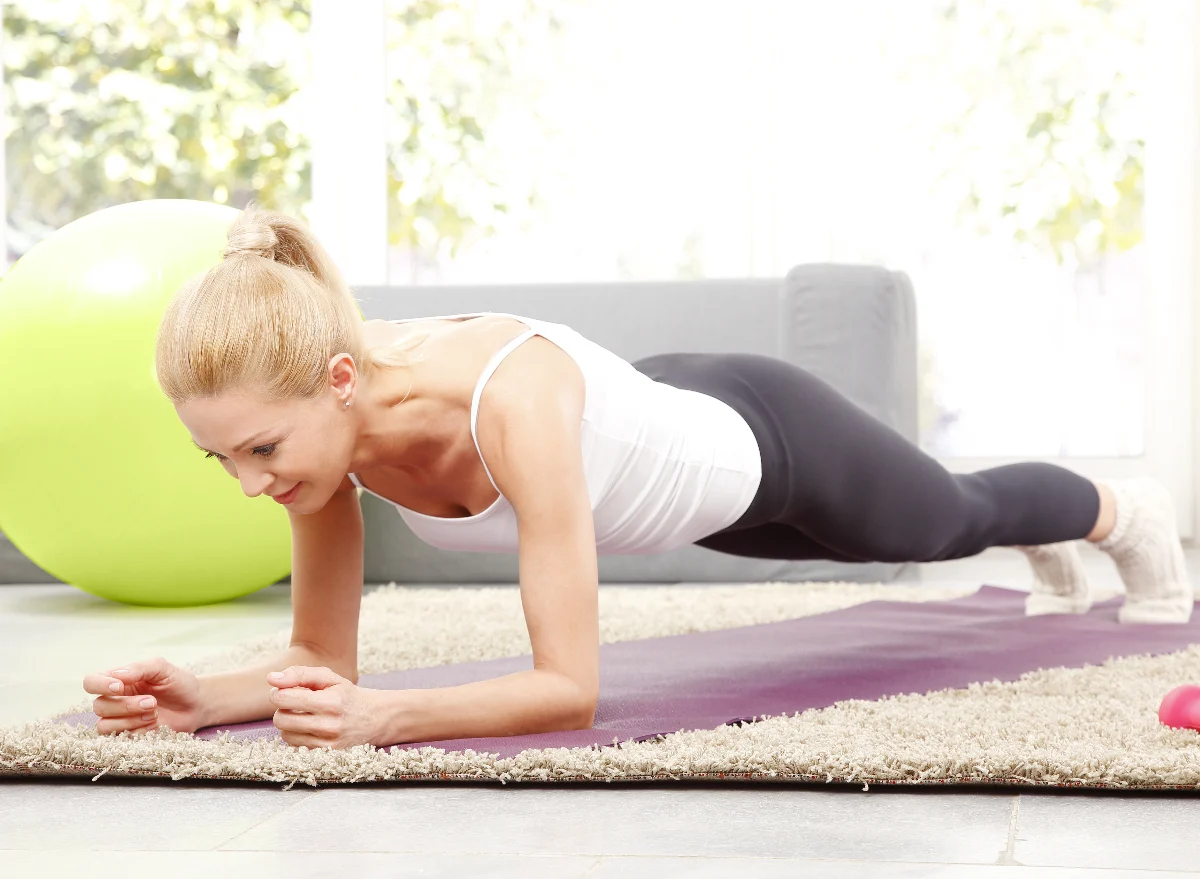
The effectiveness of a plank is entirely dependent on its execution. If the body is not aligned, the stimulus is lost, and the risk of lumbar strain increases. To perform a standard forearm plank, follow these steps:
- Set the Foundation: Lie face down on a mat. Place your forearms on the floor, elbows directly beneath your shoulders. Your palms can be flat or clasped.
- The Bridge: Engage your core by pulling your belly button toward your spine. Tuck your toes and lift your hips off the ground.
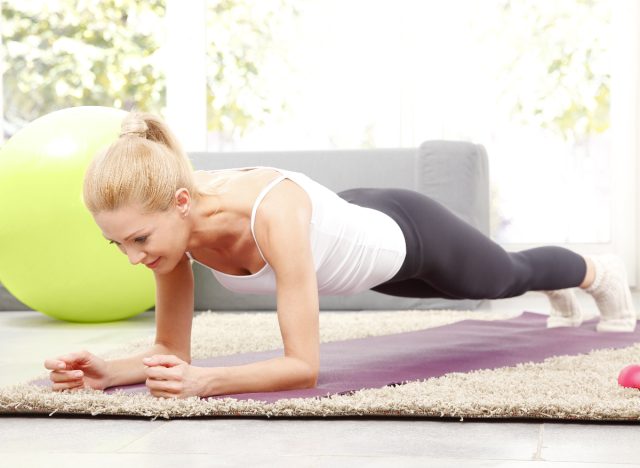
- Linear Alignment: Your body should form a straight, unbroken line from the crown of your head through your shoulders and hips down to your heels.
- The Glute Squeeze: Squeeze your glutes firmly. This is the "secret" to a stable plank; it prevents the hips from sagging and protects the lower lumbar vertebrae.
- Controlled Breathing: Do not hold your breath. Maintain rhythmic, steady breathing throughout the entire hold.
"The moment that line starts to break—whether the hips sag toward the floor or pike toward the ceiling—your time is up," Brady notes. "Stopping at the moment of breakdown is a victory, not a failure. It teaches your body where your current limits lie."
The Dangers of "Form Drift"
A common mistake among beginners and seasoned athletes alike is the "grind"—the act of forcing an extra 10 or 15 seconds onto a plank by sacrificing form. This is counterproductive. When the core tires, the body often recruits the lower back to bear the load, creating a "swayback" position.
"If your form starts to break down after 30 seconds, stopping there is significantly more beneficial than holding on for another minute with poor technique," Brady explains. "A short, clean hold builds real strength and reinforces the deep stabilizing muscles that protect your spine. A long, sagging hold does neither, and may actually introduce unnecessary stress to the vertebral discs."
Implications for Long-Term Quality of Life
The implications of mastering the plank extend far beyond the vanity of a toned midsection. A strong core is the foundation of "functional longevity." When the core is robust, the body is better equipped to handle the demands of travel, gardening, playing with grandchildren, and maintaining an active lifestyle.
Furthermore, the psychological benefit of achieving this benchmark cannot be overstated. Tracking one’s progress—moving from a 15-second hold to a 60-second hold—provides a tangible sense of agency over one’s own aging process. It is a reminder that the body is capable of adaptation and growth, regardless of the number on one’s birthday cake.
Conclusion: Starting Where You Are
If you cannot hold a plank for one minute, do not be discouraged. Most people, regardless of age, start with holds ranging from 15 to 30 seconds. The beauty of this exercise is its simplicity. It requires no equipment, making it a perfect addition to a morning routine or an evening stretch session.
By committing to a consistent schedule of testing and training, you are not just building muscle; you are building a more resilient, stable, and confident version of yourself. Whether you are currently at 10 seconds or 45, the path forward is the same: stay consistent, prioritize your form, and trust the process. In the years to come, the dividends of those daily minutes will manifest in every movement you make, ensuring that you stay upright, mobile, and independent for as long as possible.
Disclaimer: Before beginning any new exercise regimen, particularly if you have pre-existing back or joint conditions, it is highly recommended to consult with your physician or a licensed physical therapist to ensure the movements are safe for your specific health profile.