










The release of the 2025–2030 Dietary Guidelines for Americans (DGAs) was met with significant anticipation, arriving with a bold, consumer-facing tagline: "Eat Real Food." On the surface, the updated federal guidance appears to signal a long-overdue pivot away from the ultra-processed, sugar-laden diet that has characterized the American food landscape for decades. However, beneath the polished infographics and simplified messaging, a complex web of contradictions, industry influence, and scientific ambiguity has emerged, leaving experts and the public alike questioning the integrity of the new recommendations.
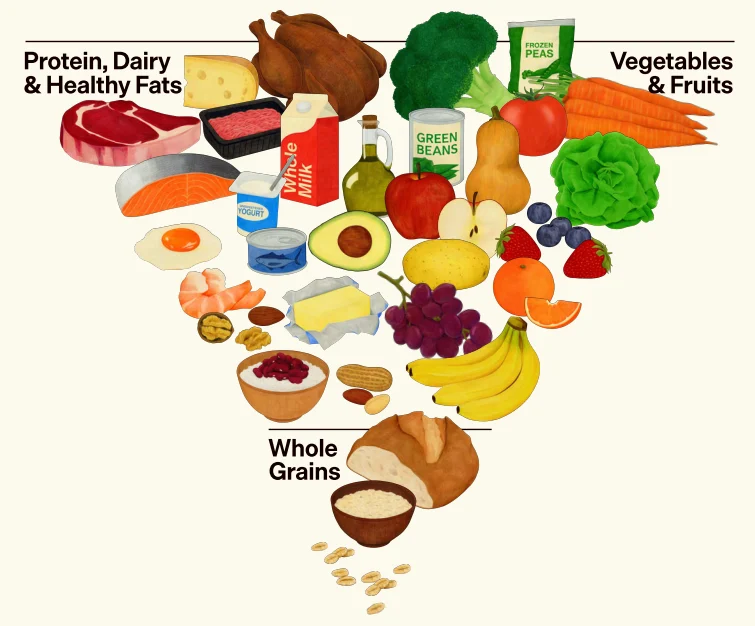
While the Guidelines make commendable strides in curbing sugar intake and identifying the dangers of ultra-processed foods, they simultaneously introduce a "New Food Pyramid" that seems to clash with its own textual warnings. By elevating animal-based, saturated-fat-rich foods to a position of visual prominence, the government has inadvertently sparked a debate over whether the latest iteration of the DGAs prioritizes public health or the interests of the agriculture sector.
The Evolution of Federal Nutrition: A Chronology of Policy
To understand the weight of the 2025–2030 DGAs, one must view them through the lens of history. Every five years, the U.S. Departments of Agriculture (USDA) and Health and Human Services (HHS) are mandated to update these guidelines to reflect the latest scientific consensus. Traditionally, this process is rigorous: an independent Advisory Committee of scientists spends two years synthesizing data, conducting peer-reviewed research, and submitting a comprehensive Scientific Report.
The process for the current edition, however, took an unprecedented turn. The independent Advisory Committee’s initial report was effectively sidelined by the current administration. In its place, a supplemental scientific analysis was conducted by a group of individuals selected via a federal contracting process. This shift has raised alarm bells among researchers. Dr. Deirdre Tobias, an assistant professor in the Department of Nutrition at the Harvard T.H. Chan School of Public Health, who served on the Advisory Committee, has been vocal about the lack of transparency in the final product. "There is no transparency in the methodology and rigor that was employed," she noted, highlighting that the final guidelines deviate from the established, replicable, and unbiased standards that the HHS spent decades building.
The "New Food Pyramid" and the Saturated Fat Paradox
Perhaps the most jarring aspect of the new guidelines is the visual representation of a healthy diet. The "New Food Pyramid" is essentially inverted from previous iterations, with a heavy emphasis on steak, full-fat milk, and butter.
This visual hierarchy creates a direct conflict with the text of the Guidelines themselves. While the document retains the long-standing scientific recommendation that saturated fat should be limited to 10% of total daily calories, the pyramid suggests a diet that would make adhering to that limit mathematically impossible for the average American.
The Math of Saturated Fat
Consider a standard 2,000-calorie diet. At a 10% limit, an individual is restricted to roughly 22 grams of saturated fat per day. If a consumer follows the DGAs’ recommendation of three daily servings of dairy—opting for the "full-fat" versions displayed in the new pyramid—the numbers tell a grim story:
- One 8-oz cup of whole milk: 5 grams of saturated fat
- ¾ cup of full-fat Greek yogurt: 6 grams of saturated fat
- 1 ounce of cheddar cheese: 6 grams of saturated fat
- Total: 17 grams of saturated fat.
By simply consuming these three dairy servings, an individual has exhausted 77% of their daily saturated fat budget. If that same person adds a single tablespoon of butter (7 grams) or beef tallow (6 grams)—both of which are highlighted as recommended cooking fats—they have officially exceeded their daily limit before even considering protein sources like red meat. This disconnect between the visual "ideal" and the written "limit" is a recipe for cardiovascular risk.
Addressing the "Ultra-Processed" Crisis
On a positive note, the 2025–2030 DGAs mark a milestone by officially calling out "highly processed foods." While food processing exists on a spectrum, the Guidelines are clear in their denunciation of sugar-sweetened beverages, ready-to-eat meals, and salty, packaged snacks.
The guidance on grains is similarly aligned with modern nutritional science, prioritizing fiber-rich, whole-grain options while advising a significant reduction in refined carbohydrates like white bread. This reflects a growing consensus that the quality of carbohydrates—not just the quantity—is the primary driver of metabolic health.
The Sugar Debate: A Stricter Stance
The new DGAs have taken a notably hardline approach to added sugars. The Guidelines state that "no amount of added sugars or non-nutritive sweeteners is recommended or considered part of a healthy or nutritious diet."
Perhaps most striking is the new directive for children: the Guidelines now recommend avoiding added sugars entirely until age 10, a dramatic increase from the previous benchmark of age 2. While the intent is noble, the implementation remains vague. The recommendation suggests that no single meal should contain more than 10 grams of added sugar—a metric that is notoriously difficult for the average consumer to track in a real-world setting where nutrition labels are often opaque.
Protein Quantity and the "Package" Problem
The Guidelines have also increased the recommended protein intake to 1.2 to 1.6 grams per kilogram of body weight—a 50–100% increase over previous minimums. While protein is essential for muscle maintenance and satiety, the lack of distinction regarding the source of that protein is a major oversight.
As Dr. Frank Hu, chair of the Department of Nutrition at the Harvard T.H. Chan School of Public Health, points out, we do not eat "protein" in isolation; we eat a "protein package." That package includes fats, fiber, sodium, and micronutrients. A diet high in protein from processed red meats carries vastly different health implications than one high in protein from fish, legumes, or nuts. By failing to emphasize plant-based proteins or lean, heart-healthy fish, the DGAs miss an opportunity to steer the public toward outcomes associated with lower rates of chronic disease.
Environmental and Socioeconomic Blind Spots
A glaring omission in the 2025–2030 edition is the complete lack of consideration for the environmental impact of dietary choices. As global awareness regarding the climate crisis grows, the link between food production and ecological stability is undeniable. Furthermore, the Guidelines offer little in the way of addressing the socioeconomic barriers that prevent many Americans from accessing "real food." For a document meant to guide the nation, the failure to address food deserts, the cost of fresh produce, and the influence of cultural food traditions renders the advice somewhat elitist and disconnected from the reality of the average household.
Implications: Can We Trust the Guidelines?
The shift toward a more "consumer-friendly" format—shorter text, interactive websites, and colorful graphics—is clearly intended to reach a wider audience. However, the controversy surrounding the methodology of the document’s creation cannot be ignored. Reports of reviewers having financial ties to the beef and dairy industries have cast a long shadow over the objectivity of the final report.
If the goal of the DGAs is to provide a roadmap for a healthier America, they must be built on a foundation of unimpeachable scientific integrity. When the government produces guidelines that are not only contradictory but also seemingly influenced by the very industries they are meant to regulate, public trust erodes.
As it stands, the 2025–2030 Dietary Guidelines for Americans are a document divided. They contain vital truths about the dangers of sugar and ultra-processed items, yet they are marred by a nostalgic, industry-friendly approach to animal fats that ignores decades of cardiovascular research. For the average American, the best advice remains to look beyond the government’s "New Food Pyramid." Resources like the Healthy Eating Plate, developed by nutrition experts, offer a more consistent and scientifically grounded approach to nutrition. As with all policy, the public must remain critical, informed, and proactive in navigating the complex—and sometimes contradictory—advice offered by federal agencies.