










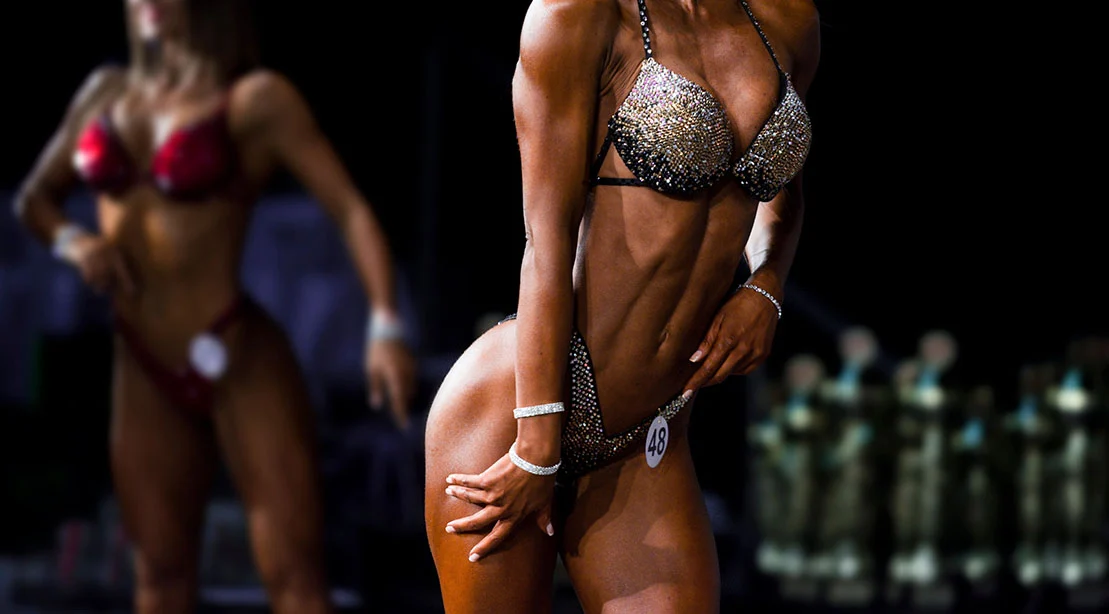
This week, the bodybuilding world descends upon Las Vegas for the most prestigious weekend in the sport: the Olympia. While fans will be glued to the stage waiting for the crowning of the next Mr. Olympia or the battle for the Bikini title, a quiet, historic shift is taking place. For the first time in the event’s storied history, the IFBB Pro League will crown a Fit Model Olympia champion.
To the traditionalists who might view this expansion with skepticism, it is worth pausing to consider the history of the sport. Since Larry Scott captured the inaugural title in 1965, the Olympia has been a living, breathing entity, constantly expanding to mirror the broader fitness industry. Today, with the addition of Fit Model, the stage now hosts 12 distinct divisions, ranging from the gargantuan mass of the Open class to the grace of the Wellness and Fitness divisions.
The introduction of Fit Model represents a deliberate, strategic attempt by the IFBB Pro League to shift the goalposts. By incentivizing a physique that favors "less" over "more," the federation is attempting to address a systemic issue: the inevitable, relentless pursuit of extreme muscularity that eventually pushes competitors out of a division.
A Chronology of Expansion: From 1965 to 2026
To understand the weight of this new addition, one must look at the timeline of the sport’s growth. The Olympia began as a singular pursuit—men’s bodybuilding—designed to find the greatest physique on the planet. Over the next six decades, the sport evolved in waves.
The 1980s and 90s saw the formalization of women’s bodybuilding and the eventual introduction of the Fitness category, which integrated athleticism and gymnastics. As the 2000s arrived, the federation recognized a need for more approachable aesthetics, leading to the birth of the Figure and Bikini divisions. These categories were intended to showcase balance and femininity, moving away from the extreme, striated conditioning of the bodybuilding stage.
However, the "growth cycle" began almost immediately. Bikini competitors, once judged on a lean, "beach-ready" look, began to present with higher levels of muscle density and deeper conditioning. The same trend mirrored in Men’s Physique and Classic Physique—the latter of which was introduced as a "rescue" category to provide an alternative to the ballooning mass of the Open division. Yet, even Classic Physique has seen its athletes grow significantly in size and density since its inception.
The Fit Model division was born from the realization that, for many, the gap between a healthy, gym-going fitness enthusiast and a professional Bikini competitor had become a canyon. The NPC piloted the division at the amateur level in 2025, and following its rapid adoption, the IFBB Pro League authorized professional contests in 2026. Now, as the 2026 Olympia runs from September 24–27, Fit Model is officially cemented into the qualification system.
Defining the Aesthetic: The "Less is More" Mandate
The judging criteria for Fit Model are perhaps the most explicit in the entire IFBB rulebook. In an industry that often relies on subjective interpretations of "balance," Fit Model provides a rigid, albeit counter-intuitive, blueprint.
Competitors are evaluated on a look that prioritizes a fit, healthy aesthetic over extreme muscle development. According to official guidelines, athletes should possess enough muscle to shape the female frame, but strictly less than their Bikini counterparts. The rules are surgical in their precision:
- Legs and Glutes: Less development is required, with no visible glute-ham tie-ins.
- Hamstrings: No hamstring separation is permitted.
- Shoulders/Delts: While a degree of roundness is allowed, "capped" deltoids—a hallmark of professional bodybuilding—are discouraged.
- Midsection: The goal is a fit, toned look, but without the high-definition vascularity or extreme "shredded" detail often seen in higher-muscle categories.
Interestingly, the federation has pointed to the 2015 version of three-time Bikini Olympia champion Ashley Kaltwasser as the visual benchmark. By citing a past version of a champion, the league is effectively asking for a "reset" to a look that was once considered the gold standard for fitness magazines, but which has since been surpassed by the current, more muscular iteration of the Bikini division.
Supporting Data: Why the Shift Matters
The primary driver behind the Fit Model division is inclusion—or rather, the retention of a specific demographic of women who find the current competitive landscape daunting.
In the current professional landscape, the demands on Bikini competitors have shifted toward a look that requires a level of leanness and muscle maturity that borders on the extreme. Many women who train with intensity, follow rigorous nutrition, and lead a "fitness lifestyle" find that the current judging trends in Bikini require a level of sacrifice that is unsustainable for their long-term health or desired aesthetic.
Market research within the NPC and IFBB Pro League suggests that there is a significant "lost" demographic: women who possess the discipline of an athlete but have no desire to diet down until their musculature exhibits "geological features." By creating a division that explicitly prohibits the extreme conditioning of traditional bodybuilding, the league is expanding its competitive base.
Furthermore, the presentation requirements underscore this shift. There are no mandatory bodybuilding poses. Instead, the division focuses on a simple, elegant front-and-back pose. Competitors wear heels, and the suits are intentionally understated—plain-colored designs rather than the Swarovski-encrusted, high-glitz swimwear associated with the Bikini stage.
Implications for the Future of Bodybuilding
The most critical question facing the Fit Model division is not whether it will succeed in the short term, but whether it can maintain its identity in the long term.
History provides a cautionary tale. Every single division introduced by the IFBB—from Figure to Classic Physique—has experienced a steady "creep" toward increased size and conditioning. When the judges reward a winner, they set a precedent. If the winner of this year’s Olympia is even slightly more conditioned than the runner-up, the following year’s competitors will inevitably push to match that level of conditioning.
If the judges fail to strictly enforce the "less is more" rule, the division will simply become "Bikini 2.0." If that happens, the cycle will repeat, and the federation will eventually find itself in the same position it is in now: needing to create yet another division to capture the demographic that feels alienated by the new, more muscular standard.
For the spectators in Las Vegas this weekend, the debut of Fit Model will be an exercise in observation. It is not just about who takes home the trophy, but what kind of physique is rewarded. If the judges hold the line, they will prove that there is a permanent home in the Olympia for the "fit, not shredded" athlete. If they yield to the natural competitive pressure to push the limits of human anatomy, they will have effectively signaled that the quest for "more" is an unstoppable force in the world of professional bodybuilding.
Ultimately, the debut of Fit Model is a test of the federation’s ability to curate its own evolution. By creating a division that dares to celebrate moderation in an era of extremes, the Olympia is attempting to reclaim the aesthetic that first drew millions of people to the gym. Whether the industry can resist its own tendency toward excess remains to be seen, but the outcome will dictate the shape of the stage for years to come.