










This week in Las Vegas, the Olympia Fitness & Performance Weekend is marking a historic pivot in its long-standing tradition. As the industry descends upon the city for the 2026 Olympia (September 24–27), the spotlight will shine on a new, highly anticipated, and controversial addition to the stage: the Fit Model Olympia.
For the purists who have followed the sport since Larry Scott hoisted the first Sandow trophy in 1965, the constant expansion of categories may feel like a departure from the grit and grime of traditional bodybuilding. Yet, the inclusion of Fit Model represents a calculated, strategic evolution—a move to bridge the gap between high-performance athleticism and the mainstream, commercial aesthetic of fitness modeling.
The Chronology of Expansion: From One to Twelve
Since its inception, the Olympia has evolved from a singular focus on the Open Men’s Bodybuilding division to a massive umbrella of 12 distinct categories. The list now includes Open, 212, Classic Physique, Men’s Physique, Bikini, Figure, Wellness, Fitness, Women’s Physique, Women’s Bodybuilding, Wheelchair, and now, the newly minted Fit Model.
The progression of this division has been swift. Following its introduction at the amateur level by the NPC in 2025, the IFBB Pro League integrated Fit Model into the professional circuit in 2026. Its rapid elevation to the Olympia stage highlights the federation’s desire to capture a specific demographic that has, until now, felt alienated by the increasingly extreme requirements of the existing divisions.
Defining the "Fit" Aesthetic: Strict Criteria
What makes Fit Model unique—and perhaps the most challenging category to judge—is that it is defined by "less" rather than "more." Unlike the constant push for greater muscularity, deeper conditioning, and more pronounced separation, Fit Model demands restraint.
The IFBB Pro League has provided exceptionally explicit judging criteria to ensure the division doesn’t succumb to the "bigger is better" trajectory that has historically plagued other categories. According to the official guidelines:
- Muscularity: Competitors should possess enough muscle to shape the female body, but distinctly less than that of a Bikini competitor.
- Specific Targets: Rules call for reduced development in the legs, glutes, arms, and delts. While the delts may possess a slight, natural roundness, "capped" shoulders are discouraged.
- Conditioning: The midsection should appear fit, not highly detailed or overly lean. Crucially, there should be no visible glute-ham tie-in and no hamstring separation.
In an era where extreme leanness is often the gold standard, this mandate for a "softer" yet still athletic look is a direct attempt to reset the clock on what the federation considers the ideal "fitness" physique.
The Historical Precedent: Why "Fit Model" Exists
The federation is not hiding its inspiration. Published rules for the division explicitly cite the 2015 physique of three-time Bikini Olympia champion Ashley Kaltwasser as the visual benchmark. This reference is telling. It acknowledges a pattern that has defined every division in the sport’s history: the "creep" toward increased mass and intensity.
History shows that every division, from Women’s Bodybuilding to Bikini and Men’s Physique, eventually trends toward extreme conditioning. Even Classic Physique—which was designed specifically to provide an aesthetic alternative to the massive, hyper-conditioned Open class—has seen its competitors evolve into larger, more muscular versions of their predecessors.
Fit Model is the IFBB’s attempt to halt this cycle. By codifying "less" as a requirement, the federation is attempting to create a permanent home for the type of physique that once graced the covers of mainstream fitness magazines—a look that is undeniably fit, but lacks the "geological" muscle definition that requires years of intensive, pro-level bodybuilding dieting.
The Presentation: A Shift in Tone
The presentation of Fit Model further differentiates it from its peers. Competitors do not perform the standard bodybuilding mandatory poses. Instead, the performance is limited to a front and back pose, emphasizing symmetry, balance, and grace over raw power.
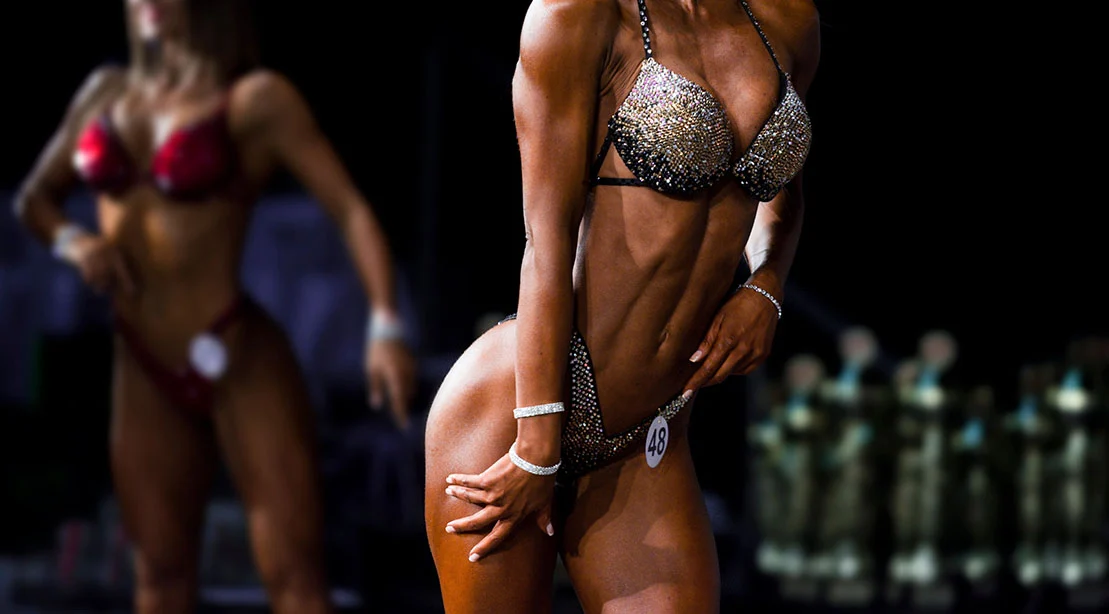
The aesthetic is also more understated. Gone are the elaborate, Swarovski-encrusted suits that have become the standard in the Bikini division. Fit Model participants compete in plain-colored suits and heels, forcing the judges to evaluate the athlete’s natural frame, posture, and poise without the distraction of "bling" or the mask of aggressive, contest-prep-induced vascularity.
Supporting Data: Why This Matters for the Industry
The rise of Fit Model is not just about aesthetics; it is a business strategy. The IFBB Pro League recognizes that there is a massive population of women who train consistently, eat a balanced diet, and possess a level of fitness that is aspirational to the general public, but who have no desire to undergo the rigorous, often depleting process of preparing for a traditional bodybuilding show.
By creating a platform for these women, the Olympia is widening its talent pool and its fan base. The question remains: can the federation maintain this standard? Critics argue that once a "champion" is crowned, the next wave of competitors will naturally attempt to out-do the winner. If the winner of the 2026 Olympia exhibits a hint of extra muscle or a slightly deeper glute separation, the rest of the field will follow suit to gain the judges’ favor.
Implications for the Future of Bodybuilding
The inaugural Fit Model Olympia serves as a litmus test for the future of the sport. If the judges hold the line—rewarding the specific, moderate look they have defined—they may succeed in creating a sustainable division that serves a unique niche in the fitness market. If, however, the standard "drifts" as it has in every other category, we may soon find ourselves waiting for a "Fit Model Classic" to arrive to rescue us from the inevitable evolution of the division.
From a sociological perspective, this is a fascinating experiment. We are watching a governing body attempt to legislate aesthetics in real-time. By explicitly telling competitors to "do less," they are acknowledging that the sport’s obsession with "more" has reached a saturation point.
For the athletes, the stakes are high. The first winner of the Fit Model Olympia will effectively become the blueprint for the category. Every woman who steps onto the stage in the years to come will be chasing that first champion’s look. The judges are not just picking a winner this week; they are establishing a constitution for a new corner of the bodybuilding world.
As the industry gathers in Las Vegas, all eyes will be on the stage. Whether this is the beginning of a successful new era or another iteration of the bodybuilding cycle remains to be seen. But one thing is certain: the Olympia is once again evolving, proving that even in a sport defined by static poses, the only constant is change.
The industry will be watching closely—not just to see who takes home the trophy, but to observe the specific "look" that the judges choose to immortalize. If they reward the intended, moderate aesthetic, the Fit Model division could become the most accessible and popular entry point for a new generation of competitors. If they falter, the cycle of "more" will continue, and the search for the perfect, balanced aesthetic will move on to yet another category.
For now, the stage is set. The athletes are ready. And for the first time in history, the mandate is clear: keep it fit, keep it balanced, and above all, keep it moderate. Whether that is possible in the highly competitive environment of the Olympia is the question that will be answered this weekend in Las Vegas.