







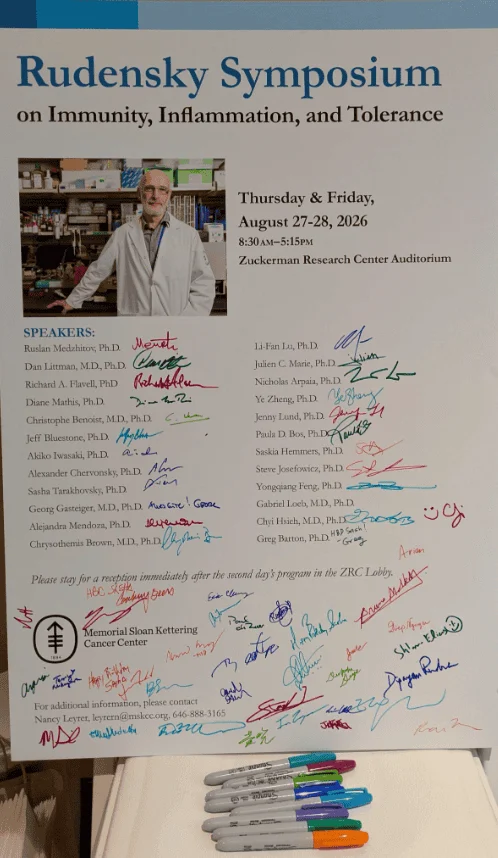
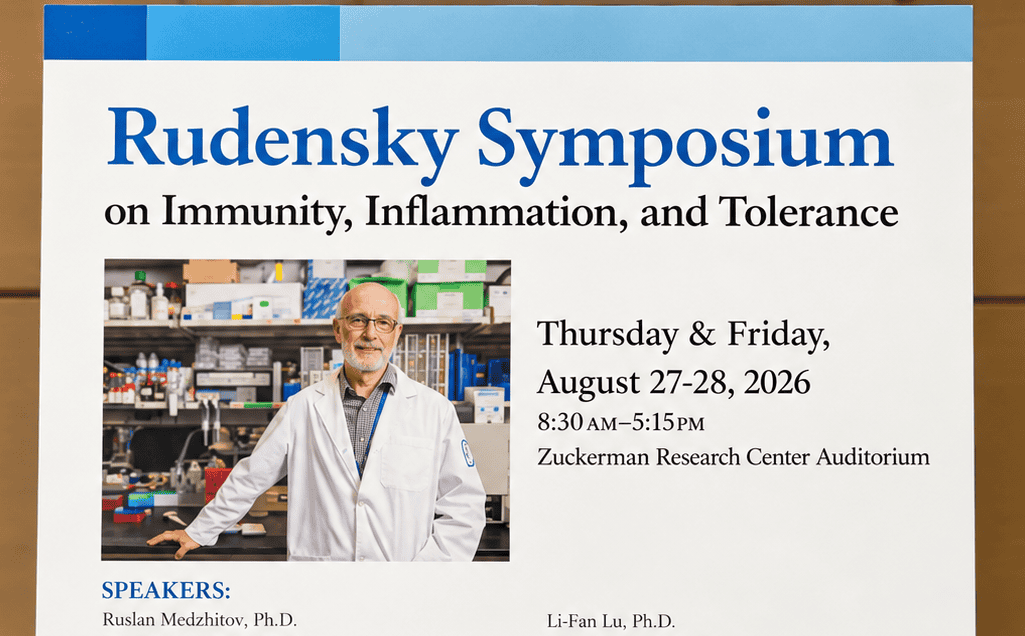
On August 27–28, 2026, the scientific community gathered for a landmark event that transcended the typical boundaries of an academic conference. The Rudensky Symposium on Immunity, Inflammation, and Tolerance was convened not merely to review data, but to honor the 70th birthday of Dr. Alexander “Sasha” Rudensky, a titan in the field of immunology based at the Memorial Sloan Kettering Cancer Center.
The symposium served as a living archive of a career defined by rigorous inquiry and profound mentorship. As former trainees, esteemed collaborators, and lifelong colleagues converged, the event underscored a pivotal truth in modern medicine: the most transformative breakthroughs in cancer treatment rarely arrive in isolation. They are the cumulative result of decades of fundamental research, nurtured by mentorship and the persistent, often unconventional pursuit of biological truths.
A Legacy of Mentorship and Discovery
For more than two decades, the Cancer Research Institute (CRI) has served as a primary benefactor of Dr. Rudensky’s work. The relationship between the Institute and the Rudensky laboratory is emblematic of CRI’s broader mission: to fund the bedrock of basic immunology under the firm belief that one cannot conquer cancer without first understanding the intricate language of the immune system.
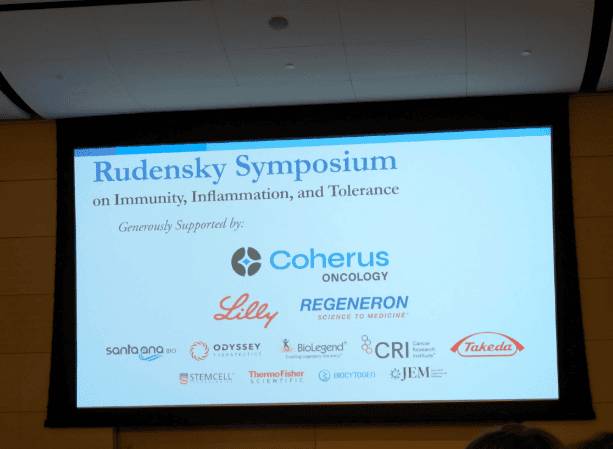
Dr. Rudensky’s contributions to science were formally recognized by the CRI in 2015 when he was awarded the prestigious William B. Coley Award. His pioneering work on regulatory T cells (Tregs)—the "peacekeepers" of the immune system that prevent autoimmunity and maintain tissue homeostasis—has redefined how we perceive the body’s internal defenses. The symposium, supported by CRI, highlighted the professional lineage of the Rudensky lab, which has produced over a dozen CRI-funded fellows who are now leading their own independent research programs globally.
Chronology of Scientific Evolution: From Tissue Homeostasis to Oncology
The symposium’s agenda was meticulously curated to mirror the evolution of the field. Presentations were woven with personal anecdotes and shared historical milestones, illustrating how the scientific community has matured alongside Dr. Rudensky’s own career.
Day One: The Mechanics of Tissue Maintenance
The initial sessions focused on the fundamental question of how healthy tissues remain in balance. Dr. Ruslan Medzhitov, a 2003 CRI Coley Awardee, set the tone by discussing the "garbage collection" functions of macrophages. He described how stressed cells signal for immune intervention to remove damaged proteins, framing immune cells not just as soldiers fighting infection, but as maintenance crews essential for physiological longevity.
This theme of homeostatic balance was expanded upon by Dr. Diane Mathis and Dr. Christophe Benoist, both 2024 CRI Coley Awardees. Their work demonstrated that Tregs are far more versatile than once thought. Dr. Mathis detailed how specific Treg populations facilitate muscle repair and manage post-injury scarring, while Dr. Benoist provided insights into how the molecular recognition of antigens dictates a Treg’s specific functional identity. These findings are vital for oncology; because the immune system operates on a razor’s edge, "fine-tuning" is essential. Too little immune activity leads to chronic inflammation and tissue damage, while too much suppression—a hallmark of tumor-infiltrated Tregs—enables cancer to evade detection.
Day Two: The Pre-Clinical Frontier
The second day shifted focus toward the "pre-cancerous" state. Dr. Richard A. Flavell, a 2012 CRI Coley Awardee, presented compelling data on early-stage immunosurveillance. By studying intestinal stem cells in mouse models, Dr. Flavell showed that the immune system is actively "weeding out" mutant cells long before a visible tumor emerges. His findings suggest that the struggle between abnormal cells and the immune system begins at the earliest possible stage of carcinogenesis.
This was complemented by the work of Dr. Julien C. Marie, who explored the link between inflammatory signaling and DNA damage. By studying the TGF-β pathway, Dr. Marie demonstrated that when regulatory signals are disrupted, immune cells like Th17 cells can shift into a pathological, inflammatory state that fosters tumor development. The silver lining, however, is the plasticity of these cells; restoring the appropriate signals can, in some cases, reverse the damage, offering a potential window for therapeutic intervention.
The Ecosystem of the Tumor Microenvironment
A recurring motif throughout the symposium was the concept of the "tumor ecosystem." Cancer is not a solitary actor; it relies on a complex network of surrounding cells, microbial influences, and structural scaffolds to survive.
The Microbiome and Systemic Immunity
Dr. Dan Littman, a CRI Scientific Advisory Council member and 2016 Coley Awardee, bridged the gap between gastroenterology and oncology. His research has been instrumental in establishing the link between the gut microbiome and the efficacy of checkpoint immunotherapy. The symposium showcased how the bacterial composition in the gut can "train" T cells to be more effective in attacking tumors located in distant organs, reinforcing the importance of systemic, rather than just localized, treatment approaches.
Structural Barriers to Treatment
The physical reality of the tumor was addressed by Dr. Paula D. Bos, who explored how Tregs manipulate the tumor microenvironment (TME). Her research into breast cancer revealed that Tregs influence the alignment of collagen fibers, effectively creating "highways" that facilitate metastasis. By modulating these interactions, researchers are finding ways to disrupt the TME’s ability to protect the tumor, potentially slowing the spread of cancer without the risks associated with systemic immune depletion.
Engineered Interventions
Dr. Nicholas Arpaia concluded the scientific sessions by discussing how tumors "recruit" fibroblasts to build suppressive neighborhoods that shield them from the immune system. His collaboration with CRI Lloyd J. Old STAR awardee Dr. Tal Danino has led to the development of "bacteria-based" therapies. By using engineered bacteria as delivery vehicles, the team is attempting to concentrate immune-modulating drugs directly inside the tumor, thereby minimizing toxic side effects and maximizing therapeutic impact.
Implications for Future Cancer Therapy
The symposium reached a consensus that the next generation of cancer therapies will likely be "context-dependent." We are moving away from the era of blanket immune activation and toward a more nuanced, surgical approach to immunotherapy. The key takeaways for the future include:
- Precision Targeting: Instead of broad Treg depletion, which risks systemic autoimmunity, future therapies will focus on specifically re-programming T cells to restore tissue balance.
- Early Intervention: Immunosurveillance represents a massive, underutilized opportunity for cancer prevention. Identifying the "molecular markers of early failure" could allow for interventions before a tumor ever becomes clinically relevant.
- Cross-Disciplinary Integration: The success of the symposium was in its refusal to segregate "basic science" from "cancer science." The discovery of how a fibroblast acts in a lung is now directly informing how we treat lung cancer.
A Human-Centric Vision of Progress
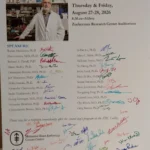
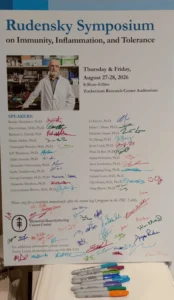
Beyond the technical data, the Rudensky Symposium was a testament to the culture of science. Dr. Rudensky’s own career—marked by rigorous debate and the freedom to pursue "blue-sky" questions—has created a ripple effect. The sight of generations of researchers, from students just starting their careers to legends in the field, signing a commemorative poster, provided a visual representation of how knowledge is passed down.
For the Cancer Research Institute, this event served as a validation of its long-term investment strategy. By funding the person rather than just the project, the CRI has fostered a community that values curiosity over immediate commercial results. As Dr. Rudensky remarked during the closing ceremonies, the most important discovery is often the one that challenges the prevailing dogma—a feat that requires not just intellect, but the confidence provided by a supportive community.
As the scientific community looks toward the next decade of immunotherapy, the lessons from the Rudensky Symposium remain clear: cancer research is a human endeavor. It is fueled by those who ask the difficult questions, who mentor the next generation with patience, and who understand that the secrets to curing the most complex diseases are often hidden in the fundamental, everyday mechanics of how our bodies function. The future of cancer therapy is being built in the laboratory today, one interaction, one cell, and one discovery at a time.