









This week, the world of professional physique sports descends upon Las Vegas for the 2026 Olympia Weekend. Amidst the thunderous cheers for the Open Bodybuilding giants and the grace of the Fitness division, a new, quieter, and arguably more controversial chapter is being written. For the first time in the event’s storied history, the IFBB Pro League will crown a champion in the "Fit Model" division.
For the hardcore, old-school bodybuilding fan—those who still hold the grainy, black-and-white images of Larry Scott’s 1965 victory as the gold standard—this announcement might feel like a dilution of the sport. However, to understand the Olympia’s evolution, one must look at the trajectory of the sport since its inception. From its roots as a singular test of mass and symmetry, the Olympia has expanded to encompass 12 distinct divisions, ranging from the gargantuan, mass-monster aesthetic of Open Bodybuilding to the athletic, performance-based requirements of Fitness.
The addition of Fit Model is not merely a bureaucratic expansion; it is a calculated attempt to reset the aesthetic clock. It represents a rare moment where the federation is explicitly choosing "less" over "more."
The Chronology: From Amateur Concept to Olympia Stage
The path to the Olympia stage for Fit Model has been a rapid, strategic climb. While the aesthetic has been discussed in fitness circles for years, the formalization of the division began in the amateur ranks under the NPC (National Physique Committee) in 2025.
The division’s reception was immediate. Recognizing a market gap, the IFBB Pro League sanctioned professional contests in 2026, creating a pathway for athletes who occupy a unique space in the fitness industry: the "mainstream fit" look. With the announcement that Fit Model would be included in the 2026 Olympia schedule, running from September 24–27, the division officially solidified its place within the highest tier of the sport.
This inclusion isn’t just a showcase; it is now part of the formal Olympia qualification system. Athletes who earn their place on that stage this week will be recognized as pioneers of a division that prioritizes a specific, curated level of physical development that the federation is desperate to protect.
The Judging Criteria: A Blueprint for Moderation
What makes Fit Model unique is the explicit nature of its judging criteria. In an industry that often leaves "the look" open to subjective interpretation by judges, the Fit Model rulebook reads like a precision engineering document.
The criteria are designed to strip away the hyper-conditioning that has become standard in other divisions. Competitors are expected to display:
- Muscularity: Enough to provide shape and definition, but significantly less than that required of Bikini competitors.
- Specific Development: The rules explicitly mandate less development in the legs, glutes, arms, and delts.
- Delt Constraints: While some roundness is permitted, "capped" shoulders—a hallmark of modern bodybuilding—are discouraged.
- Midsection: Must be fit, but devoid of the extreme abdominal detailing found in other categories.
- Glute-Ham Tie-ins: There should be no visible glute-ham tie-in and no hamstring separation.
These instructions are a direct rebuttal to the current trend of "extreme conditioning." By forbidding the very traits that usually win trophies, the IFBB is attempting to force a return to an aesthetic that mirrors the mainstream fitness model—a look that is attainable, aspirational, and arguably more aligned with the general public’s perception of "peak fitness."
Supporting Data: The "Ashley Kaltwasser" Standard
Perhaps the most fascinating aspect of the Fit Model criteria is the federation’s use of historical data to define the ideal. The official guidelines cite the 2015 physique of three-time Bikini Olympia champion Ashley Kaltwasser as the visual benchmark for the division.
By pointing to a specific year in a specific athlete’s career, the IFBB is acknowledging a phenomenon that has plagued almost every physique division in history: "Division Creep."
In the bodybuilding ecosystem, there is a natural, almost evolutionary pressure to grow. Over time, the definition of "Bikini" shifted from a beach-ready, lean look to a more muscular, highly conditioned physique. The same has occurred in Figure, Men’s Physique, and even Classic Physique. The latter was designed specifically to provide a retro-alternative to the mass-monster aesthetic of the Open class, yet today’s top Classic competitors possess a level of muscle density and conditioning that would have been considered "Open-class" in the 1990s.
Fit Model is the federation’s attempt to halt this cycle. By setting the bar at a 2015-era aesthetic, they are essentially trying to build a dam against the tide of constant, unchecked physical progression.
The Presentation: A Departure from Tradition
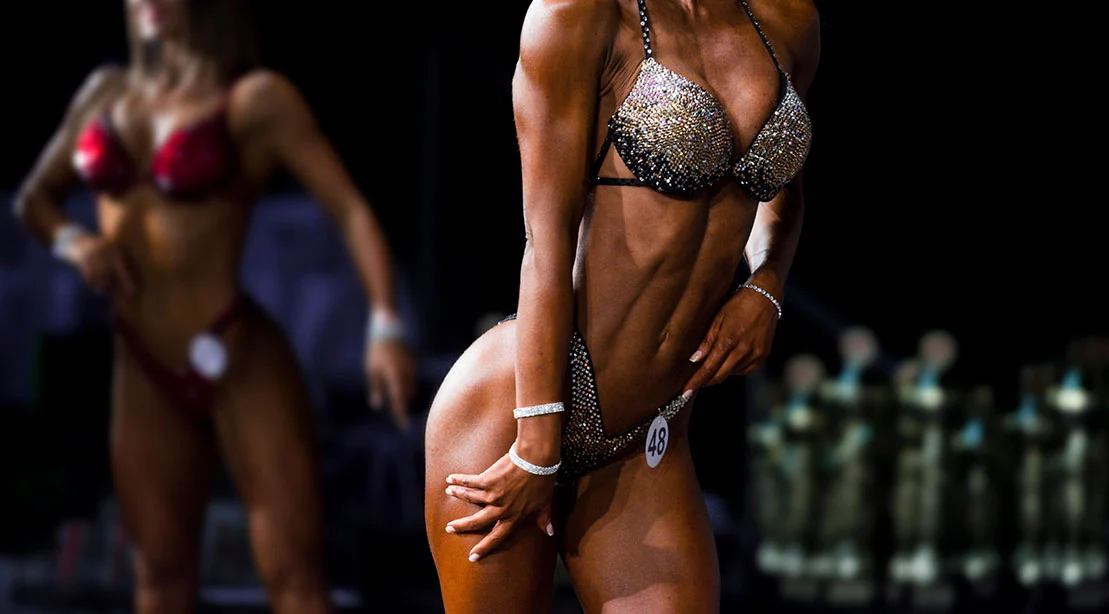
The stage presentation for Fit Model further distances itself from the bodybuilding norm. Gone are the elaborate, Swarovski-encrusted suits that characterize the Bikini and Figure divisions. In their place are plain-colored suits, emphasizing the silhouette of the competitor rather than the flash of the fabric.
Competitors perform only a front and back pose. There are no mandatory bodybuilding poses, no quarter-turns designed to showcase vascularity, and no focus on extreme muscular separation. Instead, the judging focuses on symmetry, balance, and—most importantly—presentation. The inclusion of heels adds an element of poise and runway elegance, cementing the division’s identity as a "fit model" contest rather than a "bodybuilding" contest.
Implications: Can the Federation Hold the Line?
The emergence of Fit Model raises a critical question: Is this truly a new division, or just a placeholder for the next wave of "Bikini" athletes?
Critics argue that "that’s not bodybuilding," a sentiment that was echoed when the Bikini division was first introduced. Yet, the history of the Olympia is one of continuous expansion. Just as the Fitness division successfully integrated gymnastics and high-intensity performance into the fold, Fit Model aims to integrate the aesthetic of the high-fashion fitness world.
The real challenge lies in the hands of the judges. If the inaugural winner of the Fit Model Olympia represents the ideal, the judges must ensure that the "standard" remains static. If, in 2027 or 2028, the judges begin to reward competitors who are slightly leaner, or slightly more muscular, the cycle will repeat.
The sport has a tendency to reward "more." It is in the nature of elite competition to push boundaries. If the Fit Model division begins to creep toward higher levels of conditioning, we will inevitably see the need for yet another division—a "Fit Model Classic," perhaps—to restore the balance.
The Future of the Physique Industry
The Fit Model division is, at its core, a response to a changing demographic of competitors. There is a massive population of women who train with intensity and dedication but who have no desire to pursue the extreme leanness required by the current judging standards in Bikini or Figure. These women want to be celebrated for their fitness without having to diet until their glutes possess "geological features."
By creating this space, the IFBB is acknowledging that there is more than one way to define a "fit" body.
As I watch the first-ever Fit Model Olympia champion walk onto that stage, I will be looking for more than just a winner. I will be looking at the standard being set. The judges are currently defining the DNA of this division. Every woman who competes in the years to follow will be chasing the physique that is rewarded tonight.
If the judges remain disciplined and adhere strictly to the "less is more" philosophy, the Olympia may have successfully found a way to diversify its ranks while preserving a beautiful, accessible aesthetic. If they waver, they risk losing the very thing that makes this division unique. The eyes of the fitness world are not just on the stage; they are on the scoreboard. The choice they make today will determine whether Fit Model becomes a permanent, successful fixture or just another footnote in the relentless, upward-marching evolution of bodybuilding.