










By [Your Name/Publication Editorial Team], based on insights from Jana Wu, LCSW, LADC, ICAADC, CASAC
For over 15 years, clinician Jana Wu has stood on the front lines of mental health and substance use treatment. As she approaches her 50th birthday, she finds herself grappling with a professional and personal inquiry that continues to haunt the modern medical landscape: Why is our healthcare system so perpetually eager to extinguish the symptoms of women’s distress before we have even begun to understand its origins?
This question has been brought into sharp relief by the rising prevalence of kratom—a botanical substance that has emerged as a go-to remedy for women in their late 30s through their 60s. For these women, kratom is rarely a recreational pursuit; it is a tactical tool for survival.
The Main Facts: The Kratom Phenomenon Among Women
Kratom, a tropical tree native to Southeast Asia, has gained significant traction in the United States as an unregulated, over-the-counter supplement. In the clinical practice of experts like Wu, women frequently report that they "stumbled" upon the substance while desperately searching for relief from anxiety, chronic pain, and, perhaps most importantly, fatigue.
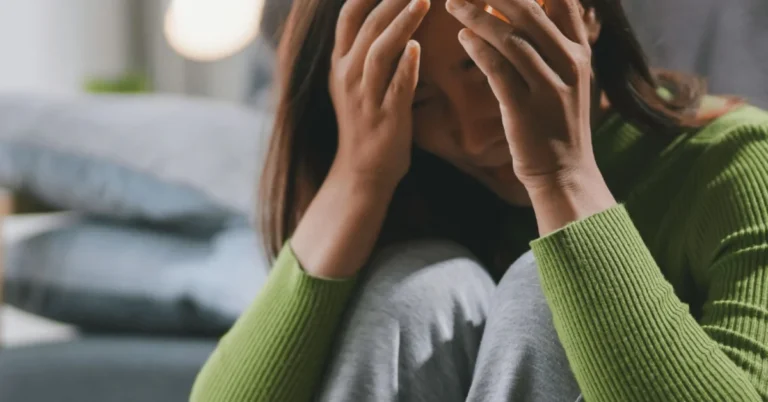
For many, kratom acts as a functional bridge. It is not necessarily used to achieve a "high," but to sustain a life that has become unsustainable. Women describe it as the engine that allows them to juggle the "triple burden": maintaining high-performance careers, raising children, and providing care for aging parents. When the demands of modern midlife exceed the biological capacity to cope, kratom offers a perceived solution to keep the machine running.
A Chronology of Suppression: From Hysteria to Benzodiazepines
To understand the current reliance on substances like kratom, one must look at the historical trajectory of how medicine has managed female distress. The medicalization of women’s discomfort is not a 21st-century invention; it is a centuries-old tradition of silencing symptoms rather than addressing causes.
The 19th Century: Hysteria and Neurasthenia
In the Victorian era, the medical establishment frequently diagnosed women with "hysteria" or "neurasthenia"—broad, catch-all terms for symptoms such as insomnia, irritability, fatigue, and physical pain. These diagnoses were often used to pathologize women who did not conform to the domestic ideals of the time. The solution was rarely systemic change; it was often rest, confinement, or rudimentary sedation.
The Mid-20th Century: The Era of "Mother’s Little Helper"
By the 1960s, the pharmaceutical revolution replaced physical confinement with chemical intervention. The introduction of Valium in 1963 changed the American cultural landscape. It became the most widely prescribed medication in the country, explicitly marketed to women to manage the "pressures of family life."
The cultural zeitgeist of this era was perfectly captured by the Rolling Stones’ 1966 hit, "Mother’s Little Helper." The song became an anthem for a generation of women using tranquilizers to navigate the domestic sphere. Decades later, the irony remains: the medications have evolved from Miltown and Valium to benzodiazepines and, now, to unregulated supplements like kratom, but the underlying narrative—that a woman’s distress is a problem to be chemically "managed"—remains firmly intact.
Supporting Data: The Midlife Vulnerability
The intersection of midlife and mental health is a critical, often overlooked, juncture. For many women, perimenopause introduces a biological storm: fluctuating hormones, sleep fragmentation, and heightened anxiety.
When this hormonal volatility meets the "sandwich generation" phenomenon—where women are squeezed between the needs of growing children and declining parents—the result is an acute state of burnout. Data suggests that when the healthcare system is presented with these complex, multifactorial issues, it is often better equipped to "quiet the symptom" than to engage in the patient, investigative work required to understand the life surrounding the patient.
The Risk of the "Natural" Misconception
A primary concern among clinicians is the trend toward viewing kratom as a "natural" and therefore "safe" alternative to pharmaceutical interventions. Because kratom is not regulated by the FDA with the same rigor as prescription medication, the potency and purity of these products are highly unpredictable.
Furthermore, the lack of medical oversight creates a dangerous blind spot. Clinicians are increasingly seeing patients who combine kratom with alcohol, benzodiazepines, or opioids. These combinations can lead to dangerous respiratory depression, excessive sedation, and severe, potentially fatal drug interactions. The "natural" label, in this case, provides a false sense of security that masks the reality of chemical risk.
Official Perspectives and Clinical Realities
From a substance use treatment perspective, the concern is not just about the specific chemical, but the psychological pathways that lead to its use.
"I am not suggesting that benzodiazepines cause women to use kratom," says Wu. "The pathways are far more complicated. But when we hear enough stories of women searching for relief from the same symptoms—anxiety, pain, fatigue—we have to look at the pattern."
The clinical reality is that many women are trapped in a cycle of "relief-seeking." They approach a provider with legitimate suffering; they are given a quick-fix prescription; they develop a tolerance or experience negative side effects; and they eventually seek their own solutions, such as kratom, when the initial medical approach fails to provide long-term stability.
Implications: Changing the Paradigm
If we are to address this crisis, we must shift our focus from the symptom to the source. The implications for healthcare providers, policymakers, and society at large are clear:
- Questioning the "Relief" Model: Providers must ask, "Whose discomfort are we actually treating?" Is the goal to help the patient achieve wellness, or is the goal to make the patient’s distress invisible to those around her?
- Addressing the Root Causes: True treatment requires curiosity and patience. A woman who suddenly experiences panic in her 40s may be dealing with hormonal shifts, professional burnout, or trauma. These require lifestyle modifications, hormonal therapy, or psychotherapy—not just a pill or a supplement.
- Comprehensive Screening: Healthcare providers need to be better at screening for substance use—including unregulated supplements like kratom—without judgment. If a patient feels she can be honest about her self-medication, she is more likely to accept professional, safer alternatives.
- Societal Expectations: We must challenge the societal expectation that women should be able to endure infinite levels of stress without breaking. When the solution to a woman’s stress is a substance that allows her to "keep up," we are not solving the problem; we are merely fueling the exhaustion.
Conclusion: Beyond the Cycle of Relief
The history of women’s health is littered with substances that promised to "help," only to create new, more complex problems. The goal for the future should not be to replace one substance with another, but to provide women with a framework for health that recognizes the complexity of their lives.
"The harder question," as Wu notes, "is what happens when relief becomes the treatment plan." It is time for the medical community to move past the era of "Mother’s Little Helper" and toward an era of comprehensive, investigative, and sustainable care. We must offer women more than the choice between enduring severe anxiety and relying indefinitely on a substance to make it disappear. True health lies not in the silence of our symptoms, but in the understanding of our stories.