









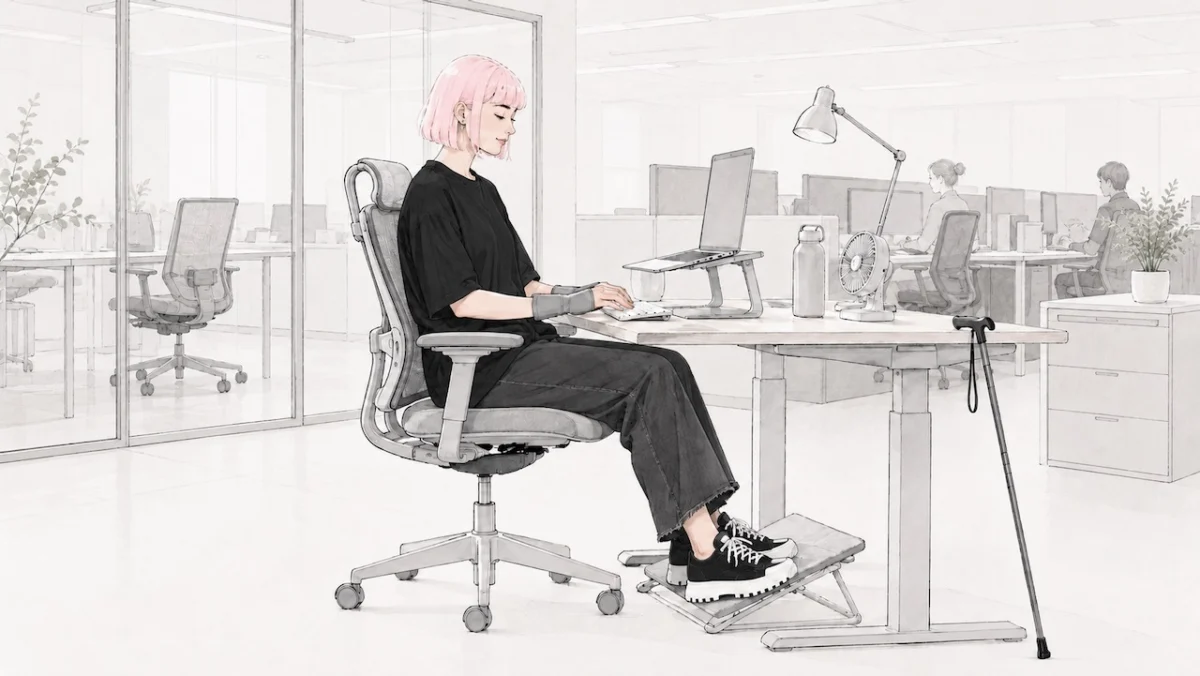
For the millions of individuals living with Ehlers-Danlos Syndrome (EDS), the professional world often presents a unique set of hurdles. EDS, a group of thirteen distinct genetic connective tissue disorders, is characterized by joint hypermobility, skin hyperextensibility, and tissue fragility. However, the diagnosis rarely stops at the joints; it frequently acts as a gateway to a constellation of comorbidities, including dysautonomia (such as Postural Orthostatic Tachycardia Syndrome, or POTS) and Mast Cell Activation Syndrome (MCAS).
As these conditions manifest with profound variability, the path to career longevity requires more than resilience—it requires the strategic application of workplace accommodations. Under the Americans with Disabilities Act (ADA), qualified employees with disabilities are entitled to "reasonable accommodations." Yet, bridging the gap between medical necessity and corporate policy remains a complex endeavor. This guide explores the multifaceted approach required to build an EDS-friendly work environment.
Main Facts: The Intersection of Disability and Employment
The fundamental reality for many with EDS is that the "standard" office setup is often physically incompatible with their bodies. Because EDS affects the collagen that serves as the body’s "glue," patients are highly susceptible to subluxations (partial dislocations) and chronic pain. When combined with the lightheadedness and fatigue associated with dysautonomia, a standard nine-to-five desk job can quickly become a catalyst for health deterioration.
The legal framework is clear: employers are prohibited from discriminating against qualified individuals with disabilities. A "reasonable accommodation" is any modification or adjustment to a job, work environment, or the way things are usually done that enables a qualified individual with a disability to participate in an application process or perform essential job functions. For the EDS community, this is not a request for special treatment, but a requirement for equitable access to productivity.
Chronology: From Diagnosis to Advocacy
The journey toward obtaining accommodations is rarely a single event; it is an iterative process of self-advocacy and negotiation.
- Phase One: Self-Assessment: Before approaching an employer, the employee must identify which specific symptoms—be it joint instability, brain fog, or temperature sensitivity—interfere with their work.
- Phase Two: Medical Documentation: Securing a clear, detailed letter from a primary care provider or specialist is the legal cornerstone of the accommodation request.
- Phase Three: The Interactive Process: This is the legal requirement for a dialogue between the employer and employee to identify effective accommodations.
- Phase Four: Implementation and Review: Accommodations are rarely "set it and forget it." They should be reviewed periodically as the patient’s health status or job requirements evolve.
Supporting Data: Why Ergonomics and Flexibility Matter
Data regarding chronic illness in the workplace indicates that when employees feel supported by their physical and temporal environment, retention rates increase significantly. For those with EDS, the physical strain of remaining in a static position can lead to severe musculoskeletal inflammation.
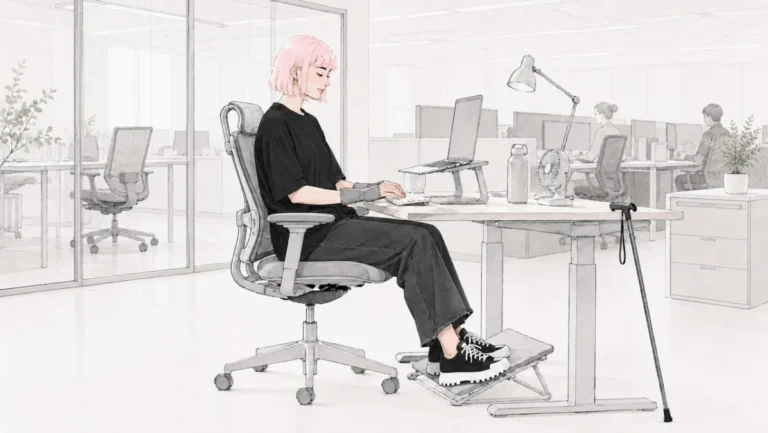
Studies into ergonomic interventions suggest that dynamic seating and support tools—such as adjustable footrests, monitor risers, and ergonomic keyboards—reduce the "load" on connective tissues. Furthermore, for those with POTS, the ability to shift between sitting and standing or to utilize a reclined position can prevent the pooling of blood in the lower extremities, thereby mitigating the risk of fainting and cognitive impairment.
Prioritizing Physical Safety and Comfort
To maintain physical health, the workspace must be treated as a clinical necessity. Suggested accommodations include:
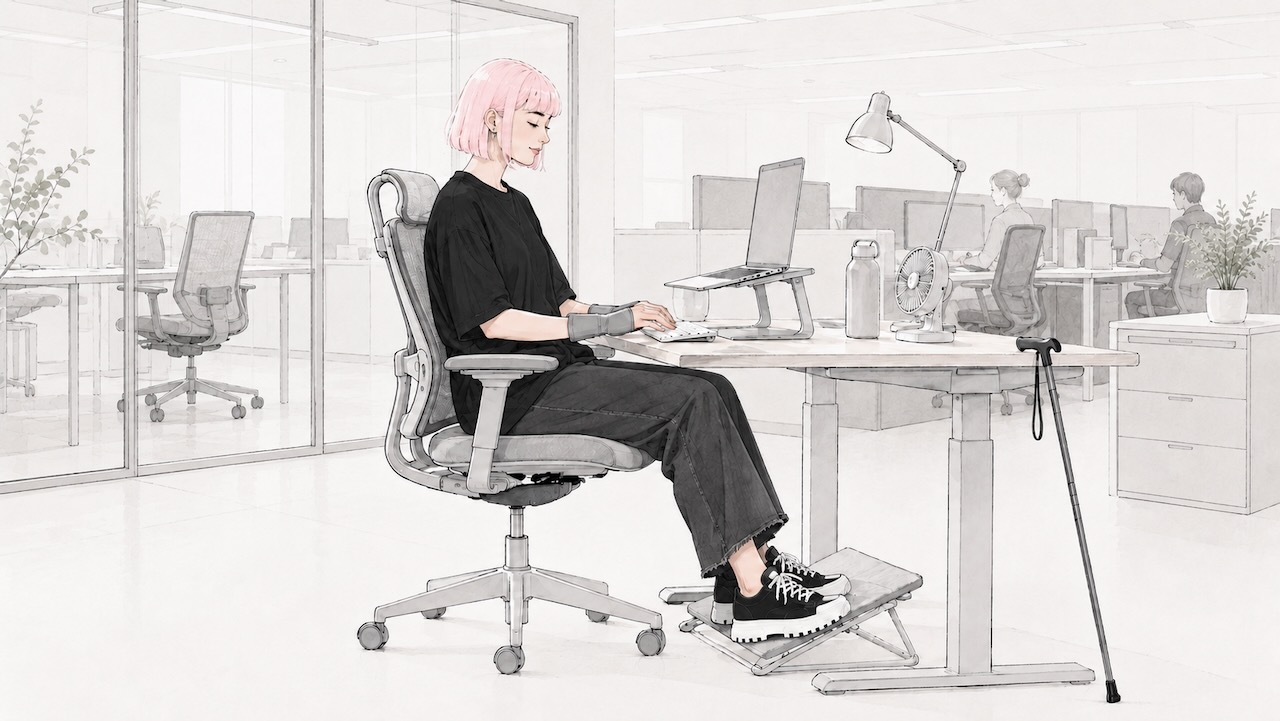
- Ergonomic Seating: Chairs with high-level adjustability, including lumbar support, adjustable armrests, and the ability to tilt or recline, are vital for those with joint instability.
- Peripheral Support: Using vertical mice, mechanical keyboards with low-actuation force, and monitor arms helps prevent the repetitive strain injuries that hypermobile individuals are prone to developing.
- Mobility Assistance: For those who use mobility aids, the office must be audited for ease of movement. This includes ensuring doorways are wide enough for rollators or wheelchairs and that common areas are free of trip hazards.
- Temperature Regulation: Because MCAS can make patients hypersensitive to environmental triggers, having control over a personal desk fan or heater can prevent systemic flares.
Flexibility as a Long-Term Strategy
The "unpredictability" of EDS flares is the greatest challenge to a traditional schedule. Employers who offer flexibility often find they retain highly skilled, loyal employees who might otherwise be forced onto disability leave.
- Remote or Hybrid Work: This is perhaps the most effective accommodation for EDS patients. It eliminates the physical toll of commuting and allows the employee to manage their environment, rest during breaks, and work from a setup that is tailored to their specific needs.
- Flexible Scheduling: Rather than a rigid 9-to-5, allowing for "result-oriented" work hours enables employees to work during their peak energy windows while resting during periods of high symptom activity.
- Asynchronous Communication: For those experiencing "brain fog" or neurological fatigue, the ability to communicate via email or project management software rather than back-to-back video calls can preserve cognitive bandwidth for core tasks.
Creating an EDS-Friendly Environment
Environmental factors can be just as debilitating as physical ones.
- Lighting Adjustments: Many EDS patients experience migraine sensitivity or visual disturbances. Fluorescent lighting, with its subtle flickering, can be a major trigger. Replacing bulbs or using desk lamps with warm, dimmable lighting is a simple but effective fix.
- Scent-Free Policies: For those with MCAS, exposure to strong perfumes, cleaning chemicals, or office air fresheners can trigger anaphylactic or respiratory symptoms. A designated scent-free work zone is often a necessary safety measure.
Official Responses and Legal Implications
The ADA requires that employers provide reasonable accommodations unless doing so causes "undue hardship." Importantly, the legal threshold for "undue hardship" is high—it must be a significant difficulty or expense. Most accommodations for EDS, such as a flexible schedule or an ergonomic chair, are remarkably low-cost when compared to the expense of losing a talented employee.
When an employer is hesitant, it is often due to a lack of awareness rather than malice. Providing literature from organizations like the Ehlers-Danlos Society or the Job Accommodation Network (JAN) can help reframe the conversation from "burden" to "essential business optimization."
Implications for the Future of Work
The rise of the digital-first economy has been a silver lining for the chronic illness community. However, there is still significant work to be done. The future of inclusive employment relies on three pillars:
- Cultural Literacy: Moving beyond HR handbooks to create a culture where physical needs are normalized rather than stigmatized.
- Universal Design: Integrating accessibility into the blueprint of all offices, rather than retrofitting them for specific individuals.
- Proactive Leadership: Managers should be trained to notice when an employee is struggling and offer support before a health crisis occurs.
Conclusion: A Collaborative Path Forward
For the person with Ehlers-Danlos Syndrome, the workplace is not just a place of production; it is a space that must be negotiated for the sake of long-term health. By understanding their rights under the ADA, clearly articulating their needs, and seeking out collaborative, supportive employers, individuals with EDS can build sustainable, fulfilling careers.
We must advocate for a professional landscape that values output over optics and health over rigid adherence to traditional norms. Whether you are an employee seeking clarity or an employer looking to support your team, remember that education is the most powerful tool in the shed. When we accommodate the needs of those with chronic conditions, we create a more human-centered, resilient, and effective workplace for everyone.
Key Takeaways
- EDS is diverse: Accommodations must be highly individualized based on the specific type of EDS and associated comorbidities.
- The Law is on your side: The ADA provides a robust framework for requesting modifications to perform essential job functions.
- The Interactive Process is key: Accommodation is a conversation, not a demand. Document every step of this interaction.
- Flexibility is the ultimate accommodation: Remote work, flexible hours, and task-based schedules are often more impactful than physical equipment.
- Resources are available: Utilize the Job Accommodation Network (JAN) and local disability advocacy groups to prepare for your meetings with HR.
Helpful Resources
- United States: Job Accommodation Network (JAN) – A primary resource for exploring accommodation options for specific medical conditions.
- United Kingdom: Access to Work – A government initiative that provides practical and financial support for disabled individuals in the workplace.
- Canada: Accessibility Standards Canada – Providing guidelines and support for inclusive work environments.
Rebecca Hayes, Disability Advocate, October 2026.