










In the upper echelons of Silicon Valley and the wellness-obsessed corners of social media, a new metric has replaced net worth as the ultimate status symbol: "Biological Age." This concept, popularized by tech mogul Bryan Johnson and his high-profile "Don’t Die" initiative, suggests that your birth certificate is merely a suggestion, and that with enough capital, data, and discipline, you can effectively run your own internal clock in reverse.
However, as the buzz surrounding bio age testing reaches a fever pitch, the medical community remains divided. Is this the future of preventative medicine, or is it merely the latest expensive frontier for the "worried well"?
The Science of Aging: Chronological vs. Biological
To understand the current obsession, one must first distinguish between two very different types of time. Chronological age is immutable; it is the simple tally of years since your birth. Biological age (bio age), however, refers to the functional status of your cells, tissues, and organs.
Consider two 50-year-old men: "Chang" lives a sedentary, high-stress life in a polluted urban center, fueled by poor nutrition and smoking. "Jabari" lives in a mountain environment, practices daily meditation, consumes a nutrient-dense diet, and maintains a rigorous physical training schedule. Even though they share the same birth year, their internal systems are likely worlds apart. Jabari’s cells, reflecting a lower accumulation of oxidative stress and systemic inflammation, would almost certainly register a younger bio age than Chang’s.
Chronology of the Bio-Age Movement
The trajectory of this movement can be traced through several distinct phases:
- The Early Research Phase: Scientists began identifying "biomarkers"—measurable indicators of biological processes—such as telomere length (the protective caps on chromosomes) and DNA methylation (chemical modifications to DNA) as proxies for cellular aging.
- The Tech-Influencer Integration: Figures like Bryan Johnson moved the conversation from academic journals to the public sphere. Johnson’s reported multi-million dollar annual spend on plasma infusions, hyperbaric oxygen, and dozens of daily supplements turned bio-hacking into a media spectacle, culminating in his Netflix feature, Don’t Die.
- The Commercial Explosion: Following these high-profile endorsements, a market of mail-order blood and urine kits emerged. These tests promise to quantify "pace of aging" for consumers, turning complex epigenetic data into a simple, marketable number.
- The Current Backlash: Investigative reports, such as those from The New York Times, have recently challenged the efficacy of these methods, noting that while Johnson claims to be aging in reverse, some assessments suggest his biological trajectory may actually be accelerating.
Supporting Data: What Are We Actually Measuring?
When you purchase a bio-age test, you are typically paying for an analysis of one of three core categories of data:
1. Epigenetic Clocks (DNA Methylation)
This is currently considered the "gold standard" in research. DNA methylation patterns change predictably as we age. Tests like the Horvath Clock or the DunedinPACE (Pace of Aging) analyze these chemical markers to estimate how fast your biological systems are degrading. While powerful for population-level research, these tests were not originally intended for individual medical diagnostics.
2. Telomere Analysis
Telomeres shorten every time a cell divides. Once they become too short, the cell stops dividing or dies. While abnormally short telomeres are linked to disease, using them as a "fitness tracker" for healthy individuals is scientifically shaky. The commercially available qPCR tests are often criticized for lack of precision compared to the clinical "flow-FISH" method used in hospitals.
3. Physiological Performance Metrics
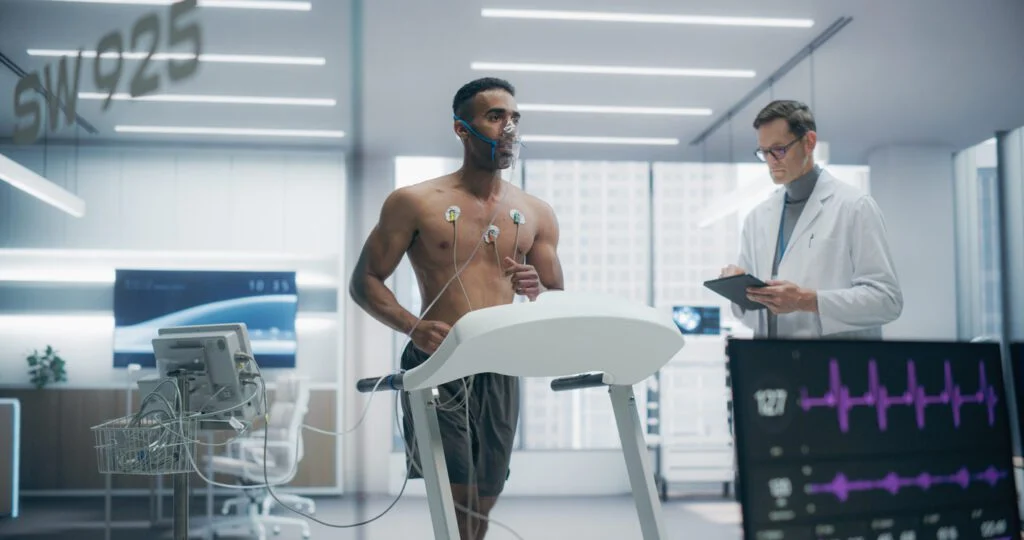
Perhaps the most reliable, if least "high-tech," indicators are performance-based. These include VO2 max (your body’s ability to utilize oxygen), grip strength, and balance. Studies have shown that a decline in these metrics is a more accurate predictor of all-cause mortality than many expensive blood-based biomarkers.
The "Free" Evidence: Assessing Yourself at Home
You do not need to be a billionaire to track your biological decline. Several scientifically validated, zero-cost tests provide immediate, actionable feedback:
- The Sitting-Rising Test (SRT): A measure of musculoskeletal strength and balance. The ability to lower to the floor and rise without using limbs for support is a strong indicator of longevity.
- Grip Strength: Often called the "new vital sign," grip strength is a better predictor of longevity than blood pressure. A sustained 90-second squeeze on a tennis ball is a hallmark of robust health.
- The One-Leg Balance Test: A loss of balance is often a precursor to systemic health issues. The ability to stand on one leg for 40+ seconds (depending on age) suggests strong coordination between the brain, inner ear, and skeletal muscles.
- The Pittsburgh Fatigability Scale: This tool measures how worn out you feel after specific activities. High scores correlate strongly with future health declines.
- Body Composition via Tape Measure: Waist-to-hip ratios and overall body composition provide more insight into inflammation and metabolic health than the number on a bathroom scale.
Official Medical Perspectives and Caveats
The medical establishment—led by organizations like the American Heart Association—largely views these commercial tests with skepticism. The primary concern is that data is not action.
Doctors emphasize that tracking biomarkers like Apo B, C-reactive protein, and fasting glucose is far more critical for immediate health outcomes than an arbitrary "biological age" score. Furthermore, organs age at different rates. A person might have a healthy, young heart but deteriorating kidney function; a single "bio age" number masks these nuanced, life-saving details.
The "Hard Sell" Warning: Many companies that provide these tests simultaneously market expensive, proprietary supplements. If a test result is used as a gateway to sell you a monthly subscription for unverified products, it is likely a marketing ploy rather than a medical breakthrough.
Implications: The Path Forward
The takeaway for the average person is simple: Do not let the pursuit of a number distract you from the pursuit of health.
If you spend your time chasing a slightly younger epigenetic score while ignoring the "big rocks"—sleep, physical activity, nutrition, and stress management—you are effectively rearranging the deck chairs on the Titanic. The most effective longevity intervention remains the "boring" stuff:
- Strength Training: Preserves muscle mass, which acts as an anti-inflammatory organ.
- Cardiorespiratory Fitness: VO2 max remains one of the strongest indicators of lifespan.
- Nutrition: Minimizing ultra-processed foods and maintaining metabolic health.
- Behavioral Consistency: The ability to adhere to healthy habits is the ultimate "bio-hack."
Conclusion: Data as a Baseline, Not a Moral Judgment
If you decide to engage in biomarker testing, view it as a mirror. If you look into the mirror and see a problem, you don’t fix the reflection—you fix your behavior. Use these tests as a starting point to see how your lifestyle changes affect your markers over 6 to 12 months.
In the final analysis, your biological age is a living, breathing, and changeable reality. It is not defined by a one-time test result, but by the aggregate of your daily choices. Whether you are a billionaire in a lab or a regular person in a home gym, the principles of longevity remain the same: build strength, protect your heart, and prioritize the foundational pillars of health over the fleeting promise of a shortcut.