









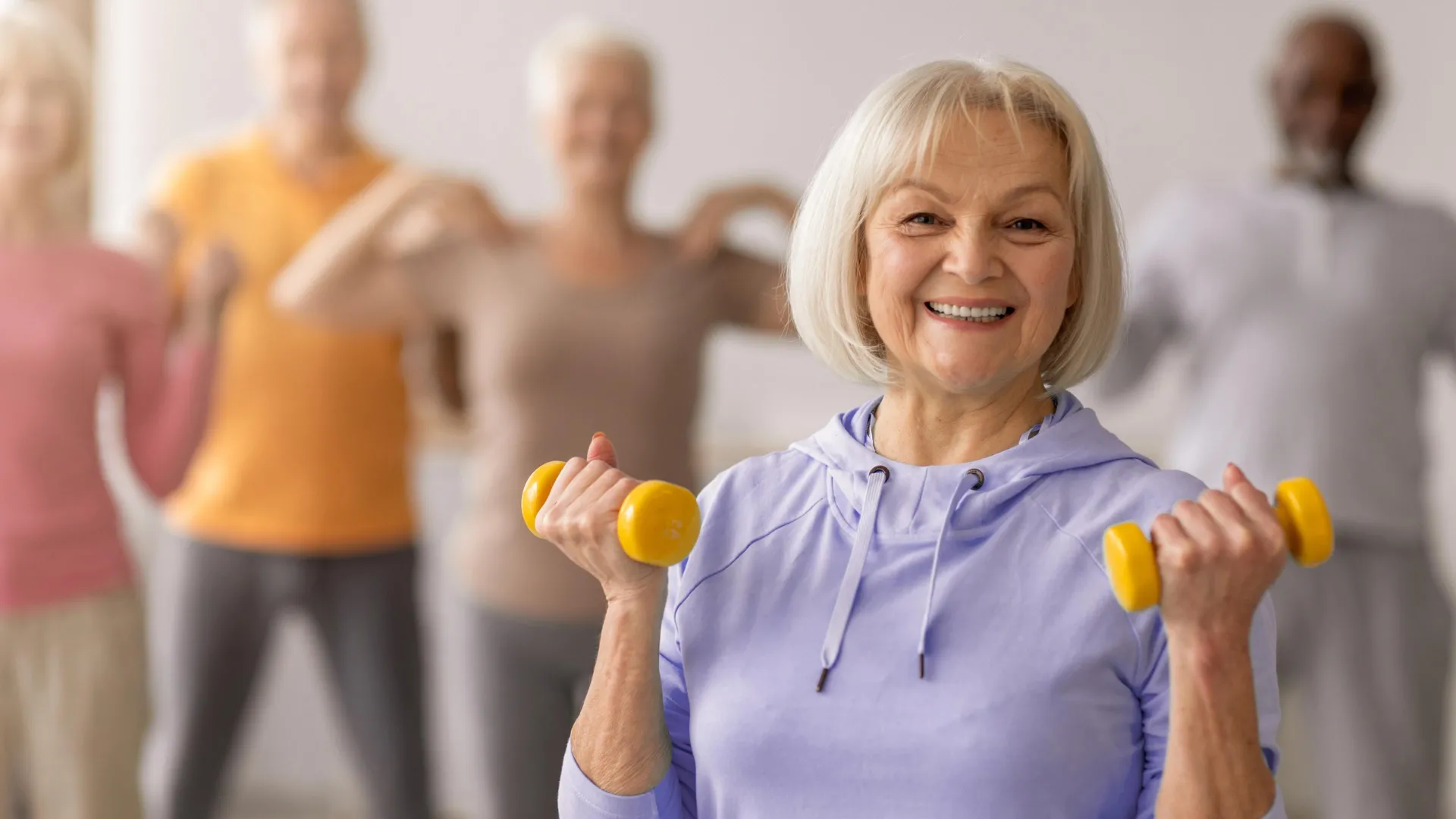
For millions of older adults, the prospect of maintaining physical independence is often overshadowed by the daunting requirements of traditional exercise. We are frequently told that to stave off the frailty of aging, we must commit to hours of gym time, complicated routines, and grueling aerobic sessions. However, a groundbreaking study led by researchers at the Penn State College of Medicine is challenging these long-held assumptions. The findings suggest that a daily strength training routine lasting just four minutes—a mere fraction of the time typically recommended—can yield significant improvements in strength, balance, and mobility for those aged 65 and older.
Published in the journal PLOS One, this research provides a beacon of hope for an aging population. It suggests that the path to longevity and continued independence may be far more accessible than previously imagined, shifting the focus from quantity of exercise to the functional efficacy of movement.
The Core Findings: High Impact in Minimal Time
The study, titled "Functional Activity Strength Training-2" (FAST-2), was designed to test whether a highly condensed, daily resistance-training program could bridge the gap between sedentary lifestyles and the physical requirements of independent living.
Over a 12-week period, 97 participants with an average age of 74 engaged in a daily routine that required only four minutes of active movement. The results were striking. Despite the brevity of the intervention, participants showed measurable, meaningful gains in their ability to perform essential physical tasks. By focusing on resistance training—making muscles work against external forces like elastic bands or body weight—the researchers were able to prove that the human body remains highly responsive to training well into one’s seventh and eighth decades.
These gains are not merely academic; they are life-altering. In the context of geriatrics, strength and mobility are the primary indicators of a person’s ability to remain in their own home, avoid the devastating consequences of falls, and maintain the cognitive and physical vitality necessary for a high quality of life.
Chronology of the Research: From Concept to Clinical Trial
The journey toward these findings began with a smaller, preliminary experiment known as FAST-1. In that earlier study, 24 older adults engaged in a 30-second regimen of push-ups and squats daily. Over six months, the researchers observed a marked improvement in the participants’ ability to perform these specific movements, suggesting that even minute amounts of exercise could stimulate muscle adaptation.
Encouraged by these results, the Penn State team, led by Professor Christopher Sciamanna, sought to expand the scope and rigor of the study. They developed the FAST-2 protocol, which was meticulously structured to be both sustainable and progressive.
The trial was divided into two groups: an intervention group that performed the four-minute routine and a control group that received no intervention. Before the trial, participants were largely sedentary, reporting an average of just 18 minutes of exercise per week—drastically lower than the 150 minutes of moderate activity recommended by national health guidelines.
The FAST-2 protocol was designed to be simple: four movements performed for 30 seconds each, separated by 30-second rest intervals. To ensure accessibility, the researchers provided equipment such as elastic bands and adjustable-height steppers, along with modifications for those with varying levels of physical ability. Participants were encouraged to "progress" the exercises—moving from wall push-ups to floor push-ups, or increasing the height of their steppers—as their strength improved.
Supporting Data: Why "Micro-Dosing" Exercise Works
The physiological mechanisms behind these results are rooted in the body’s innate capacity for adaptation. While conventional wisdom dictates that longer, more intense workouts are the only way to build muscle, the data suggests that consistency and specificity are the true drivers of physical improvement.
The FAST-2 Routine at a Glance:
- Push-ups: Targeted at upper body strength, with options for countertop or wall-based modifications.
- Squats: Aimed at lower body power, essential for the "sit-to-stand" motion required in daily life.
- Stepper Exercises: Focused on balance and leg endurance.
- Resistance Band Rows: Designed to improve posture and back strength.
The assessments conducted at the 12-week mark focused on real-world capabilities. Researchers measured the speed and efficiency with which participants could rise from a chair and their ability to maintain balance on one leg. Both of these metrics are clinical gold standards for predicting the risk of falling.
The data revealed that even with just 60 seconds of lower-body resistance training per session, the participants achieved statistically significant improvements. These improvements are not just "numbers on a chart"—they represent a reduced risk of being admitted to a nursing home, a lower likelihood of suffering a fall, and a higher threshold of independence.
Official Responses: Shifting the Paradigm of Exercise
The lead authors of the study, Professor Christopher Sciamanna and Associate Professor Smita Dandekar, have been vocal about the implications of these findings. They argue that the traditional approach to exercise advice is fundamentally flawed for the average older adult.
"Exercise is actually really complicated," says Dr. Dandekar. "You have to decide how many repetitions, how far, how many sets, how much rest, and how many times per week. It’s hard work, so there’s huge problems with people wanting to do exercise. If we can make it short, we’re part way there."
Dr. Sciamanna emphasizes that the goal of the research is to demystify fitness. By framing exercise as "forward-thinking"—training today for the movements you want to be able to perform in 20 years—the team hopes to remove the psychological barriers that keep many older adults from starting a routine.
"The human body is designed to improve very quickly," Sciamanna noted. "Just a few repetitions of an exercise performed regularly can lead to huge improvements. Exercise is the key to freedom."
Implications: A New Roadmap for Healthy Aging
The most compelling takeaway from the FAST-2 study is the high adherence rate: participants completed their exercises on 81% of the days during the study. This level of consistency is rare in fitness interventions, which are frequently abandoned due to fatigue, injury, or the overwhelming nature of the instructions.
Addressing the Barriers to Fitness
The study successfully tackled the three primary obstacles that prevent older adults from exercising:
- Time Constraints: By condensing the program to four minutes, the "I don’t have time" excuse is effectively nullified.
- Complexity: The clear instructions and limited number of exercises removed the cognitive load of planning a workout.
- Physical Demands: The inclusion of modifications ensured that individuals of all fitness levels could participate without feeling discouraged by failure.
For the medical community, these findings suggest that we should stop "prescribing" exercise in the same way we might suggest a grueling marathon training plan. Instead, we should advocate for "functional activity" that mimics the demands of daily life. If an older adult can improve their balance and leg strength enough to comfortably navigate their home, they have achieved the ultimate health goal: the ability to live on their own terms.
Future Research and Conclusion
While the FAST-2 study is a landmark in gerontological research, the team acknowledges that more long-term studies are needed to determine if these gains persist over years rather than months. However, the current evidence is clear: the threshold for achieving meaningful physical improvement is much lower than the industry has led us to believe.
By moving away from the "no pain, no gain" mentality and toward a model of "consistent, functional movement," we can provide older adults with the tools to take control of their physical destiny. In a world where the population of those over 65 is growing rapidly, the four-minute workout may prove to be one of the most effective public health interventions of the decade.
The message is clear: You do not need to be an athlete to be healthy. You simply need to move with intention, consistency, and a focus on the movements that allow you to engage with the world around you. As Dr. Sciamanna poignantly stated, freedom is the ability to do what you want to do—and a four-minute investment each day might be the best way to secure that freedom for the future.