






Published October 27, 2026
In the ongoing Yoga Journal Archives series—a project dedicated to preserving the pedagogical wisdom published since our inception in 1975—we revisit a seminal masterclass on Urdhva Mukha Svanasana (Upward-Facing Dog). Originally featured in our May-June 2003 issue, this guide provides a technical roadmap for navigating the intense spinal architecture required by one of yoga’s most transformative backbends.
Main Facts: The Anatomy of the Backbend
Urdhva Mukha Svanasana is frequently misunderstood as a simple extension of the spine. In reality, it is a complex, full-body engagement that requires a delicate balance between muscular exertion and structural release. The primary challenge of this pose is the lumbar spine; without proper pelvic stabilization, the lower back can easily become "crunched," leading to discomfort or injury.
To execute the pose with integrity, practitioners must understand the "pit of the abdomen"—the area just above the pubic bone. By lifting this region toward the sternum and drawing the tailbone away from the lower spine, you create the necessary length to protect the lumbar vertebrae. Simultaneously, "kidney energy" must be channeled upward into the thoracic cavity to facilitate an opening of the lungs, ribs, and diaphragm.
Chronology: A Progressive Path to Intensity
Achieving the full expression of Upward-Facing Dog is not an overnight endeavor. Success is predicated on a sequence of preparatory poses that build the foundational strength required to avoid collapse.
Phase 1: Bhujangasana (Cobra)
Begin by lying prone with feet 6–8 inches apart. Place your hands slightly forward of your shoulders. The key to this pose is root: press your thighs, insteps, and the little-toe sides of your feet into the floor. Contract the buttocks to create a pelvic tilt that safeguards the lower back. As you inhale, press through the hands to pull the chest forward. Focus on the engagement of the quadriceps and the activation of mula bandha (the root lock), drawing energy from the pelvic floor toward the diaphragm.
Phase 2: Bhujangasana II
Deepen the practice by moving your elbows outward before hugging them in toward the ribs. This movement forces the armpits forward, exposing them and allowing the chest to "hug" the upper arms. This creates a powerful lift in the sternum. By pressing into the mounds of the index fingers, you gain the leverage needed to lift the sides of the chest, creating a profound opening in the throat and lungs.
Phase 3: Chaturanga Dandasana
Before ascending into Upward-Facing Dog, one must master the foundation of the transition: Chaturanga Dandasana. By tucking the toes and lifting the body so the waist aligns with the elbows, you engage the entire core. This pose demands that you draw the lower belly toward the kidneys, ensuring that the back remains supported as you prepare to transition into the backbend.
Supporting Data: The Pelvic Paradox
A common point of contention in modern yoga instruction is the role of the glutes. While contracting the buttocks is essential to prevent lumbar compression, excessive contraction can inadvertently cause the sacroiliac (SI) joints to compress and the thighs to rotate externally—both of which are counterproductive to a healthy backbend.
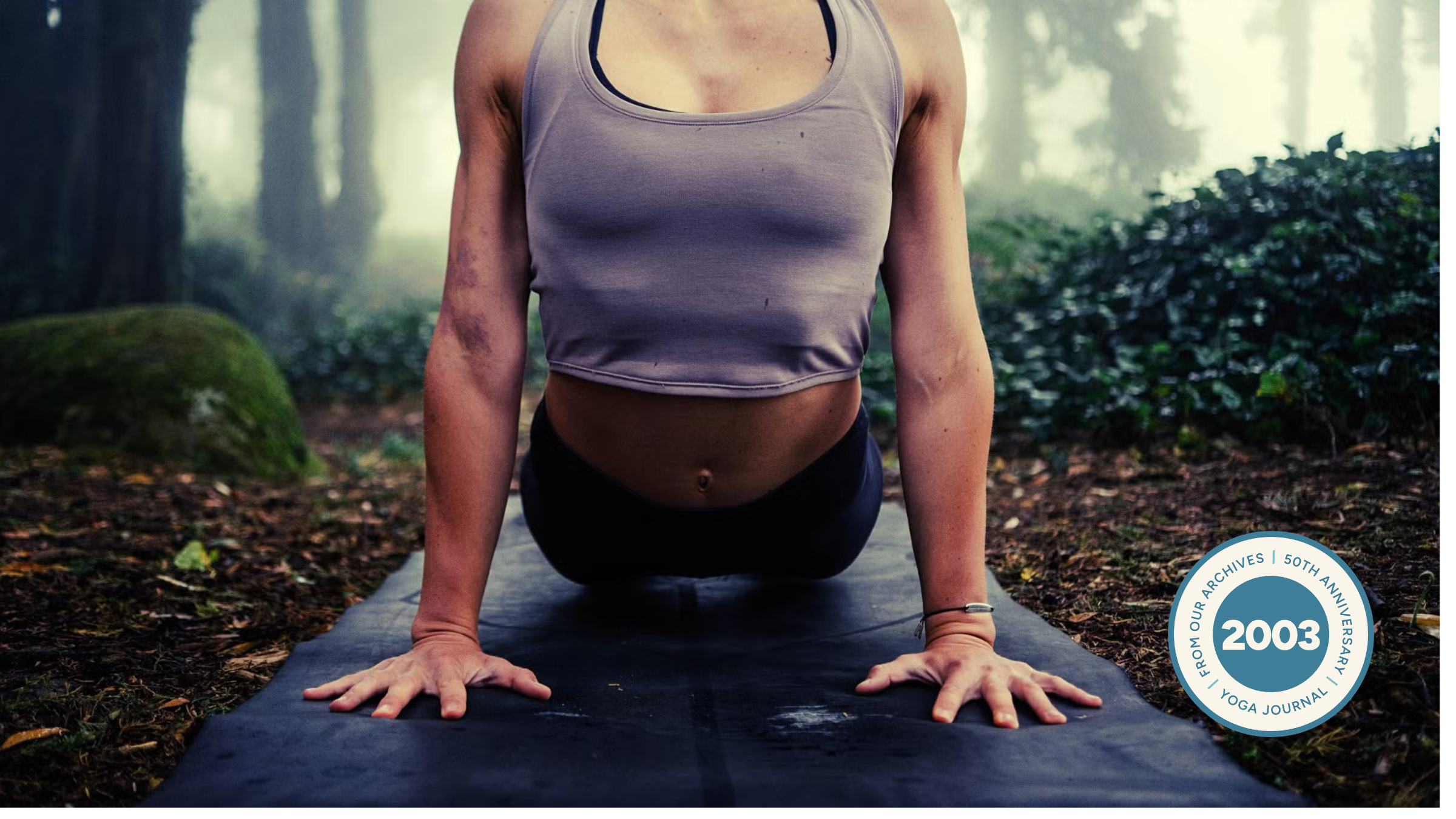
The solution, as detailed in our 2003 archives, lies in the sequence of engagement. One must first press the outer edges of the feet firmly into the floor. Only after this grounding action is established should the glutes be engaged. This specific order ensures the pelvis remains in the necessary tilt to protect the spine without sacrificing the integrity of the hip joints or the alignment of the legs.
Official Guidance: Executing Urdhva Mukha Svanasana
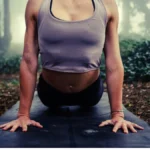
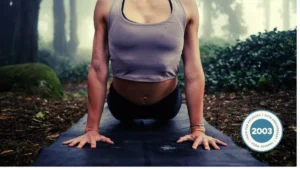
Once the foundation is set, the practitioner transitions from Chaturanga by flipping the toes and grounding the tops of the feet.
Urdhva Mukha Svanasana I
In the first stage, maintain the pressure on the little-toe sides of the feet. This action stabilizes the pelvis. As you inhale, press the index finger mounds into the mat, lift the chest, and gaze upward. The goal here is to draw the shoulder blades down toward the kidneys, effectively creating a "shelf" for the heart to lift upon. Hold for three to nine breaths, maintaining a steady, rhythmic cadence.
Urdhva Mukha Svanasana II
The second stage involves refinement. Pull the pit of the abdomen toward the sternum and slide the legs closer to the hands. Draw energy from the perineum through the frontal spine, creating a continuous, elegant curve that terminates at the crown of the head. In this advanced variation, the head reaches back, resting gently on the trapezius muscles. This creates the "full arc" of the pose, allowing for maximum thoracic expansion.
Implications for Practice and Health
The implications of practicing Urdhva Mukha Svanasana with this level of precision are vast. When performed correctly, the pose offers more than just a stretch; it serves as a tonic for the entire respiratory and nervous systems.
Therapeutic Benefits
- Respiratory Expansion: By creating space in the diaphragm and lungs, the pose enhances lung capacity and promotes deeper, more efficient breathing.
- Spinal Health: Proper engagement of the quadriceps and the pelvic floor prevents the chronic "crushing" of the lumbar discs, promoting a more fluid, flexible spine over time.
- Energy Flow: The activation of mula bandha and the drawing of energy from the kidneys to the chest are traditional techniques for cultivating prana (life force), which is said to invigorate the mind and reduce mental fatigue.
Contraindications and Cautions
Despite its benefits, the pose should be approached with caution by those with specific physical limitations:
- Neck Injuries: If you suffer from cervical spine issues, do not drop the head back. Keep the neck in a neutral alignment with the spine to avoid strain.
- Lower Back Issues: Individuals with existing disc herniations or chronic lower back pain should stick to the preparatory stages (Cobra I and II) before attempting the full weight-bearing version of Upward-Facing Dog.
- Wrist Sensitivity: Because the pose places significant weight on the hands, those with carpal tunnel syndrome or severe wrist inflammation should utilize blocks under the hands to modify the angle of the wrist.
Integrating the Wisdom
The 2003 guidelines for Urdhva Mukha Svanasana remain as relevant today as they were two decades ago. The practice of yoga is not merely about achieving the final shape of an asana; it is about the intelligence applied to the journey toward that shape. By focusing on the specific engagement of the feet, the intentional tilt of the pelvis, and the upward trajectory of the thoracic spine, practitioners can transform a simple transition pose into a profound exercise in anatomical awareness.
As you return to your mat, remember that every backbend is an opportunity to practice grace under tension. Whether you are a beginner working on the nuances of Cobra or an experienced practitioner refining the deep arc of Upward-Facing Dog, the principles of groundedness, engagement, and alignment remain your most reliable guides.