








The Newly Certified Software Achieved Independent Validation Across All Four Scoring Domains, Providing Objective Proof of Performance
In a landmark development for the field of sleep medicine, EnsoData has announced that its AI-powered diagnostic platform, EnsoSleep, has been awarded the inaugural Full Autoscoring Certification by the American Academy of Sleep Medicine (AASM). This certification marks a watershed moment in the transition toward artificial intelligence integration in clinical settings, establishing a standardized, third-party verified benchmark for how sleep studies are analyzed, interpreted, and managed.
As sleep centers grapple with increasing patient backlogs and a chronic shortage of qualified sleep technologists, the validation of EnsoSleep across all four critical scoring domains—sleep staging, arousals, respiratory events, and periodic limb movements—offers a path toward greater efficiency without compromising clinical rigor.
Main Facts: What the Certification Means
The AASM’s autoscoring certification program is designed to bridge the gap between manufacturer-claimed efficacy and clinical reality. While FDA clearance focuses on safety and substantial equivalence, the AASM certification process evaluates software performance against a rigorous, independent gold standard.
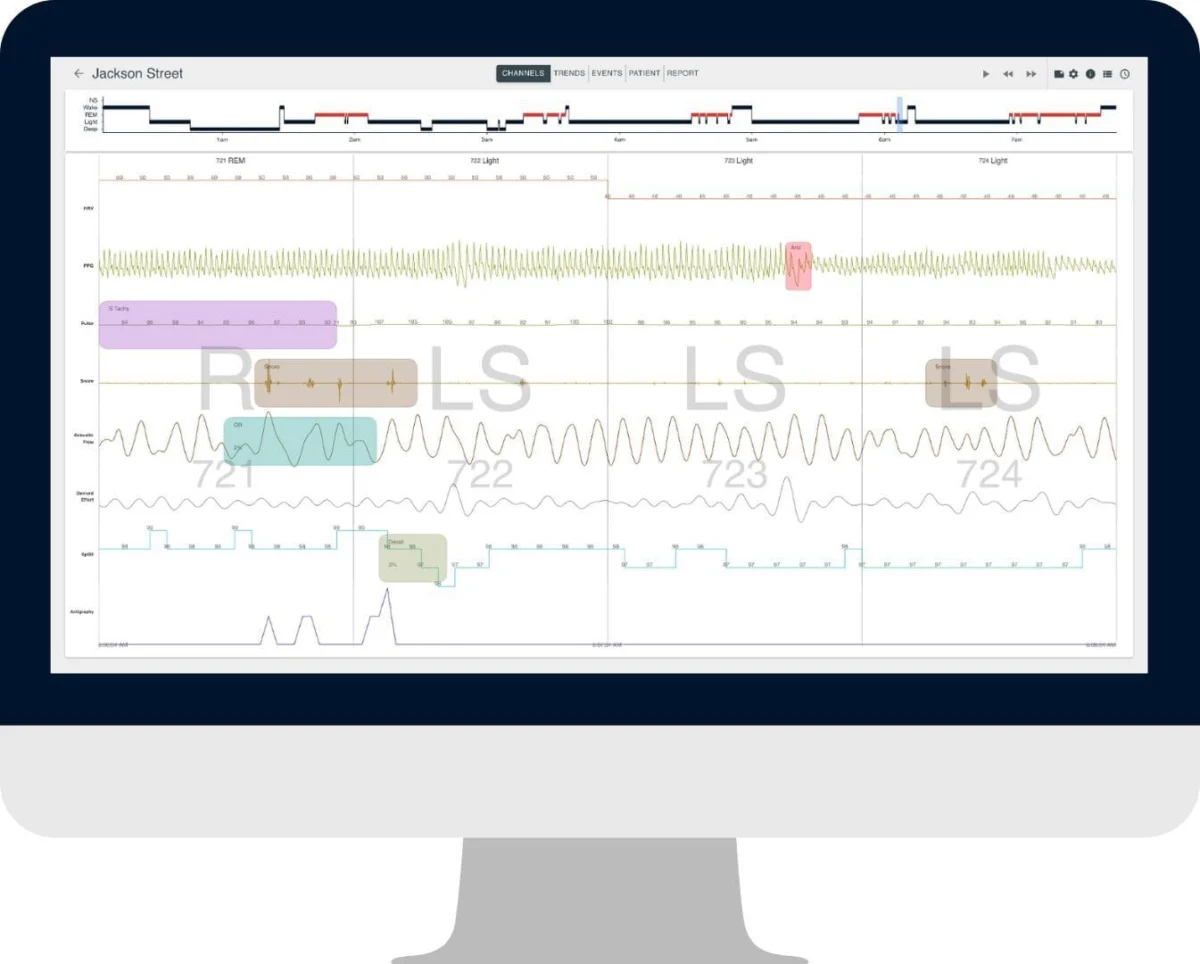
The AASM evaluation utilized a vast repository of more than 140 diverse polysomnography (PSG) studies. To establish the ground truth for this testing, the academy assembled a panel of 14 registered sleep technologists. The software’s performance was measured against the collective consensus of these human experts. EnsoSleep’s achievement of full certification indicates that it successfully matched the diagnostic accuracy of these experts across the four pillars of sleep analysis:
- Sleep Staging: The categorization of sleep into N1, N2, N3, and REM phases.
- Arousals: The identification of brief shifts in EEG frequency that interrupt sleep continuity.
- Respiratory Events: The detection of apnea and hypopnea episodes.
- Periodic Limb Movements: The identification of rhythmic, involuntary muscle activity during sleep.
By achieving "full" status, EnsoSleep has demonstrated that its AI algorithms function at a level of precision that meets the stringent requirements set forth by the governing body of the sleep profession.
Chronology: The Evolution of AI in Sleep Diagnostics
The path to this certification represents years of iterative development in machine learning within the medical sector.
The Early Era (2015–2018): EnsoData emerged from the burgeoning intersection of data science and health care. During this period, the focus was primarily on developing "black box" algorithms capable of processing physiological data faster than the human eye. Early skepticism was rampant; clinicians were understandably wary of "automating" the interpretation of complex neurological and respiratory data.
The Standardization Phase (2019–2022): As AI tools proliferated, the AASM recognized the need for a standardized evaluation framework. Rather than relying on individual company white papers, the AASM began crafting a pilot certification program. This period was characterized by intense collaboration between software developers and medical societies to define what "accuracy" actually looks like in a clinical setting.
The Validation Milestone (2023–2024): The culmination of these efforts resulted in the current testing protocol. By moving from internal validation to an objective, third-party testing environment, the industry has shifted from asking "Does it work?" to "Does it meet the professional standard of care?" EnsoSleep’s recent achievement confirms that the technology has moved from an experimental tool to a validated clinical instrument.
Supporting Data: Why Independent Validation Matters
The necessity of this certification stems from the "trust gap" currently present in medical AI. In many sectors, companies publish internal studies demonstrating their software’s performance. However, these studies often use cherry-picked data or proprietary scoring methods that do not reflect the diversity of real-world patient populations.
The AASM process effectively dismantles this bias. By utilizing a "gold standard" panel of experts, the AASM ensures that the AI is not just being compared to a singular, potentially flawed human scorer, but to the collective wisdom of an experienced committee.
According to data presented by the AASM, the scoring of sleep studies is inherently subjective, with inter-scorer reliability historically being a challenge in the field. By introducing a certified AI into the workflow, sleep labs can reduce the variance between different scorers. If an AI provides a consistent, high-accuracy baseline, the clinician’s role shifts from performing the labor-intensive "first pass" of scoring to performing high-level oversight, editing, and final diagnosis. This is not about replacing the technologist, but rather about elevating the technologist to a reviewer role, allowing them to handle higher volumes of data without burnout.
Official Responses: The Leadership Perspective
The significance of this milestone is not lost on the leadership at EnsoData. Sam Rusk, co-founder and chief AI officer at EnsoData, emphasized in an interview with Sleep Review that the certification is as much about professional trust as it is about technological capability.
"There can be general distrust in companies representing their own products and services," Rusk explained. "Medical directors wanted third-party independent validation from the medical societies that govern them. The fact that the AASM—the very entity that governs and certifies these sleep centers—is the one validating the software gives medical directors and sleep centers the confidence they need to adopt this technology."
In an official statement, Rusk further highlighted the human-centric benefit of the software: "Earning full autoscoring certification from the AASM is an important step for the sleep community and EnsoData. This milestone reflects the depth of EnsoSleep’s capabilities and a decades-long commitment to clinical quality and real-world accuracy. For clinicians, it provides another reason to integrate AI into their workflow, and enables more time to focus on patients."
The message from EnsoData is clear: The AI is an instrument designed to facilitate human expertise, not to bypass it.
Implications: The Future of the Sleep Lab
The successful certification of EnsoSleep has profound implications for the future of sleep medicine.
1. Workflow Efficiency and Burnout
The most immediate impact will be felt in sleep labs experiencing a bottleneck in data processing. Scoring a single overnight PSG is a time-intensive process that can take a technologist over an hour. With EnsoSleep, that study can be scored in minutes. This allows sleep labs to increase their throughput, reducing the time patients spend waiting for a diagnosis—a critical factor for those suffering from conditions like sleep apnea, where delayed treatment can lead to severe cardiovascular complications.
2. Democratization of Quality
Certification provides a baseline level of quality. Smaller, independent sleep clinics, which may not have the resources to perform extensive internal audits of their software, can now look to the AASM certification as a seal of approval. This ensures that patients in smaller, rural, or underserved areas receive the same standard of diagnostic accuracy as those in major academic research centers.
3. The New Standard of Care
This certification sets a new precedent for all AI developers in the sleep space. Going forward, "validated" will become the minimum requirement for market entry. This will likely push other developers to submit their platforms to the AASM for similar testing, creating a more transparent and competitive marketplace where clinical performance is the primary differentiator.
4. Clinical Oversight Remains Paramount
Despite the automation, the human element remains central to the process. The EnsoSleep system is designed to provide a "pre-score" that the physician or sleep technologist must review. This ensures that the final clinical decision—the diagnosis and the treatment plan—remains in the hands of a qualified human professional. The AI acts as an assistant, ensuring that the clinician spends their cognitive energy on clinical decision-making rather than repetitive data tagging.
Conclusion
The AASM’s decision to award Full Autoscoring Certification to EnsoData’s EnsoSleep is a clear indicator that the medical community is ready to embrace AI, provided it meets the highest standards of evidence-based validation. By proving that its algorithms perform with the precision of human experts, EnsoData has provided the sleep community with the tools to tackle the rising demand for sleep diagnostics. As more labs adopt this validated technology, the result will likely be a more efficient, accurate, and accessible system for diagnosing the millions of individuals who suffer from sleep disorders every year.