










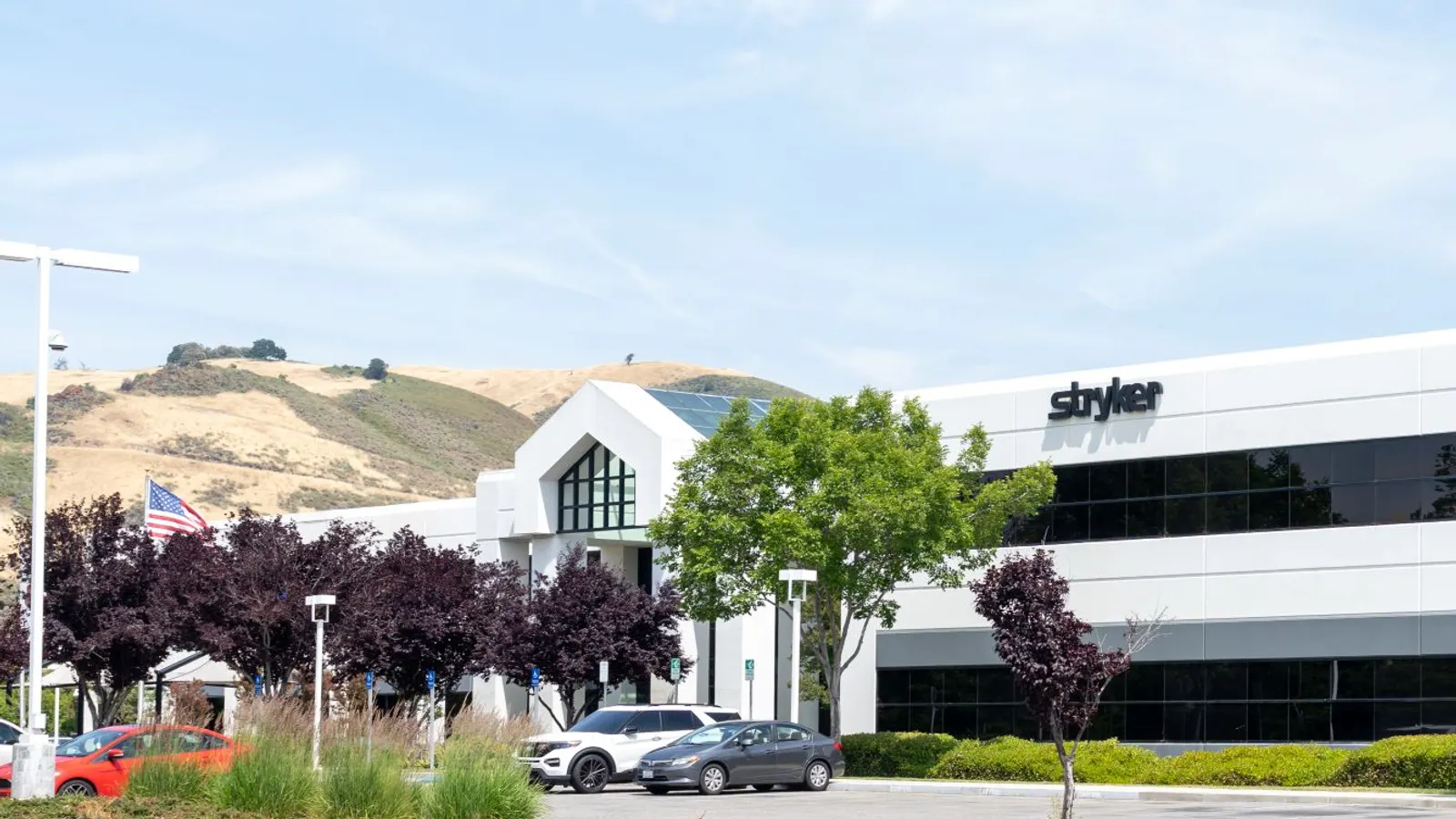
In a strategic move to solidify its leadership in the high-growth orthopedics market, medical technology giant Stryker has announced the acquisition of ZuriMED, a Swiss medical device innovator. The centerpiece of the deal is FiberLocker, a proprietary technology designed to revolutionize rotator cuff repair. By integrating this advanced surgical solution into its existing sports medicine portfolio, Stryker aims to address one of the most persistent challenges in orthopedic surgery: the high rate of post-operative tissue retears.
The acquisition marks a pivot for Stryker, which has spent the last two years aggressively expanding its peripheral vascular capabilities. By pivoting back to its roots in orthopedics, the company is signaling that it intends to capture an even larger share of the lucrative shoulder care market.
Main Facts: The FiberLocker Innovation
At the core of this acquisition is the FiberLocker system, a dual-component medical device that addresses the mechanical weaknesses inherent in traditional rotator cuff repairs.
Traditional surgeries typically rely on sutures and bone anchors to reattach torn tendons to the humeral head. While these provide the necessary mechanical tension, they do not always facilitate optimal biological healing, leading to a significant retear rate. FiberLocker addresses this through a two-fold approach:
- The Non-Degradable Implant: The system utilizes a patch made of high-strength polyester staple fibers. This "medical felt" acts as a scaffold to reinforce the damaged tissue, effectively distributing the stress across the repair site.
- The Micro-Stapling Device: To secure this implant, ZuriMED developed a surgical micro-stapling tool. This device allows surgeons to fix the patch directly into the soft tissue, providing a layer of structural reinforcement that works in tandem with existing suture and anchor techniques.
By reinforcing the repair at the time of surgery, the FiberLocker system aims to provide a more stable environment for the tendon to heal, potentially reducing the need for revision surgeries—a major cost driver for healthcare systems and a point of pain for patients.
A Chronology of Clinical Progress
The road to this acquisition has been defined by rapid clinical development and regulatory milestones, underscoring the potential investors and medical professionals see in the FiberLocker platform.
- 2024: Regulatory Validation: ZuriMED achieved a significant milestone by securing 510(k) clearance from the U.S. Food and Drug Administration (FDA). This clearance was supported by rigorous bench and animal performance testing, which demonstrated that the device could reliably integrate into soft tissue repairs without compromising existing surgical workflows.
- 2025: Transition to Human Trials: The year 2025 marked the commencement of human testing, a critical phase for any novel implant. ZuriMED initiated a first-in-human safety study in Switzerland to evaluate the device’s short-term performance in real-world clinical settings.
- 2025: U.S. Multicenter Expansion: Simultaneously, the company launched a multicenter clinical trial in the United States. While the Swiss trial focused primarily on safety and ease of use, the U.S. trial was designed to capture efficacy data, with a primary endpoint focused on healing outcomes at the six-month mark.
- 2026: Strategic Integration: Following the promising preliminary outcomes of these trials, Stryker finalized the acquisition. This move follows a period of heavy M&A activity for Stryker, including the February 2025 acquisition of Inari Medical (focusing on venous thromboembolism) and the May 2026 acquisition of Amplitude Vascular Systems (intravascular lithotripsy).
Supporting Data: Addressing the Retear Crisis
The clinical necessity for a solution like FiberLocker is rooted in sobering statistics regarding shoulder recovery. Despite advancements in surgical techniques, the rotator cuff remains a notoriously difficult area to repair permanently.
According to a systematic review and meta-analysis published in 2021, the retear rate for rotator cuff repairs within the first three to six months post-operation stands at approximately 21%. This high failure rate often results in persistent pain, reduced range of motion, and the requirement for secondary procedures, which are both more complex and less successful than primary repairs.
Stryker is currently leveraging magnetic resonance imaging (MRI) in its ongoing clinical evaluations to quantify the structural integration of the FiberLocker implant. By providing objective, longitudinal data on tendon healing, the company aims to build a compelling economic and clinical argument for the adoption of FiberLocker as a standard-of-care component in shoulder surgeries.
Official Responses and Strategic Rationale
Stryker’s leadership has been vocal about the role of the shoulder care business in the company’s broader financial success. During the Q2 2026 earnings call, Stryker CFO Preston Wells explicitly identified the company’s expanded range of shoulder implants as a primary engine for the double-digit growth seen in the sports medicine segment.
"Our focus is on the complete ecosystem of shoulder care," Wells noted during the call. "From the Mako Shoulder robot, which provides precision for arthroplasty, to the advanced soft-tissue reinforcement provided by FiberLocker, we are providing surgeons with a comprehensive toolkit that spans the entire patient journey."
The Mako Shoulder robotic platform, which recently saw a full commercial launch, has been a massive success for the company. By bundling the robotic precision of Mako with the biological reinforcement of FiberLocker, Stryker is effectively "locking in" surgeons to its technological ecosystem, creating a recurring revenue stream that is difficult for competitors to replicate.

Implications: The Future of Sports Medicine
The acquisition of ZuriMED is not merely an addition to a product catalog; it represents a broader trend in orthopedic technology toward "biological augmentation."
1. Shift Toward Preventive Outcomes
For years, the focus of orthopedic innovation was on the strength of hardware—making better anchors and stronger sutures. The industry is now shifting toward the "biology" of the repair. By incorporating materials that encourage tissue healing, companies like Stryker are attempting to move the needle from merely fixing a tear to ensuring the tissue actually regrows and maintains its integrity.
2. Competitive Landscape
This move puts increased pressure on competitors like Arthrex, Smith+Nephew, and Zimmer Biomet. As Stryker continues to integrate its robotic platforms with specialized implants, the barrier to entry for smaller players becomes higher. Hospitals and ambulatory surgery centers are increasingly looking for "all-in-one" vendors that can provide both the capital equipment (like the Mako robot) and the high-end disposables (like FiberLocker).
3. Impact on Healthcare Economics
The long-term economic impact of this technology could be significant. If the use of FiberLocker can reduce the 21% retear rate by even a small percentage, the savings to insurance providers and health systems would be substantial. Revision surgeries are significantly more expensive than initial repairs; therefore, a higher-cost initial implant that prevents a follow-up surgery is a highly attractive value proposition for hospital administrators and payers.
4. Continued M&A Outlook
While Stryker has spent much of the last two years diversifying into peripheral vascular health, this acquisition confirms that the company has not lost sight of its core competencies. The transition from cardiovascular expansion back to sports medicine suggests that Stryker intends to maintain a balanced portfolio. Investors can likely expect further tuck-in acquisitions that complement the Mako robotic platform, as the company seeks to maintain its status as the dominant player in orthopedics.
Conclusion
As Stryker moves to integrate ZuriMED’s technology, the sports medicine community will be watching the ongoing clinical trials with keen interest. If the results continue to confirm the safety and efficacy of the FiberLocker implant, it will likely become a staple in the OR. For Stryker, the deal represents a calculated, data-driven bet that the future of shoulder surgery lies in the marriage of high-tech robotics and advanced soft-tissue reinforcement. By bridging the gap between mechanical repair and biological healing, Stryker is well-positioned to remain at the forefront of orthopedics for the remainder of the decade.