





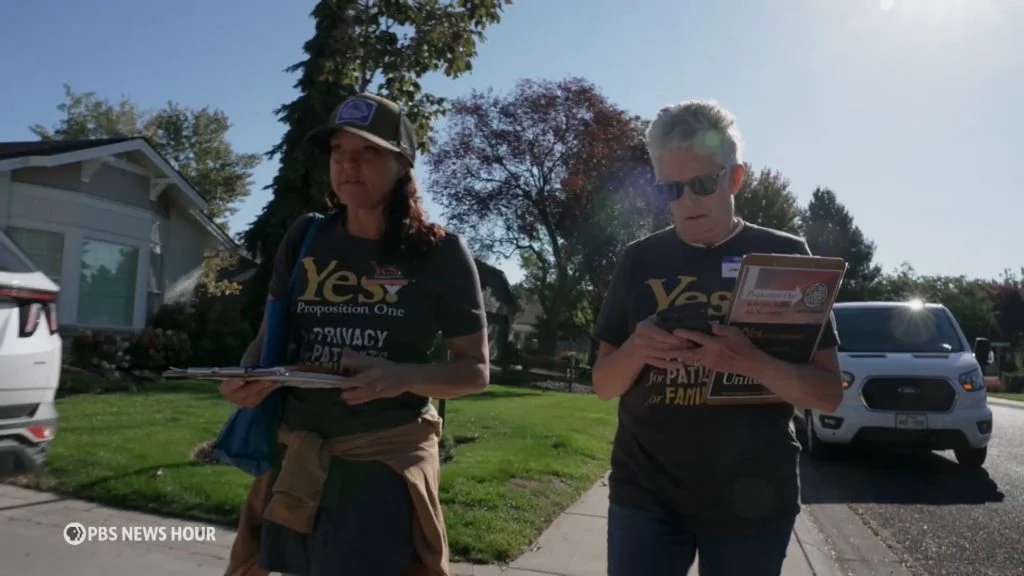
As the United States approaches a pivotal November election, the national conversation surrounding reproductive rights has reached a fever pitch. While much of the attention is focused on the presidential contest, a quiet but intense revolution is brewing in the heart of the American West. In Idaho—a state defined by its deep-red political identity and stringent conservative values—voters are preparing to decide on a citizen-led initiative that could fundamentally reshape the landscape of abortion access.
This November, the future of reproductive healthcare will be on the ballot in Virginia, Nevada, Missouri, and Idaho. However, the fight in Idaho is particularly unique. It serves as a litmus test for whether the fallout from the overturning of Roe v. Wade and the subsequent medical crises experienced by citizens can pierce the armor of a staunchly anti-abortion legislature.
The Human Cost: A Crisis in Care
The impetus for this ballot measure—Proposition 1—is rooted not in abstract legal theory, but in the harrowing personal experiences of Idaho residents. Among them is Abby Nichols, a mother whose life was upended by the state’s restrictive laws.
Thirteen weeks into a wanted pregnancy, Nichols received the devastating news that her fetus suffered from a severe, fatal genetic disorder. "The doctor came in and she checked for a heartbeat. She just quietly did it on an iPad, and then she said there was. And it was a really sad moment," Nichols recounted. Despite the medical consensus that the pregnancy was nonviable, Idaho’s near-total ban prohibited her physicians from performing an abortion.
For many women in Idaho, the realization of these restrictions is a slow-dawning horror. "There’s like a piece of you that hopes that they can help you," Nichols said. "But you also have heard of other women who haven’t received care, and you just are starting to realize that that’s you too." Ultimately, Nichols and her husband were forced to fly to Seattle to receive the necessary medical care—an expensive, isolating, and emotionally traumatic ordeal that has since fueled her commitment to changing Idaho law.
Chronology of a Restrictive Regime
To understand the current political friction, one must look at the timeline of Idaho’s legislative trajectory.
- Four Years Ago: Idaho implemented a near-total abortion ban, criminalizing the procedure with extremely narrow exceptions only for the life of the mother or in cases of rape and incest documented by law enforcement.
- The Post-Roe Era: Following the 2022 Supreme Court decision to overturn Roe v. Wade, the state’s trigger laws went into full effect, immediately stripping away the legal protections for abortion care that had existed for decades.
- The Medical Exodus: As the law took hold, the state began to experience a "brain drain" of medical professionals. Data indicates that Idaho has lost 94 obstetricians and gynecologists—roughly one-third of the state’s total—since the ban’s inception.
- Systemic Collapse: The loss of specialized medical staff has had a domino effect on regional infrastructure; three hospitals in the state have shuttered their maternity wards entirely, leaving rural communities in a state of crisis.
Supporting Data: The Legislative and Demographic Landscape
The political reality in Idaho is daunting for proponents of the measure. In the 2020 presidential election, nearly 70 percent of Idaho voters supported Donald Trump, cementing the state’s status as a GOP stronghold.
Melanie Folwell, a key organizer with Idahoans United For Women and Families, acknowledges the difficulty of the path ahead. "The tricky thing about Idaho’s ban is, it doesn’t really care what your personal beliefs are. It doesn’t really care what your partisanship is," Folwell explains. "It doesn’t really care if you have never considered an abortion. It comes for you all the same."
The initiative, Proposition 1, aims to codify abortion access up to the point of fetal viability—generally considered to be around 24 weeks—and in circumstances where a woman’s health is at risk. Crucially, the measure also seeks to shield physicians from legal retribution, a provision aimed at reversing the current climate of fear that has led to the mass departure of OB-GYNs.
Official Responses and Political Divisions
The political response to Proposition 1 is deeply polarized, reflecting a rift even within the Republican Party.
The Opposition
State Senator Camille Blaylock (R-ID), representing a Western suburb of Boise, has emerged as a vocal opponent of the initiative. She argues that the current law is the result of careful, intentional deliberation by the legislature and that the initiative is built upon "misinformation."
"Every word in our current law has been precisely thought about, debated, and put there on purpose," Blaylock stated. She warns that if the initiative passes, she and other legislative colleagues would likely move to overturn or severely limit its implementation. "I have my moral soul, and I answer to my God," she added, signaling that for many in the legislature, this is not a policy debate, but a matter of fundamental religious conviction.
The Republican Dissent
Conversely, some members of the GOP are beginning to break ranks, citing the practical failures of the current ban. State Senator Jim Woodward (R-ID), who originally voted for the abortion restrictions, now admits, "It didn’t take long to understand the problem that we had created."
Woodward’s shift highlights the tension between ideology and pragmatism. "I don’t support elective abortions," he noted, "but we need to get our policy back in line with the reality of pregnancy." Last year, Woodward attempted to introduce a bill that would have carved out exemptions for serious health risks and fatal fetal conditions, but the measure failed to gain traction, further convincing him that the current legislative path is unsustainable.
The Grassroots Shift: Personal Stories as Policy
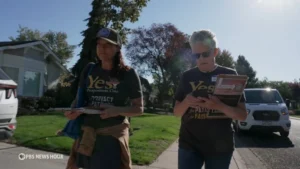
The success of Proposition 1 may ultimately rest on the shoulders of individuals like Suzanne Gallus. A mother of seven and a lifelong Catholic from Northern Idaho, Gallus once held the firm belief that abortion was inherently immoral. However, the real-world application of the law changed her perspective.
"I wanted to believe what the church said, because it sounded perfect," Gallus shared. "We just had no idea how important abortion care was. And when you take it out, it’s like the Jenga tower just falls." By engaging with her community, Gallus found that the issue touched far more people than she had initially imagined. Her argument, which she brings to doorsteps across the state, is one of personal agency: "When a personal medical decision comes up, who should be making those hard decisions? Should it be you and your husband or your partner and your doctor and your God, or should it be the government?"
Implications: A National Signal
The outcome of the Idaho vote will carry weight far beyond its borders. If a state as deeply conservative as Idaho manages to pass an initiative restoring reproductive rights, it would provide a clear signal to political strategists nationwide. It would suggest that the post-Roe legal landscape is viewed by a significant portion of even the conservative electorate as an overreach that jeopardizes public health.
As Melanie Folwell puts it, "Our success in Idaho would send a message that these kinds of bans, these kinds of policies are deeply unpopular, and that even in places that are very conservative… it’s not that simple."
Whether the frustration of voters like Abby Nichols and the pragmatism of legislators like Jim Woodward will be enough to overcome the entrenched political power of the status quo remains to be seen. As November approaches, the "Gem State" stands at a crossroads, with the health of its women and the limits of state power hanging in the balance. The vote will not only decide the immediate future of medical care in Idaho, but it may also redefine the boundaries of the American culture war for years to come.