







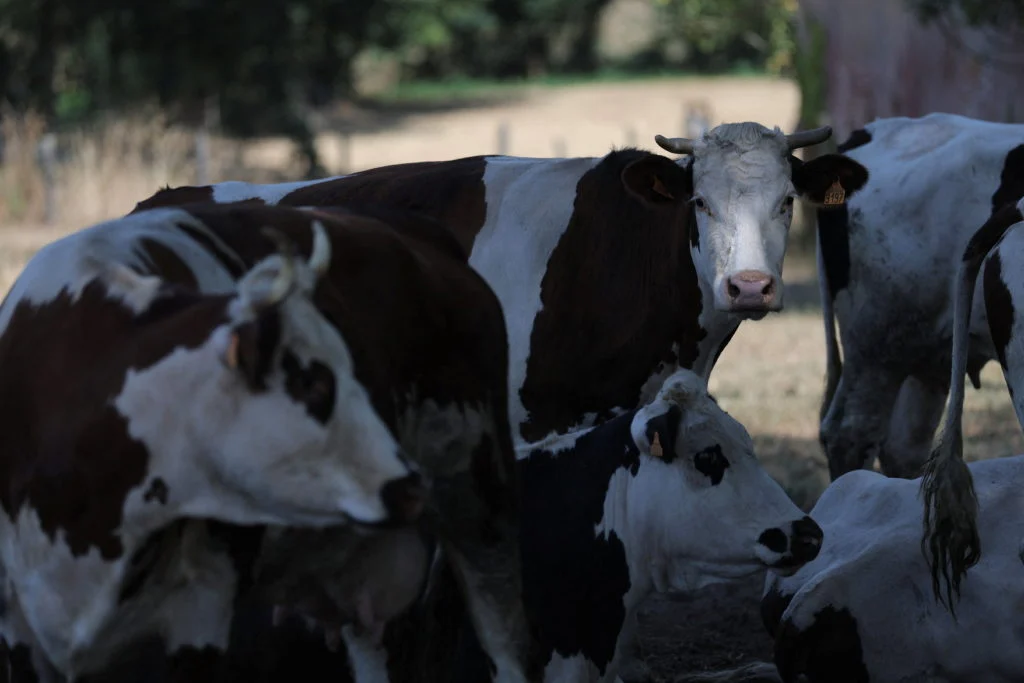
PARIS — In a development that has captured the attention of infectious disease experts and global health watchdogs, French health authorities have confirmed the first known human case of the Shamonda virus. The infection, which resulted in the death of a patient in Lyon earlier this month, marks a significant, albeit isolated, shift in the known host range of a pathogen previously thought to be exclusive to ruminants.
While the incident has prompted a swift interdisciplinary investigation, the French Ministry of Health has moved to reassure the public, emphasizing that the current evidence suggests this is an exceptional case restricted to a highly vulnerable individual. Despite the lack of an immediate public health threat, the case serves as a stark reminder of the unpredictable nature of zoonotic diseases in an era of global environmental and climatic change.
Main Facts: A First in Human Clinical History
The Shamonda virus—a member of the Orthobunyavirus genus—has historically been classified as a pathogen of veterinary concern. It is transmitted primarily by Culicoides midges, tiny blood-sucking insects that are notoriously difficult to control.
The deceased patient, who was being treated in Lyon for an underlying, severe immunocompromised condition, tested positive for the virus post-mortem. According to clinical reports, the patient had been residing in eastern France, a region where the virus has been identified in livestock populations during the warmer months of this year.
Crucially, the French health ministry and the Sante Publique France agency have maintained that the virus does not typically exhibit the biological mechanisms required to infect human cells. The patient’s severely compromised immune system is believed to have been the decisive factor that allowed the virus to overcome traditional biological barriers, leading to a fatal outcome that would likely not occur in a healthy individual.
Chronology of the Outbreak
The narrative of the Shamonda virus in France is a relatively recent phenomenon, unfolding over several months:
- Mid-20th Century Discovery: The virus was first isolated in Nigeria in the 1960s. For decades, it remained largely a regional concern in sub-Saharan Africa, with sporadic outbreaks documented in cattle across East, West, and Southern Africa, as well as in Japan.
- The Arrival in Europe: In the summer of 2024, agricultural monitoring systems detected the presence of the Shamonda virus in cattle farms across parts of France. This marked the virus’s first documented arrival on the European continent.
- The Lyon Incident: Throughout the summer and early autumn, the patient, who had been under medical supervision for a pre-existing severe illness, remained in the eastern regions of France. It is believed that the patient was bitten by an infected midge during this period.
- Early October 2024: The patient passed away in a Lyon hospital. Subsequent laboratory analysis revealed the presence of the Shamonda virus, triggering an emergency notification process.
- October 24, 2024: French health authorities officially disclosed the findings to the public and notified international bodies, including the World Health Organization (WHO) and the European Centre for Disease Prevention and Control (ECDC).
Supporting Data and Virology
To understand the gravity—and the limitations—of this event, one must examine the nature of the Orthobunyavirus family. These viruses are segmented, negative-sense RNA viruses. They rely on arthropod vectors, specifically midges and mosquitoes, to complete their life cycle.
The Vector: Culicoides Midges
The transmission cycle of Shamonda is inextricably linked to the Culicoides midge. These insects thrive in warm, humid conditions. Climate change has expanded the geographical range of many arthropod vectors, allowing viruses previously confined to tropical or subtropical climates to push into higher latitudes. The detection of Shamonda in French cattle earlier this year is widely considered to be a byproduct of these shifting ecological conditions, which have allowed midge populations to migrate and persist in new European territories.
Why Humans Were Previously Considered "Safe"
Until the Lyon case, the scientific consensus was that human cellular receptors were incompatible with the Shamonda virus’s surface proteins. Unlike viruses such as West Nile or Dengue, which have evolved to utilize human cellular machinery, Shamonda lacks the specific molecular "keys" to enter human cells. However, in an immunocompromised host, the internal defense mechanisms that normally identify and neutralize such "foreign" pathogens are disabled. This allowed the virus to replicate, albeit under extraordinary circumstances.
Official Responses and Public Health Protocols
The French Ministry of Health acted with significant transparency, immediately disseminating information to the scientific community and the public.
The Stance of the Ministry of Health
In its official statement, the ministry noted: "This is an exceptional case involving a patient whose immune system was severely compromised. Based on our current knowledge of the virus and its behavior in the animal kingdom, there is no identified public health risk to the general population."
The ministry has explicitly stated that no quarantine measures or broad-scale vaccinations are being considered. The focus remains on surveillance:
- Enhanced Veterinary Surveillance: Monitoring cattle and livestock in the eastern regions of France to track the spread of the midge-borne virus.
- Clinical Vigilance: Encouraging hospitals to remain alert for unexplained febrile illnesses in immunocompromised patients who have been in contact with rural or agricultural settings.
- International Cooperation: France has provided its full genomic data on the virus strain found in the patient to the World Health Organization. This data is essential for researchers to determine if there have been any mutations in the virus that could potentially increase its affinity for human hosts.
The Role of International Bodies
The ECDC is currently evaluating the risk profile for the broader European Union. While the current consensus is that the risk remains "low," the ECDC is working with local authorities to assess whether the presence of the virus in livestock poses a long-term threat to agricultural economic stability, if not necessarily human health.
Implications: A Shifting Global Health Landscape
The detection of the Shamonda virus in a human host serves as a significant case study in the "One Health" approach—an integrated effort to optimize the health of people, animals, and the environment.
1. The Challenge of "Silent" Pathogens
The Shamonda virus is one of many pathogens that reside in the "background" of the natural world. Scientists estimate that thousands of viruses circulate in animal populations that have yet to be identified or fully understood. When these viruses begin to spill over into new territories—as seen with the migration of midge populations—the probability of human exposure increases, even if the probability of infection remains low.
2. The Vulnerability of the Immunocompromised
As modern medicine advances, the population of immunocompromised individuals—those undergoing chemotherapy, organ transplants, or suffering from autoimmune diseases—continues to grow. This demographic acts as a "canary in the coal mine." Viruses that are harmless to the general public can prove lethal to this group. Public health systems must adapt their diagnostic protocols to consider a broader range of "non-human" pathogens when treating these patients.
3. Climate Change and Vector Migration
The geographic expansion of the Culicoides midge is a clear indicator of how ecological shifts are altering the transmission dynamics of vector-borne diseases. As France and other European nations experience warmer, longer summers, the window of activity for these vectors expands, bringing them into closer proximity with human settlements.
4. Need for Continued Vigilance
While there is no cause for panic, the Lyon case highlights the necessity of robust, real-time genomic surveillance. We are living in an era of unprecedented mobility and environmental flux. The ability to sequence the genome of an unknown pathogen in a matter of hours, as was done in this case, is our best defense against the next potential outbreak.
Conclusion
The death of the patient in Lyon is a tragedy, but it is also a scientific milestone. By documenting this case, French health authorities have added a crucial piece of information to the global repository of medical knowledge. The Shamonda virus remains, for the vast majority of the human population, a non-threat. However, the event underscores the importance of continued monitoring, international transparency, and a deeper understanding of the complex, interconnected web of life that links human health to the health of our animals and our environment.
As the investigation continues, the global health community will be watching France’s data closely, not out of fear, but out of a commitment to proactive science. The lesson is clear: in the age of global change, even the most obscure viruses require our attention, respect, and rigorous scientific scrutiny.