



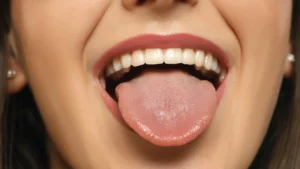
For millions of people worldwide, the COVID-19 pandemic did not end when they tested negative for the virus. While the acute respiratory symptoms—fever, cough, and fatigue—typically resolve within a few weeks, a subset of the population continues to grapple with "Long COVID," a constellation of persistent symptoms that defy easy explanation. Among the most vexing of these is the long-term loss or distortion of taste, a sensory deficit that can linger for more than a year, profoundly impacting quality of life, nutritional intake, and psychological well-being.
Now, a groundbreaking study published in the journal Chemical Senses has provided the first direct biological evidence to explain this phenomenon. By peering into the microscopic architecture of the tongue, researchers have uncovered a "molecular amplifier" defect and structural disorganization within taste buds that may finally explain why some patients remain unable to fully perceive flavor long after the virus has cleared their systems.
The Lingering Aftermath: A Clinical Overview
The study, a collaborative effort between the University of Colorado Anschutz Medical Campus and institutions in Sweden, focused on 28 individuals who had been struggling with taste disturbances for more than 12 months following a COVID-19 infection. Crucially, none of these participants had required hospitalization for their initial illness, suggesting that even mild cases can lead to persistent sensory damage.
The clinical profile of the cohort revealed a striking, non-uniform pattern of loss. While 8 of the 28 participants demonstrated objectively abnormal taste scores, 11 reported specific difficulties in detecting sweet, bitter, and umami (savory) flavors. Interestingly, these same individuals often reported that their ability to perceive salty and sour sensations remained largely intact. This selective loss—rather than a total cessation of taste—pointed researchers toward a specific biological mechanism rather than a generalized destruction of all taste receptors.
Chronology of Discovery: From Observation to Molecular Mapping
The journey to this discovery began with the clinical observation that taste dysfunction in "Long COVID" patients was not merely a psychological or neurological anomaly but a tangible, localized issue.
Phase 1: Identifying the Sensory Gap
Researchers first screened the 28 participants to categorize their sensory deficits. By utilizing standardized taste testing, the team established a clear baseline of dysfunction. The finding that umami, sweet, and bitter were disproportionately affected compared to salt and sour provided the first vital clue: the signaling pathways for these three tastes share a common molecular foundation that salt and sour do not.
Phase 2: Tissue Sampling and Microscopic Analysis
To investigate the "why," the research team, led by Dr. Göran Hellekant of the University of Wisconsin and the Swedish University of Agricultural Sciences, performed biopsies on 20 of the participants. By collecting tiny tissue samples from the taste buds, they were able to look at the cellular machinery responsible for transducing chemical signals from food into electrical impulses that the brain can interpret.
Phase 3: The PLCβ2 Deficiency
The analysis revealed a critical shortage of messenger RNA (mRNA) involved in the production of a protein known as PLCβ2 (Phospholipase C beta 2). In a healthy tongue, PLCβ2 acts as a fundamental component of the signal transduction pathway. It serves as a biochemical amplifier, taking the initial signal triggered by a taste molecule and boosting it so that the taste receptor cell can effectively transmit the message to the sensory nerves connected to the brain.
The Science of the "Molecular Amplifier"
To understand the significance of this finding, one must look at the anatomy of the taste bud. Taste receptor cells are specialized sensory cells located within the taste buds on the tongue. When a person eats, molecules from the food bind to receptors on these cells.
For sweet, bitter, and umami tastes, the cell utilizes a complex intracellular signaling cascade to process the information. PLCβ2 is the key "amplifier" in this cascade. Without adequate levels of this protein, the signal produced by the binding of a taste molecule is too faint to trigger the release of neurotransmitters required to send a signal to the brain.
"PLCβ2 acts like a molecular amplifier inside taste cells," explains Dr. Thomas Finger, a professor of cell and developmental biology at the University of Colorado Anschutz and the study’s corresponding author. "It strengthens the signal before it’s transmitted to the brain. When levels are reduced, the taste signal weakens."
This explains the selectivity observed by the researchers. The sensing of salt and sour utilizes different, ion-channel-based signaling mechanisms that do not rely on the PLCβ2 pathway. Consequently, even when the "amplifier" for sweet and savory is broken, the channels for salt and acid continue to function, leaving the patient with a distorted and incomplete sensory experience.
Hidden Structural Changes: The Architectural Failure
While the molecular defect provided a breakthrough, the researchers discovered that the damage was not purely chemical. When examining the physical structure of the taste buds under high-resolution microscopy, they found that some participants exhibited "structural disorganization."
In a normal taste bud, cells are neatly arranged in a cluster, optimizing their ability to interact with food molecules and communicate with nerve fibers. In some of the post-COVID subjects, however, the internal arrangement of these cells appeared chaotic or disorganized.
"Some subjects had normal-looking taste buds, while others showed structural disorganization," Dr. Finger noted. "This suggests that both molecular and architectural changes may contribute to persistent taste dysfunction." This double-hit of damage—impaired signaling machinery combined with a breakdown in cellular architecture—likely explains why the recovery process is so prolonged for these specific patients.
The Paradox of Cell Renewal
One of the most profound questions raised by this study is how these deficits can persist for over a year. Biologically, the human tongue is a dynamic environment; taste cells are replaced every two to four weeks. Under normal conditions, if a cell is damaged, it should be shed and replaced by a fresh, healthy cell.
The fact that these symptoms persist for 12 months or longer implies that the virus may have fundamentally altered the environment in which these new cells are born. The stem cells responsible for generating new taste cells may have been impacted, or the local inflammatory environment of the tongue may be preventing the proper maturation of new cells. This suggests that the damage is not just in the "software" (the molecular signaling), but potentially in the "hardware" (the progenitor cells that build the taste buds).
Implications for Future Treatment
While this research does not yet offer a cure, it changes the trajectory of how we approach post-COVID sensory loss. Previously, many patients were told that their loss of taste was a result of nerve damage in the brain or simple olfactory (smell) issues. This study shifts the focus back to the tongue, suggesting that the primary site of injury for many is the taste bud itself.
Potential Therapeutic Pathways
- Regenerative Medicine: If the issue lies in the stem cell niches of the taste buds, research could focus on promoting healthy cell turnover and inhibiting the chronic, low-level inflammation that may be hindering the process.
- Signal Modulation: Future pharmaceutical efforts could explore ways to boost the activity of existing PLCβ2 proteins or bypass the need for this protein, potentially restoring the sensitivity of the signal to the brain.
- Targeted Testing: Doctors can now move beyond subjective reports. If a patient complains of specific loss of sweet or bitter flavors, clinicians might eventually use these findings to categorize the type of dysfunction and tailor nutritional or therapeutic interventions accordingly.
Conclusion: A Step Toward Understanding
The findings published in Chemical Senses represent a critical milestone in understanding the long-term impact of COVID-19. By providing measurable, biological evidence, the researchers have validated the experiences of patients who have been suffering in silence for years.
"Our findings offer measurable evidence of long-term taste disruption in some post-COVID patients long after the virus has been cleared," the authors conclude. However, the path forward remains complex. Scientists must now determine if these abnormalities are reversible, whether specific environmental triggers influence the healing process, and if pharmacological interventions can nudge the taste buds back into their correct structural and molecular configuration.
For the millions still living in a world where food lacks its former vibrancy, this research provides more than just data—it provides hope that the mystery of the "lost taste" is finally beginning to unravel, paving the way for targeted, science-based recovery.