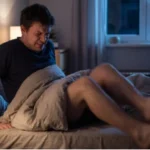












For millions of people, the transition from a long day to a restful night is abruptly interrupted by an uninvited guest: leg discomfort. Whether it manifests as a persistent, creeping urge to fidget or a sharp, sudden muscle spasm, nocturnal leg pain is a primary driver of sleep deprivation and chronic fatigue. While these sensations are often grouped together under the umbrella of "leg pain," they represent fundamentally different physiological phenomena.
Distinguishing between Restless Legs Syndrome (RLS) and nocturnal leg cramps is not merely an academic exercise—it is the essential first step toward effective treatment. Misidentifying these conditions can lead to ineffective interventions, prolonged suffering, and unnecessary anxiety. By understanding the sensory signatures, temporal patterns, and clinical markers of these two conditions, patients can move from frustration to resolution.
Main Facts: Defining the Two Conditions
To address nocturnal leg discomfort, one must first be able to speak the language of the symptoms. While both RLS and leg cramps disrupt the restorative architecture of sleep, their mechanisms are distinct.
Restless Legs Syndrome (RLS)
Restless Legs Syndrome is a neurological sensory disorder characterized by an overwhelming, often irresistible, urge to move the limbs. It is not a muscle condition in the traditional sense; rather, it is a dysfunction of the nervous system. Patients often describe the sensation as "creeping," "crawling," or "tingling." Some report an ache deep within the bones or muscles, though the specific location is notoriously difficult to pinpoint. The hallmark of RLS is its responsiveness to movement; walking, stretching, or even rubbing the legs provides temporary, immediate relief.
Nocturnal Leg Cramps
In contrast, sleep-related leg cramps—also known as "charley horses"—are involuntary, forceful contractions of a muscle. Unlike the diffuse, internal sensation of RLS, a cramp is a localized, acute event. The affected muscle becomes visibly hard, knotted, and intensely painful. These spasms typically occur in the calf, though they can affect the feet or thighs. A cramp is a mechanical event, often resulting from muscle fatigue, electrolyte imbalances, or dehydration, and it is not typically associated with a "need" to move for comfort.
Chronology: The Lifecycle of a Sleep Disruption
The timing of symptoms provides a vital roadmap for diagnosis. Understanding the circadian rhythm of these conditions allows patients to track their experiences with greater precision.
The RLS Timeline: Evening Escalation
RLS symptoms follow a distinct circadian rhythm. They are rarely present in the morning. As the day progresses, the brain’s dopamine levels—which regulate movement—naturally fluctuate. For those with RLS, the evening hours act as a trigger. As the body prepares for rest, the symptoms intensify.
- The Onset: Usually occurs while the individual is sitting or lying down, often during sedentary evening activities like watching television or reading.
- The Escalation: The sensation builds in intensity as the period of rest continues.
- The Peak: Often reaches its zenith just as the individual attempts to fall asleep, creating a vicious cycle of insomnia.
- The Relief: Moving the legs provides a "window" of relief. However, the symptoms return the moment the individual ceases the movement and attempts to rest again.
The Cramp Timeline: The Midnight Interruption
Leg cramps do not respect the same temporal rules as RLS. They are episodic and often occur in the middle of the night.
- The Trigger: Often occurs during a transition in sleep stages or after a long period of muscle shortening (such as pointing the toes while in bed).
- The Event: A sudden, sharp contraction that is immediate and intense.
- The Resolution: Once the spasm is released—usually through forceful stretching or massage—the pain typically subsides, though muscle soreness may linger for hours or days. Unlike RLS, the urge to move does not necessarily persist once the muscle has been stretched.
Supporting Data: Comparative Clinical Markers
Distinguishing between these two conditions requires a focus on the specific nature of the sensation and the situational context.
| Feature | Restless Legs Syndrome (RLS) | Nocturnal Leg Cramps |
|---|---|---|
| Sensation | Creeping, crawling, urge to move | Sharp, painful, muscle hardening |
| Location | Often diffuse, deep, bilateral | Localized, specific, usually unilateral |
| Timing | Evening/Night, worse during rest | Any time, often mid-sleep |
| Movement | Movement provides relief | Movement is the result of pain |
| Muscle State | Muscle remains soft | Muscle becomes hard/knotted |
Clinical observations suggest that while RLS is often a chronic, lifelong condition, nocturnal leg cramps are frequently intermittent and tied to environmental factors, such as exercise intensity, fluid intake, and medication side effects.
Official Perspectives: The Role of Medical Intervention
Medical organizations, including the American Academy of Sleep Medicine, emphasize that patients should not "normalize" sleep-disturbing leg pain. Because these conditions mimic one another, professional evaluation is the only way to ensure proper management.
The Diagnostic Process
When a patient presents with leg discomfort, physicians typically look for specific diagnostic criteria. For RLS, this includes the "URGE" acronym:
- Urge to move the legs (usually accompanied by discomfort).
- Rest-induced (symptoms occur during inactivity).
- Gets better with movement.
- Evening/Night worsening.
For leg cramps, the focus shifts to ruling out secondary causes. Doctors investigate potential metabolic disturbances, such as low magnesium, potassium, or calcium levels, and review the patient’s medication list. Certain blood pressure medications, diuretics, and statins are known to increase the frequency of leg cramps.
Why "Self-Diagnosis" Often Fails
Many patients attempt to treat their symptoms with over-the-counter supplements like magnesium or quinine. While these may help with occasional muscle cramps, they are often ineffective for the neurological pathways associated with RLS. Using the wrong treatment delays the underlying diagnosis, leaving the patient to suffer through months of sleep fragmentation.
Implications: The Long-Term Cost of Untreated Discomfort
The implications of ignoring these conditions extend far beyond a tired morning. Chronic sleep deprivation is linked to a host of systemic health issues, including hypertension, impaired glucose metabolism, and diminished cognitive function.
Psychological Impact
The psychological toll of nocturnal leg pain is significant. The anxiety surrounding the "inevitable" onset of symptoms each night can create a conditioned insomnia, where the bedroom itself becomes a source of stress. This anticipatory anxiety can exacerbate the symptoms, creating a feedback loop of nervous system arousal that makes sleep even more elusive.
Quality of Life
Patients suffering from untreated RLS or chronic cramps report significant declines in work productivity, mood regulation, and relationship satisfaction. The inability to sit through a movie, a long meeting, or a flight without the urge to move is a hallmark of severe RLS, indicating that the condition affects the patient’s quality of life even when they are not attempting to sleep.
The Path Forward: Preparing for the Doctor
To maximize the effectiveness of a medical consultation, patients should maintain a "Sleep and Symptom Diary" for at least two weeks prior to their appointment. This diary should track:
- Time of Day: When do the symptoms start?
- Nature of Sensation: Is it a "crawling" urge or a sharp "cramp"?
- Location: Is it one leg or both?
- Relief Factors: What stops the sensation? (e.g., walking, stretching, heat, cold).
- Sleep Impact: How many times are you waking up?
By providing this data, the patient transforms from a passive recipient of care to an active partner in their diagnostic journey.
Conclusion: A Call to Action
Leg discomfort at night is a signal from the body that something is amiss. Whether it is the neurological agitation of Restless Legs Syndrome or the mechanical distress of a muscle cramp, these symptoms are not inevitable consequences of aging or exhaustion. They are manageable, treatable, and deserving of medical attention.
If you find yourself pacing the floor in the middle of the night or waking up to the agonizing knot of a cramp, do not suffer in silence. Record your symptoms, consult a healthcare provider, and reclaim the restorative power of a full night’s sleep.
Medical review by Shalini Paruthi, MD. This article was created using editorial tools, including AI, as part of the process. Human editors reviewed this content before publication.